The US defence secretary during President Donald Trump’s first term, Jim Mattis, repeatedly warned that China would revert to a Ming dynasty-style model, projecting its strong military, technological and economic influence globally.At the time, his views were widely questioned by mainstream academics as too aggressive. A decade ago, China still lagged far behind the United States.But Mattis underestimated China’s ambitions.On January 29, China announced the official launch of a national space resources development programme, an ambitious project spanning nearly a century.According to the China Aerospace Science and Technology Corporation (CASC), the plan is to build a vast interplanetary fleet to extend resource exploration and mining operations to Mars, Jupiter, Saturn, Mercury and Venus.The project is named after the encyclopaedic work Tiangong Kaiwu (“The Exploitation of the Works of Nature”), published in 1637.
SRCSouth China Morning Post
LANGEN
LEANCenter-Right
WORDS132
ENT11
TUE · 2026-02-03 · 07:26 GMTBRIEF NSR-2026-0203-12893
NSR-2026-0203-12893News Report·EN·Technology
The Ming dynasty ‘Guide to the Galaxy’: China names 2100 space plan after 1637 book
China has launched a century-long national space resources development program, officially announced on January 29th. The China Aerospace Science and Technology Corporation (CASC) will lead the project, aiming to build an interplanetary fleet for resource exploration and mining.
Shi HuangSouth China Morning PostFiled 2026-02-03 · 07:26 GMTLean · Center-RightRead · 1 min
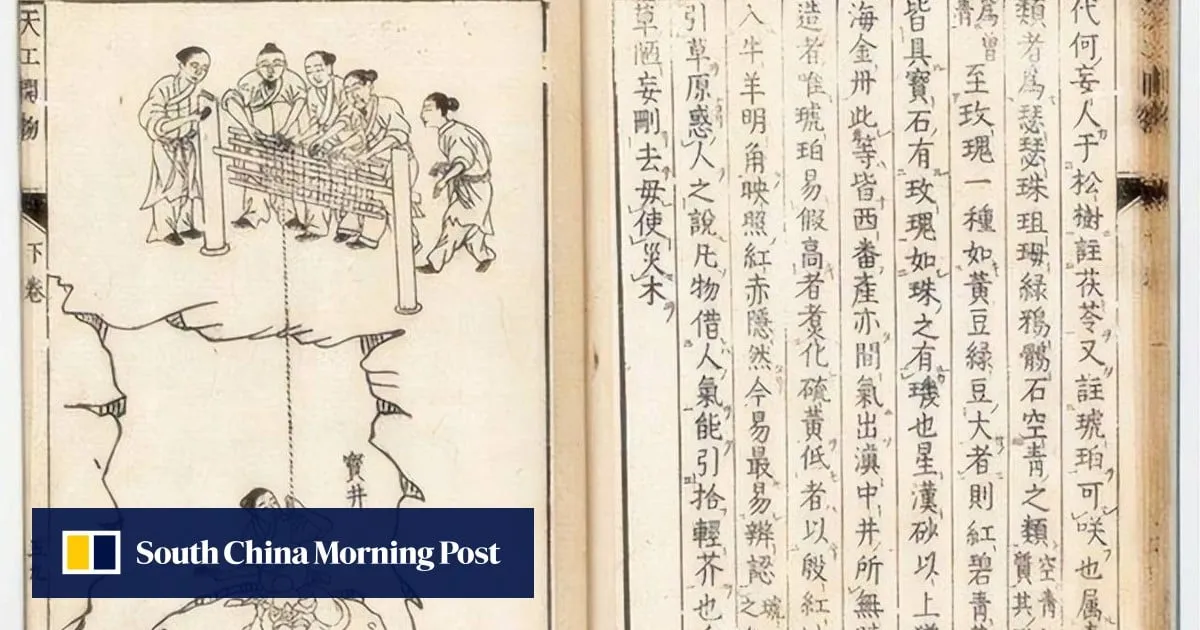
South China Morning PostFIG 01
Reading time
1min
Word count
132words
Sources cited
2cited
Entities identified
11entities
Quality score
100%
§ 01
Briefing Summary
AI-generatedNEWSAR · AI
China has launched a century-long national space resources development program, officially announced on January 29th. The China Aerospace Science and Technology Corporation (CASC) will lead the project, aiming to build an interplanetary fleet for resource exploration and mining. The plan includes operations on Mars, Jupiter, Saturn, Mercury, and Venus. The project is named "Tiangong Kaiwu" after a 1637 encyclopedic book, "The Exploitation of the Works of Nature." This initiative reflects China's growing space ambitions, a development that some analysts, like former US defense secretary Jim Mattis, had predicted, albeit with skepticism from some academics.
Confidence 0.85Sources 2Claims 5Entities 11
§ 02
Article analysis
Model · rule-basedFraming
Technology
National Security
Tone
Measured
AI-assessed
CalmNeutralAlarmist
Factuality
0.70 / 1.00
Factual
LowHigh
Sources cited
2
Limited
FewMany
§ 03
Key claims
5 extracted01
Jim Mattis warned China would revert to a Ming dynasty-style model.
factualArticle
Confidence
1.00
02
The project is named after Tiangong Kaiwu, published in 1637.
factualArticle
Confidence
1.00
03
The project aims to extend operations to Mars, Jupiter, Saturn, Mercury and Venus.
factualChina Aerospace Science and Technology Corporation (CASC)
Confidence
1.00
04
The plan is to build a vast interplanetary fleet for resource exploration and mining.
factualChina Aerospace Science and Technology Corporation (CASC)
Confidence
1.00
05
China announced the launch of a national space resources development programme on January 29.
factualArticle
Confidence
1.00
§ 04
Full report
1 min read · 132 words§ 05
Entities
11 identifiedKey playerOppositionContextPositiveNeutralNegative
Organizations2
§ 06
Keywords & salience
9 termsspace resources development
0.90
china
0.80
space exploration
0.70
interplanetary fleet
0.70
mining operations
0.60
resource exploration
0.60
ming dynasty
0.50
tiangong kaiwu
0.50
jim mattis
0.40
§ 07
Topic connections
Interactive graph Network visualization showing 51 related topics
View Full Graph Person Organization Location Event|Click node to navigate|Edge numbers = shared articles