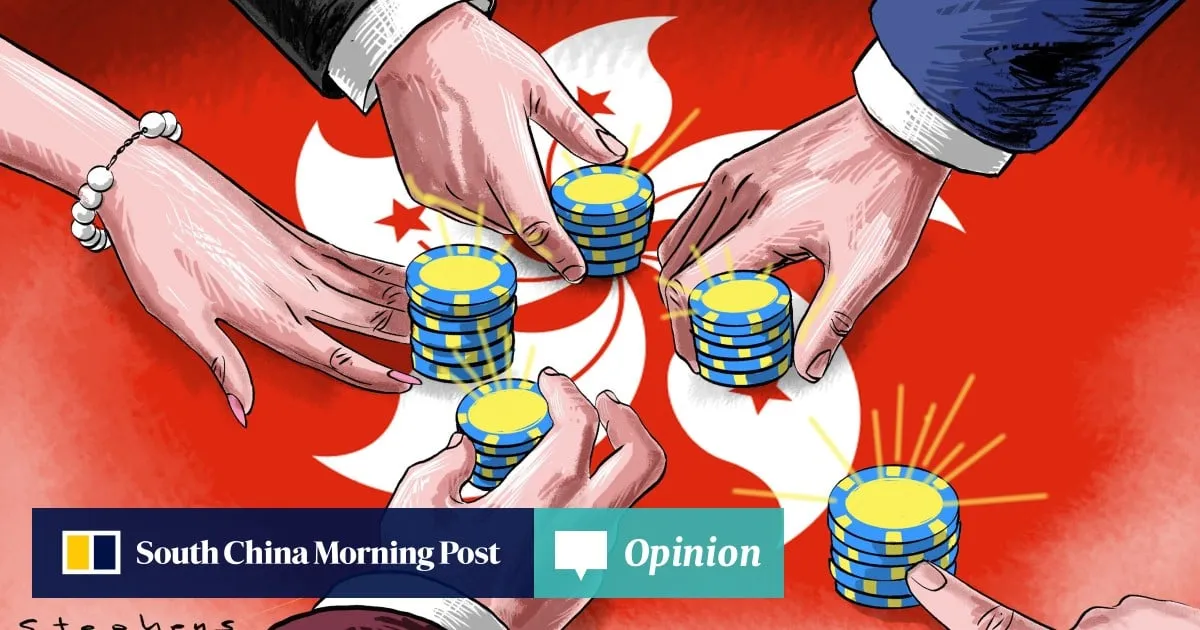
Former governor Chris Patten once said nobody ever profited from betting against Hong Kong. Anybody wagering against its “one country, two systems” policy will undoubtedly be out of pocket.Since 1997, the policy has been the city’s lodestar. While the post-reunification settlement was repeatedly challenged, most notably during the 2019 social unrest, Hong Kong has emerged stronger. The Basic Law sustained it throughout and Beijing’s support was unwavering.With national security legislation, Hong Kong’s capitalist system and way of life are secure. Last year, its economy grew by 3.5 per cent while the number of foreign and mainland Chinese companies rose by 11 per cent to 11,070. Hong Kong is taking full advantage of the “high degree of autonomy” promised under the Basic Law. It is nothing if not an international city and attempts to paint it as “just another Chinese city” are delusional.The Basic Law guarantees its right to “maintain and develop relations and conclude and implement agreements with foreign states and regions and relevant international organisations” including in finance, trade, shipping, communications, culture and tourism. Its architects envisioned a global city, and so it has proved.At the recent 19th Asian Financial Forum, Chief Executive John Lee Ka-chiu’s message was that Hong Kong is thinking big, seizing opportunities and reaching out to Asia. He wants to “boost our status as an international financial centre”, including by deepening the equity market, expanding the bond market and advancing the asset and wealth management sector. With more than 400 companies in the initial public offering pipeline, the city is collaborating with the Shanghai Gold Exchange on a gold trading ecosystem.Whenever the limits of the city’s autonomy were tested, the central authorities kept the train on the tracks. The Basic Law stipulates that Hong Kong comes “directly under the central people’s government”, and no country could tolerate regional legislators seeking to undermine national objectives, subvert the government’s work and collaborate with foreign powers to endanger national security. The late Deng Xiaoping envisaged “patriots ruling Hong Kong”; problems arose when this was disregarded.
SRCSouth China Morning Post
LANGEN
LEANCenter-Right
WORDS337
ENT9
THU · 2026-02-05 · 01:30 GMTBRIEF NSR-2026-0205-13463
NSR-2026-0205-13463Opinion·EN·Economic Impact
Those betting on Hong Kong’s bright future have backed a winner
This article argues that Hong Kong has thrived under the "one country, two systems" policy since 1997, despite challenges like the 2019 unrest. The Basic Law and Beijing's support have been crucial to Hong Kong's stability and economic growth, with the economy growing 3.5% last year and foreign companies increasing by 11%.
Grenville CrossSouth China Morning PostFiled 2026-02-05 · 01:30 GMTLean · Center-RightRead · 2 min
South China Morning PostFIG 01
Reading time
2min
Word count
337words
Sources cited
2cited
Entities identified
9entities
Quality score
100%
§ 01
Briefing Summary
AI-generatedNEWSAR · AI
This article argues that Hong Kong has thrived under the "one country, two systems" policy since 1997, despite challenges like the 2019 unrest. The Basic Law and Beijing's support have been crucial to Hong Kong's stability and economic growth, with the economy growing 3.5% last year and foreign companies increasing by 11%. Hong Kong is leveraging its autonomy to maintain its status as an international financial center, as highlighted by Chief Executive John Lee Ka-chiu at the recent Asian Financial Forum. The city is actively expanding its financial markets and collaborating with Shanghai on gold trading. The article emphasizes that Beijing has consistently upheld the Basic Law and intervened when necessary to ensure national security and stability, as envisioned by Deng Xiaoping's principle of "patriots ruling Hong Kong."
Confidence 0.90Sources 2Claims 5Entities 9
§ 02
Article analysis
Model · rule-basedFraming
Economic Impact
Political Strategy
Tone
Measured
AI-assessed
CalmNeutralAlarmist
Factuality
0.40 / 1.00
Mixed
LowHigh
Sources cited
2
Limited
FewMany
§ 03
Key claims
5 extracted01
Former governor Chris Patten once said nobody ever profited from betting against Hong Kong.
quoteChris Patten
Confidence
1.00
02
Chief Executive John Lee Ka-chiu wants to “boost our status as an international financial centre”.
quoteJohn Lee Ka-chiu
Confidence
1.00
03
The number of foreign and mainland Chinese companies in Hong Kong rose by 11 per cent to 11,070 last year.
statisticArticle
Confidence
0.90
04
Hong Kong's economy grew by 3.5 per cent last year.
statisticArticle
Confidence
0.90
05
Hong Kong is taking full advantage of the “high degree of autonomy” promised under the Basic Law.
factualArticle
Confidence
0.60
§ 04
Full report
2 min read · 337 words§ 05
Entities
9 identifiedKey playerOppositionContextPositiveNeutralNegative
Locations4
§ 06
Keywords & salience
9 termshong kong
1.00
one country, two systems
0.90
basic law
0.80
national security legislation
0.70
international financial centre
0.60
high degree of autonomy
0.50
economic growth
0.50
foreign companies
0.40
asian financial forum
0.40
§ 07
Topic connections
Interactive graph Network visualization showing 51 related topics
View Full Graph Person Organization Location Event|Click node to navigate|Edge numbers = shared articles