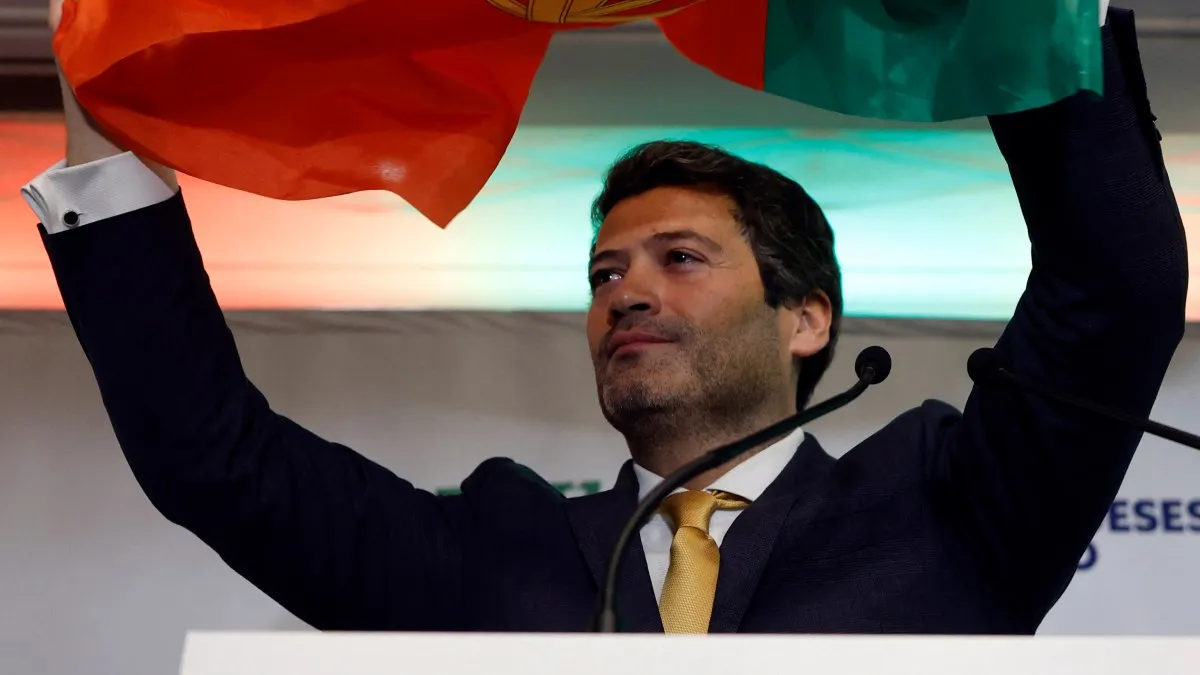
In the tourist haven of the Algarve, disaffected locals are embracing the far right as the cost of living rises.The leader of Chega (Enough) party, far-right candidate Andre Ventura, waves a Portuguese flag as he addresses supporters on the night of Portugal's presidential election's first round in Lisbon on January 18, 2026 (File/AFP)Reporting from PortugalPublished On 7 Feb 2026The Algarve, Portugal – After fierce storms that brought days of torrential rain, the sun is finally out in Portugal’s Algarve.In the coastal town of Portimao, cafe terraces are busy with people enjoying a respite from the bad weather. In nearby Albufeira, tourists, mostly from northern Europe in search of winter warmth, stroll on the sandy beach. The ocean is gleaming; the cliffs are topped with lush vegetation.Recommended Stories list of 3 itemslist 1 of 3Socialist, far-right candidates head to presidential run-off in Portugallist 2 of 3One man killed, girl missing as Storm Leonardo hits Portugal and Spainlist 3 of 3Portugal’s parliament approves far-right party’s bill to ban face veilsend of listBut behind the idyllic scenery is an increasingly disaffected population that may be on the cusp of embracing Portugal’s first right-wing nationalist president since the country’s dictatorship ended half a century ago.The Algarve has long been a popular destination for holidaymakers, and tourism fuels much of the region’s economy. But it also pushes up housing prices and the cost of living, and attracts a high number of foreign workers. Some residents say they are fed up with the situation. Others will tell you wistfully that the Algarve is not what it once was.Outside a supermarket in Albufeira, a man tells Al Jazeera he knows people who can barely pay their rent because salaries are so low. Another says that the Algarve and Portugal need change and new leadership.The sense for many people here is that politicians in Lisbon are disconnected from the struggles of people outside of the capital. It is partly why the Algarve has become a stronghold for Andre Ventura’s far-right Chega party. Its anti-establishment and anti-immigration message resonates with voters here who feel unheard and unseen by mainstream parties.A former TV football commentator, Ventura founded Chega, which means “Enough”, seven years ago. Since then, Chega’s made large gains in a region that has become a springboard for its leader’s ambitions, including the presidency.Ventura is in the second round of the presidential run-off vote on February 8. He is the first populist candidate in Portuguese history to make it that far. Ventura may well believe that momentum is on his side.In the 2024 parliamentary elections, Chega grew to become the main opposition to the centre-right government of Luis Montenegro. Its rapid rise has shaken a political landscape long dominated by socialists and liberals. It has also rattled opponents and critics who believed Portugal was immune to the far-right surge seen elsewhere in Europe.In Portimao and Albufeira, Ventura’s campaign billboards tower over roads and roundabouts. He is also a regular on TV shows and prolific on social media, much like Donald Trump, whom Ventura admires. Like the United States president, Ventura rails against immigration and immigrants. He has even been sanctioned by Portuguese courts for discriminatory comments.Not everyone in the Algarve would welcome a Ventura presidency. At the Timing temporary employment agency in Albufeira, people come looking for work, mainly in the region’s many hotels and restaurants. Most are from outside Portugal.Al Jazeera spoke with Tariq Ahmed and Saidul Islam Said from Bangladesh, and Gurjeet Singh from India. They work during the holiday season to save money. All say they like Portugal.When asked whether they worry about Chega’s rhetoric, Saidul says he is aware of it but isn’t concerned for now. He says that every country has its problems and that he stays focused on work, not politics.The agency has thousands of workers on its books, and about 70 percent come from abroad, says manager Ricardo Mariano. They work hard and are welcome, he says. He insists the Algarve could not function without immigrant labour and says neither could the rest of Portugal.The country faces worker shortages in several industries. Portugal has a long tradition of emigration, and a lack of affordable housing, jobs and low wages mean young Portuguese people continue to seek opportunities abroad.Successive socialist and liberal governments are viewed by some as having failed to reverse the trend. Nevertheless, it is a veteran socialist politician who faces Ventura in the presidential race. Antonio Jose Seguro has served as an MP, a junior minister and a member of the European Parliament.He had retired from politics to teach but returned with a mission, saying he wanted to unite an increasingly divided country and defend Portugal’s institutions. Seguro says voters will have to choose between democracy and radicalism.Opinion polls suggest Seguro could win, and several politicians from across the political spectrum are urging their supporters to rally behind him and block a Ventura victory. The presidential role is largely ceremonial, but it has the power to dissolve parliament or veto laws.Back in Portimao, Chega MP Joao Graca is out campaigning for Ventura. He’s come to a food market wearing a suit jacket over a T-shirt printed with Ventura’s portrait.He weaves through the stalls, chatting to sellers and shoppers. More than a dozen supporters chant behind him, enthusiastically handing out Chega pens and bags. The reception for them is noteworthy in that it is universally warm.For some Portuguese voters, a Ventura win would be a disaster, widening divisions in society and destroying Portugal’s image as one of Europe’s most tolerant nations, but for Graca, it would be the best thing that could happen to the country. Portugal, he tells Al Jazeera, needs Ventura.
SRCAl Jazeera
LANGEN
LEANCenter
WORDS942
ENT6
SAT · 2026-02-07 · 08:56 GMTBRIEF NSR-2026-0207-14191
NSR-2026-0207-14191News Report·EN·Political Strategy
Reporter’s Notebook: Portugal’s far right surges in presidential election
The article reports on the rising support for the far-right Chega party in Portugal's Algarve region, as of February 7, 2026. Fueled by economic anxieties, including rising cost of living and housing prices exacerbated by tourism and foreign workers, some residents feel disconnected from the Lisbon government.
Natacha ButlerAl JazeeraFiled 2026-02-07 · 08:56 GMTLean · CenterRead · 4 min
Al JazeeraFIG 01
Reading time
4min
Word count
942words
Sources cited
2cited
Entities identified
6entities
Quality score
100%
§ 01
Briefing Summary
AI-generatedNEWSAR · AI
The article reports on the rising support for the far-right Chega party in Portugal's Algarve region, as of February 7, 2026. Fueled by economic anxieties, including rising cost of living and housing prices exacerbated by tourism and foreign workers, some residents feel disconnected from the Lisbon government. This discontent has made the Algarve a stronghold for Chega and its leader, Andre Ventura, who is now in the second round of the presidential election. Ventura's anti-establishment and anti-immigration message resonates with voters who feel unheard by mainstream parties. Chega, founded seven years prior, has seen significant gains in the region, using it as a base for Ventura's presidential ambitions.
Confidence 0.90Sources 2Claims 5Entities 6
§ 02
Article analysis
Model · rule-basedFraming
Political Strategy
Economic Impact
Tone
Measured
AI-assessed
CalmNeutralAlarmist
Factuality
0.70 / 1.00
Factual
LowHigh
Sources cited
2
Limited
FewMany
§ 03
Key claims
5 extracted01
Chega grew to become the main opposition to the centre-right government of Luis Montenegro in 2024.
factualAl Jazeera
Confidence
1.00
02
Ventura is in the second round of the presidential run-off vote on February 8.
factualAl Jazeera
Confidence
1.00
03
The Algarve has long been a popular destination for holidaymakers, and tourism fuels much of the region’s economy.
factualAl Jazeera
Confidence
0.90
04
Some residents say they are fed up with the situation [rising cost of living].
quoteAl Jazeera
Confidence
0.90
05
The Algarve has become a stronghold for Andre Ventura’s far-right Chega party.
factualAl Jazeera
Confidence
0.80
§ 04
Full report
4 min read · 942 words§ 05
Entities
6 identifiedKey playerOppositionContextPositiveNeutralNegative
Organizations1
§ 06
Keywords & salience
9 termsfar right
1.00
portugal
0.90
presidential election
0.80
algarve
0.70
andre ventura
0.60
cost of living
0.60
anti-immigration
0.50
chega party
0.50
tourism
0.40
§ 07
Topic connections
Interactive graph Network visualization showing 42 related topics
View Full Graph Person Organization Location Event|Click node to navigate|Edge numbers = shared articles