Thailand’s border war with Cambodia has fuelled an election campaign as nationalistic sentiments surge in the country.Foreign Minister Sihasak Phuangketkeow, of the Bhumjaithai Party, delivers a speech during a campaign rally in advance of the February 8 elections [Maxim Shemetov/Reuters]Published On 7 Feb 2026As Thailand prepares to vote on Sunday in a nationwide election, the country’s months-long border dispute with Cambodia continues to cast a shadow over election proceedings.Brief but deadly armed clashes in May last year on a disputed section of the Thai-Cambodia border escalated into the deadliest fighting in a decade between the two countries, killing dozens of people and displacing hundreds of thousands.Recommended Stories list of 4 itemslist 1 of 4Thailand election 2026: What are the main parties? What do polls suggest?list 2 of 4As Thailand votes, can the reformist People’s Party break the cycle?list 3 of 4Ancient Khmer temples scarred by Thailand-Cambodia conflictlist 4 of 4In US ally Thailand, feelings of betrayal after Trump’s visa freezeend of listFallout from the conflict toppled the government of Thailand’s Prime Minister Paetongtarn Shinawatra – daughter of the billionaire populist leader Thaksin Shinawatra – before bringing Prime Minister Anutin Charnvirakul to power in September.Now, while the fighting may have ceased, the conflict remains an emotive topic for Thais and a means for Anutin to rally support for his conservative Bhumjaithai Party as a no-nonsense prime minister, unafraid to flex his country’s military muscle when required, analysts say.“Anutin’s party is positioning itself as the party that’s really willing to take the initiative on the border conflict,” said Napon Jatusripitak, an expert in Thai politics at the ISEAS-Yusof Ishak Institute in Singapore.“It’s a party that has taken the strongest stance on the issue and the most hawkish,” Napon said of the recent military operations.Anutin had good reason to focus on the conflict with Cambodia in his election campaign. The fighting created a surge in nationalist sentiment in Thailand during two rounds of armed conflict in July and December, while the clashes also inflicted reputational damage on Anutin’s rivals in Thai politics.Chief among those who suffered on the political battlefield was the populist Pheu Thai Party, the power base of Thailand’s former prime minister Thaksin and his family.Pheu Thai sustained a major hit to its popularity in June when a phone call between its leader, then-Thai Prime Minister Paetongtarn, and the strongman of Cambodian politics, Hun Sen, was made public.In the June 15 call, Paetongtarn referred to Hun Sen, an erstwhile friend of her father, as “uncle” and promised to “take care” of the issue after the first early clashes between Thai and Cambodian troops, according to Reuters news agency.For factions in Thailand’s politics and Thai people, Paetongtarn’s deference to Hun Sen was beyond the pale of acceptable behaviour for a prime minister, especially as she appeared to also criticise Thailand’s military – a major centre of power in a nation of more than 70 million people.Hun Sen later admitted to leaking the call and claimed it was in the interest of “transparency,” but it led to the collapse of Paetongtarn’s government. She was then sacked by the constitutional court at the end of August last year, paving the way for Anutin to be voted in as Thailand’s leader by parliament the following month.The border conflict with Cambodia has given a major boost to Thailand’s armed forces at a time of “growing popular discontent with the military’s involvement in politics, and with the conservative elite”, said Neil Loughlin, an expert in comparative politics at City St George’s, University of London.Anutin’s government focused its political messaging when fighting on the border re-erupted in early December. Days later, he dissolved parliament in preparation for the election.“Bhumjaithai has leaned into patriotic, nationalist messaging,” said Japhet Quitzon, an associate fellow with the Southeast Asia programme at the Center for Strategic and International Studies (CSIS) in Washington, DC.“Anutin himself has promised to protect the country at campaign rallies, signalling strength in the face of ongoing tensions with Cambodia. He has vowed to retaliate should conflict re-emerge and will continue protecting Thai territorial integrity,” Quitzon said.‘War against the scam army’During the fighting, Thailand took control of several disputed areas on the border and shelled Cambodian casino complexes near the boundary, which it claimed were being used by Cambodia’s military.Bangkok later alleged some of the casino complexes, which have ties to Cambodian elites, were being used as centres for online fraud – known as cyber scams – a major problem in the region, and that Thai forces were also carrying out a “war against the scam army” based in Cambodia.Estimates by the World Health Organization say the conflict killed 18 civilians in Cambodia and 16 in Thailand, though media outlets put the overall death toll closer to 149, before both sides signed their most recent ceasefire in late December.While the fighting has paused for now, its impact continues to reverberate across Thai politics, said the ISEAS-Yusof Ishak Institute’s Napon.Pheu Thai is still reeling from the leaked phone call between Paetongtarn and Hun Sen, while another Thai opposition group, the People’s Party, has been forced to temper some of its longstanding positions demanding reform in the military, Napon said.Former Prime Minister Paetongtarn Shinawatra shakes hands with Pheu Thai Party supporters during a campaign event in Bangkok [Patipat Janthong/Reuters]“[The People’s Party] vowed to abolish the military’s conscription and to cut the military’s budget, but what the border conflict with Cambodia did was to elevate the military’s popularity to heights not seen in longer than a decade since the 2014 coup,” Napon told Al Jazeera.“Its main selling point used to be reform of the military, but after the conflict it seems to be a liability,” Napon continued.The party has now shifted its criticism from the military as an institution to specific generals, and turned its focus back to reviving the economy, which is expected to grow just 1.8 percent this year, according to the state-owned Krungthai Bank.In the past two weeks, that messaging seems to be hitting home, Napon said, with the People’s Party once again leading at the polls despite a different platform from 2023.“It will be very different from the previous election,” Napon said.“Right now, there’s no military in the picture, so it’s really a battle between old and new,” he added.
SRCAl Jazeera
LANGEN
LEANCenter
WORDS1 041
ENT10
SAT · 2026-02-07 · 15:24 GMTBRIEF NSR-2026-0207-14250
NSR-2026-0207-14250News Report·EN·Political Strategy
Will pro-military message bring Thailand’s ‘most hawkish’ party to power?
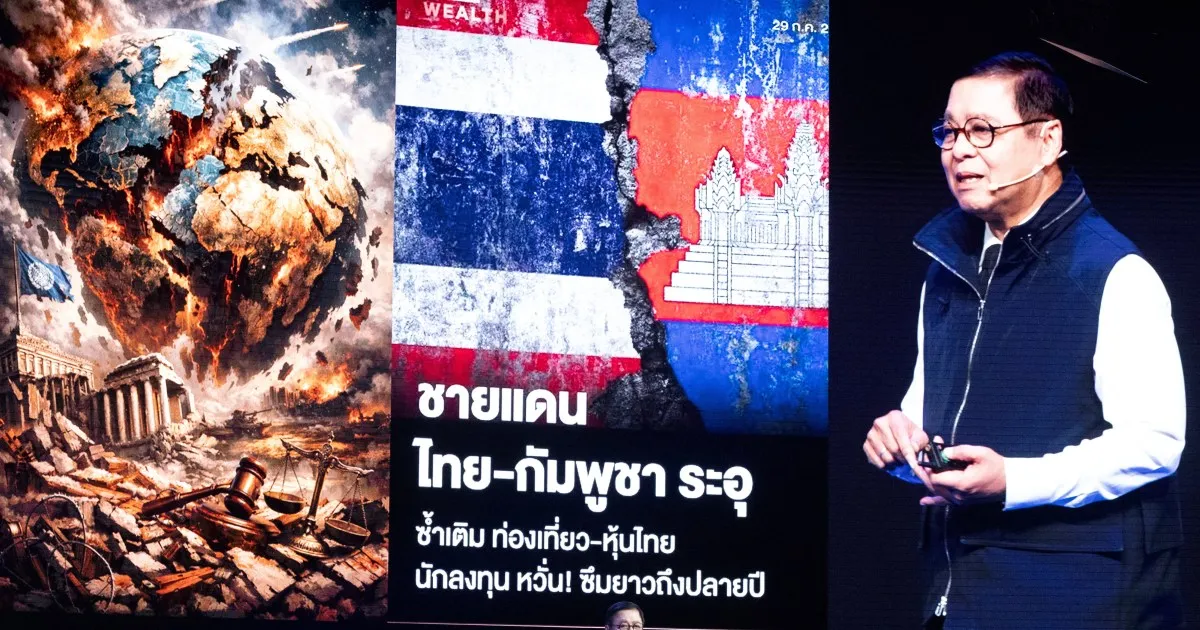
As Thailand prepares for national elections, the ongoing border dispute with Cambodia is a key issue. Deadly clashes in 2025 led to a change in government, with Anutin Charnvirakul becoming Prime Minister.
Erin HaleAl JazeeraFiled 2026-02-07 · 15:24 GMTLean · CenterRead · 5 min
Al JazeeraFIG 01
Reading time
5min
Word count
1 041words
Sources cited
1cited
Entities identified
10entities
Quality score
100%
§ 01
Briefing Summary
AI-generatedNEWSAR · AI
As Thailand prepares for national elections, the ongoing border dispute with Cambodia is a key issue. Deadly clashes in 2025 led to a change in government, with Anutin Charnvirakul becoming Prime Minister. Anutin's Bhumjaithai Party is leveraging the conflict and rising nationalistic sentiment in its election campaign, presenting itself as a strong, pro-military force. Analysts say the party has taken the most hawkish stance on the border issue. The conflict has damaged the reputation of rival parties, particularly the Pheu Thai Party, making the border dispute a significant factor influencing the upcoming election.
Confidence 0.90Sources 1Claims 5Entities 10
§ 02
Article analysis
Model · rule-basedFraming
Political Strategy
National Security
Tone
Measured
AI-assessed
CalmNeutralAlarmist
Factuality
0.70 / 1.00
Factual
LowHigh
Sources cited
1
Limited
FewMany
§ 03
Key claims
5 extracted01
Anutin’s party is positioning itself as the party that’s really willing to take the initiative on the border conflict.
quoteNapon Jatusripitak, expert in Thai politics
Confidence
1.00
02
Brief but deadly armed clashes in May last year on a disputed section of the Thai-Cambodia border escalated into the deadliest fighting in a decade.
factual
Confidence
1.00
03
Thailand prepares to vote on Sunday in a nationwide election.
factual
Confidence
1.00
04
Pheu Thai sustained a major hit to its popularity in June when a phone call between its leader, then-Thai Prime Minister Paetongtarn, and the strongman of Cambodian politics, Hun Sen, was made public.
factual
Confidence
0.90
05
The country’s months-long border dispute with Cambodia continues to cast a shadow over election proceedings.
factual
Confidence
0.90
§ 04
Full report
5 min read · 1 041 words§ 05
Entities
10 identifiedKey playerOppositionContextPositiveNeutralNegative
People4
Organizations4
§ 06
Keywords & salience
9 termsthailand election
0.90
border conflict
0.80
nationalistic sentiment
0.70
bhumjaithai party
0.70
cambodia
0.60
military
0.60
anutin charnvirakul
0.50
hawkish
0.50
thai politics
0.40
§ 07
Topic connections
Interactive graph Network visualization showing 51 related topics
View Full Graph Person Organization Location Event|Click node to navigate|Edge numbers = shared articles