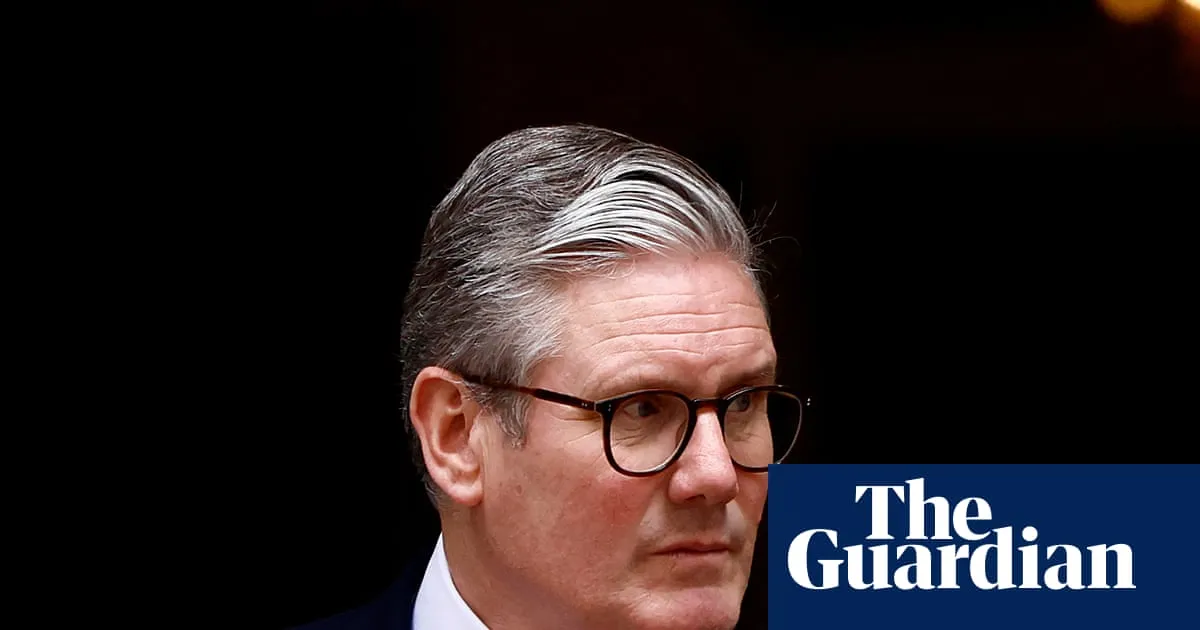
On Monday morning, the prime minister was preparing to reset relations with MPs after the resignation of his chief aide, Morgan McSweeney.Just before midday, news broke that Tim Allen, Keir Starmer’s director of communications, had resigned. By lunchtime, it emerged that Anas Sarwar, Labour’s leader in Scotland, was preparing to hold a press conference calling on Starmer to stand down.The intention was to spark a mutiny. But by late afternoon, cabinet ministers were emerging one by one to back the prime minister. For now, his position appears secure.Helen Pidd recounts a whirlwind 24 hours in which the prime minister fought to save his career. Photograph: Benjamin Cremel/AFP/Getty Images
SRCThe Guardian - World News
LANGEN
LeanCenter-Left
WORDS108
ENT6
TUE · 2026-02-10 · 03:00 GMTBRIEF NSR-2026-0210-14878
NSR-2026-0210-14878News Report·EN·Political Strategy
Starmer survives – but for how long? – podcast
Keir Starmer's position as prime minister appears secure after a 24-hour period marked by rapid succession of resignations and defections from his party. The turmoil began with the resignation of Tim Allen, Starmer's director of communications, on Monday morning.
Presented by Helen Pidd; produced by Natalie Ktena and Tom Glasser; the executive producer is Maz EbtehajThe Guardian - World NewsFiled 2026-02-10 · 03:00 GMTLean · Center-LeftRead · 1 min
The Guardian - World NewsFIG 01
Reading time
1min
Word count
108words
Sources cited
2cited
Entities identified
6entities
NEWSAR · AI
Keir Starmer's position as prime minister appears secure after a 24-hour period marked by rapid succession of resignations and defections from his party. The turmoil began with the resignation of Tim Allen, Starmer's director of communications, on Monday morning. As the day progressed, Anas Sarwar, Labour's leader in Scotland, announced plans to hold a press conference calling for Starmer's resignation. However, by late afternoon, several cabinet ministers had publicly backed the prime minister, countering Sarwar's efforts to spark a mutiny within the party. The swift shift in momentum suggests that Starmer's support base remains intact, at least for now. Despite the challenges, Starmer's leadership appears to have weathered the initial storm.
Confidence 0.85Sources 2Claims 4Entities 6
Framing
Political Strategy
Conflict
Tone
Measured
AI-assessed
CalmNeutralAlarmist
Factuality
0.70 / 1.00
Factual
LowHigh
Sources cited
2
Limited
FewMany
01
Cabinet ministers were emerging one by one to back the prime minister.
factualnull
Confidence
1.00
02
Anas Sarwar, Labour’s leader in Scotland, was preparing to hold a press conference calling on Starmer to stand down.
factualnull
Confidence
1.00
03
Tim Allen, Keir Starmer’s director of communications, had resigned.
factualnull
Confidence
1.00
04
Morgan McSweeney resigned as prime minister's chief aide.
factualnull
Confidence
1.00
§ 04
Full report
1 min read · 108 wordsKey playerOppositionContextPositiveNeutralNegative
People4
Organizations1
Locations1
uk government
0.90
uk politics
0.90
labour leadership
0.80
keir starmer
0.80
party politics
0.70
labour party
0.70
cabinet ministers
0.60
§ 07
Connections
Who appears together in the newsIn this articleWider coverageLine weight = articles in common
Laying out network…
Strongest ties articles in common
- 380
- 78
- 57
- 38
- 37
- 35
Recurring context not named in this article
- LUnited Kingdomlinks 6
- PAndy Burnhamlinks 6
- PNigel Faragelinks 5
- LEnglandlinks 5
- OReform UKlinks 5
- LUnited Stateslinks 5
- PPeter Mandelsonlinks 5
- PJeffrey Epsteinlinks 5