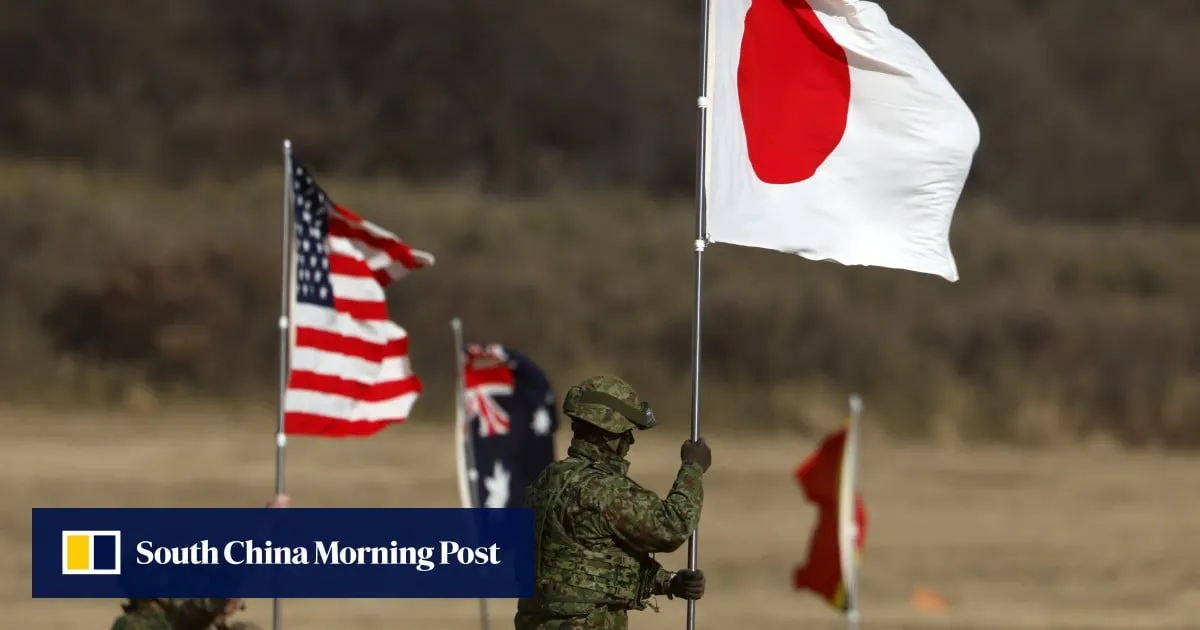
North Korea’s claim that Japan has breached a diplomatic “red line” by deepening security partnerships is less about Tokyo’s defence moves than about Prime Minister Sanae Takaichi’s decisive victory at the polls, analysts say, as a weaker mandate could have pushed her to negotiate with Pyongyang.With a commanding majority secured in Sunday’s election, Takaichi now faces fewer domestic constraints as she signals plans to expand Japan’s defence cooperation with Western partners and potentially push ahead with constitutional revision.North Korea has responded with unusually sharp rhetoric. In commentary published on Wednesday headlined “Plotting to expand military alliances aimed at perfecting war capabilities”, the state-run Rodong Sinmun newspaper argued that, as a former wartime aggressor, Japan was barred from possessing a military or forming security alliances.The article also repeated Pyongyang’s frequently used line that Japan was planning to resurrect its empire on mainland Asia, accusing Tokyo of “creating an environment favourable to realising its ambitions of overseas invasion by strengthening military collusion with global powers”.Plaintiffs, their lawyers and supporters gather outside the Tokyo-district-court" class="entity-link entity-organization" data-entity-id="20675" data-entity-type="organization">Tokyo District Court after it ordered North Korea to pay damages for luring Japanese to the North with false promises on January 26. Photo: APFurther underlining Pyongyang’s hostility towards Takaichi’s conservative administration, another state-run media ran a feature on Tuesday about atrocities allegedly committed by Japanese invaders in the 1592 Imjin War. Korea Central News Agency’s article reiterated descriptions of “brigandish” Japanese carrying out “unethical crimes … so hideous that they can never be pardoned”.
SRCSouth China Morning Post
LANGEN
LEANCenter-Right
WORDS245
ENT8
FRI · 2026-02-13 · 00:00 GMTBRIEF NSR-2026-0213-15821
NSR-2026-0213-15821News Report·EN·National Security
Why Takaichi’s Japan election victory has sparked North Korea’s ‘childish’ fury
North Korea has reacted strongly to Japanese Prime Minister Sanae Takaichi's recent election victory, accusing Japan of breaching a diplomatic "red line" by strengthening security partnerships. Analysts suggest this response is less about Japan's defense moves and more about Takaichi's strengthened mandate, which reduces the likelihood of negotiations with Pyongyang.
Julian RyallSouth China Morning PostFiled 2026-02-13 · 00:00 GMTLean · Center-RightRead · 1 min
South China Morning PostFIG 01
Reading time
1min
Word count
245words
Sources cited
1cited
Entities identified
8entities
Quality score
100%
§ 01
Briefing Summary
AI-generatedNEWSAR · AI
North Korea has reacted strongly to Japanese Prime Minister Sanae Takaichi's recent election victory, accusing Japan of breaching a diplomatic "red line" by strengthening security partnerships. Analysts suggest this response is less about Japan's defense moves and more about Takaichi's strengthened mandate, which reduces the likelihood of negotiations with Pyongyang. North Korean state media has published articles criticizing Japan's military alliances and accusing it of planning to resurrect its empire in Asia. These articles also reiterate past grievances, referencing alleged atrocities committed by Japanese forces during the Imjin War in 1592. The increased criticism signals Pyongyang's hostility towards Takaichi's conservative administration and its plans to expand defense cooperation.
Confidence 0.90Sources 1Claims 5Entities 8
§ 02
Article analysis
Model · rule-basedFraming
National Security
Political Strategy
Tone
Measured
AI-assessed
CalmNeutralAlarmist
Factuality
0.70 / 1.00
Factual
LowHigh
Sources cited
1
Limited
FewMany
§ 03
Key claims
5 extracted01
North Korea accuses Japan of planning to resurrect its empire on mainland Asia.
quoteNorth Korea
Confidence
1.00
02
North Korea claims Japan breached a diplomatic “red line” by deepening security partnerships.
quoteNorth Korea
Confidence
1.00
03
Takaichi signals plans to expand Japan’s defence cooperation with Western partners.
factualnull
Confidence
0.90
04
Takaichi's victory gives her fewer domestic constraints to pursue her policies.
factualnull
Confidence
0.80
05
Analysts say North Korea's reaction is due to Takaichi's decisive election victory.
factualanalysts
Confidence
0.80
§ 04
Full report
1 min read · 245 words§ 05
Entities
8 identifiedKey playerOppositionContextPositiveNeutralNegative
Organizations3
§ 06
Keywords & salience
9 termsnorth korea
0.90
japan
0.90
election victory
0.80
sanae takaichi
0.70
security partnerships
0.70
defence cooperation
0.60
military alliances
0.50
constitutional revision
0.50
wartime aggressor
0.40
§ 07
Topic connections
Interactive graph Network visualization showing 51 related topics
View Full Graph Person Organization Location Event|Click node to navigate|Edge numbers = shared articles