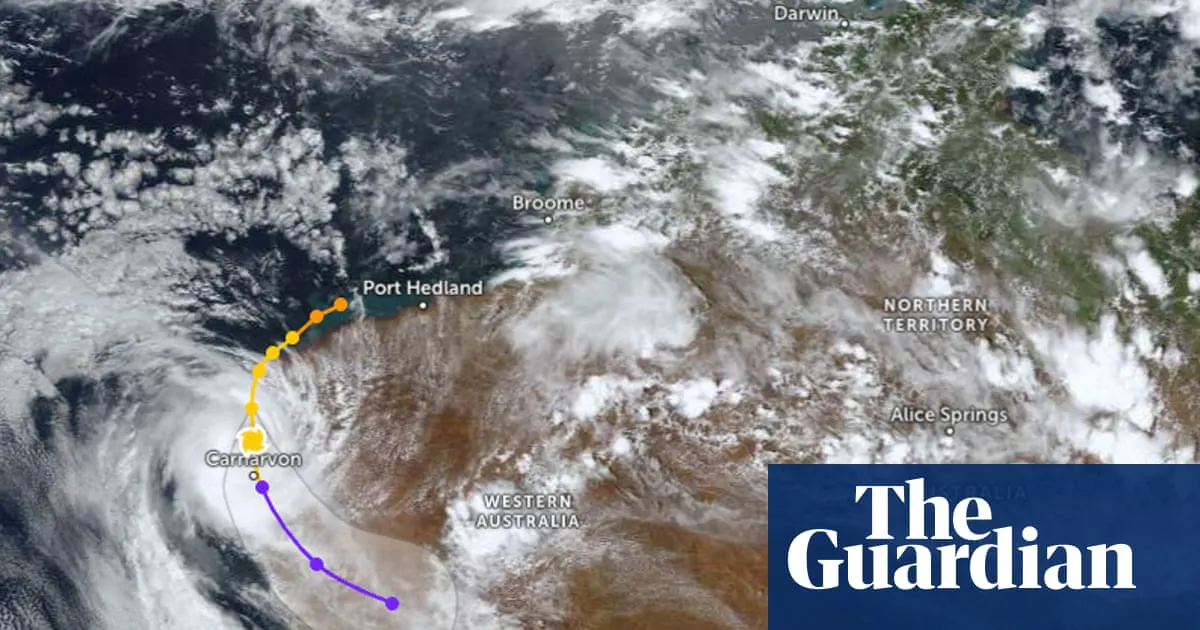
Tropical Cyclone Mitchell hit the coast of Western Australia last week. It initially developed as a weak tropical low over the Northern Territory in early February, then tracked eastwards over Western Australia’s Kimberley region and eventually reached the Indian Ocean.Fuelled by warm waters, Mitchell intensified into a tropical cyclone and moved south-west, hugging the coast of Western Australia and eventually deepened to a category three storm.Affected coastal regions experienced destructive winds, abnormally high tides and heavy rainfall last weekend. Mitchell eventually made landfall in westernmost Western Australia, weakening back to a tropical low. Lingering moisture from Mitchell fuelled further stormy weather across southern Western Australia on Monday, bringing heavy rain and wind damage to farms and businesses.Cyclone Genzani made landfall on Madagascar’s east coast on Tuesday, causing major flooding and damaging hundreds of buildings, with winds of 155mph recorded near the city centre of Toamasina. Genzani weakened after making landfall but continued to sweep across the island, killing at least nine people and displacing more than 1,300. Genzani is the second cyclone to hit Madagascar this year, after Tropical Cyclone Fytia just 10 days ago, which killed 14 people and displaced 31,000.Meanwhile, the blocked weather pattern across Europe, which brought the very wet start to the year for the west and south-west of the continent, has had the opposite effect farther north-east. Under the influence of persistent high pressure over northern Europe, dry and cold conditions prevailed in large parts of Scandinavia, the Baltics and eastern Europe, resulting in the continent’s coldest January since 2010.Two notable cold snaps produced the most extreme conditions. The first struck in early January in the far north, where temperatures plummeted to less than -40C. Tulppio in Finland recorded -42.8C on 9 January, followed by -41.5C in Karasjok in Norway on the 11 January. Flights were cancelled as deicing failed, leaving tourists stranded, while high demand for heating drove record electricity use.The second extreme cold spell developed in late January, again initially affecting northern Scandinavia, with temperatures falling to -35.6C in Utsjoki in Finland. Then, as low pressure pushed in from the east in early February, this Arctic air sank south into eastern Europe. In Lithuania temperatures fell to -34.3C on 1 February, while north-eastern Poland recorded a minimum of -27.7C, about 20C below the climate average. The prolonged cold spell allowed parts of the Baltic Sea to freeze over, with thick ice sheets forming in the Bay of Gdansk. This winter 38 people in Poland have died from hypothermia, double last year’s tally.
SRCThe Guardian - World News
LANGEN
LEANCenter-Left
WORDS419
ENT10
FRI · 2026-02-13 · 10:29 GMTBRIEF NSR-2026-0213-15921
NSR-2026-0213-15921News Report·EN·Environmental
Weather tracker: Tropical Cyclone Mitchell hits Western Australia
Tropical Cyclone Mitchell impacted Western Australia last week, developing from a tropical low and intensifying into a category three storm fueled by warm waters. Coastal regions experienced destructive winds, high tides, and heavy rainfall before Mitchell weakened upon landfall.
Brendan Wood and Claire Jones for MetDeskThe Guardian - World NewsFiled 2026-02-13 · 10:29 GMTLean · Center-LeftRead · 2 min
The Guardian - World NewsFIG 01
Reading time
2min
Word count
419words
Sources cited
0cited
Entities identified
10entities
Quality score
100%
§ 01
Briefing Summary
AI-generatedNEWSAR · AI
Tropical Cyclone Mitchell impacted Western Australia last week, developing from a tropical low and intensifying into a category three storm fueled by warm waters. Coastal regions experienced destructive winds, high tides, and heavy rainfall before Mitchell weakened upon landfall. Cyclone Genzani struck Madagascar's east coast on Tuesday, causing major flooding, damaging buildings, and resulting in casualties and displacement; it is the second cyclone to hit Madagascar this year. Meanwhile, a blocked weather pattern in Europe led to a very wet start to the year in the west and southwest, and dry, cold conditions in Scandinavia, the Baltics, and eastern Europe. Two cold snaps in January brought extreme temperatures as low as -42.8C in Finland, disrupting travel and driving record electricity use.
Confidence 0.90Claims 5Entities 10
§ 02
Article analysis
Model · rule-basedFraming
Environmental
Human Interest
Tone
Measured
AI-assessed
CalmNeutralAlarmist
Factuality
0.90 / 1.00
Factual
LowHigh
Sources cited
0
No named sources
FewMany
§ 03
Key claims
5 extracted01
This winter 38 people in Poland have died from hypothermia, double last year’s tally.
statistic
Confidence
1.00
02
Tulppio in Finland recorded -42.8C on 9 January.
statistic
Confidence
1.00
03
Genzani is the second cyclone to hit Madagascar this year, after Tropical Cyclone Fytia just 10 days ago.
factual
Confidence
1.00
04
Cyclone Genzani made landfall on Madagascar’s east coast on Tuesday, causing major flooding and damaging hundreds of buildings.
factual
Confidence
1.00
05
Tropical Cyclone Mitchell hit the coast of Western Australia last week.
factual
Confidence
1.00
§ 04
Full report
2 min read · 419 words§ 05
Entities
10 identifiedKey playerOppositionContextPositiveNeutralNegative
Locations9
§ 06
Keywords & salience
9 termstropical cyclone
0.90
western australia
0.80
extreme cold
0.70
heavy rainfall
0.60
madagascar
0.60
destructive winds
0.50
stormy weather
0.50
cold snaps
0.40
high pressure
0.40
§ 07
Topic connections
Interactive graph No topic relationship data available yet. This graph will appear once topic relationships have been computed.