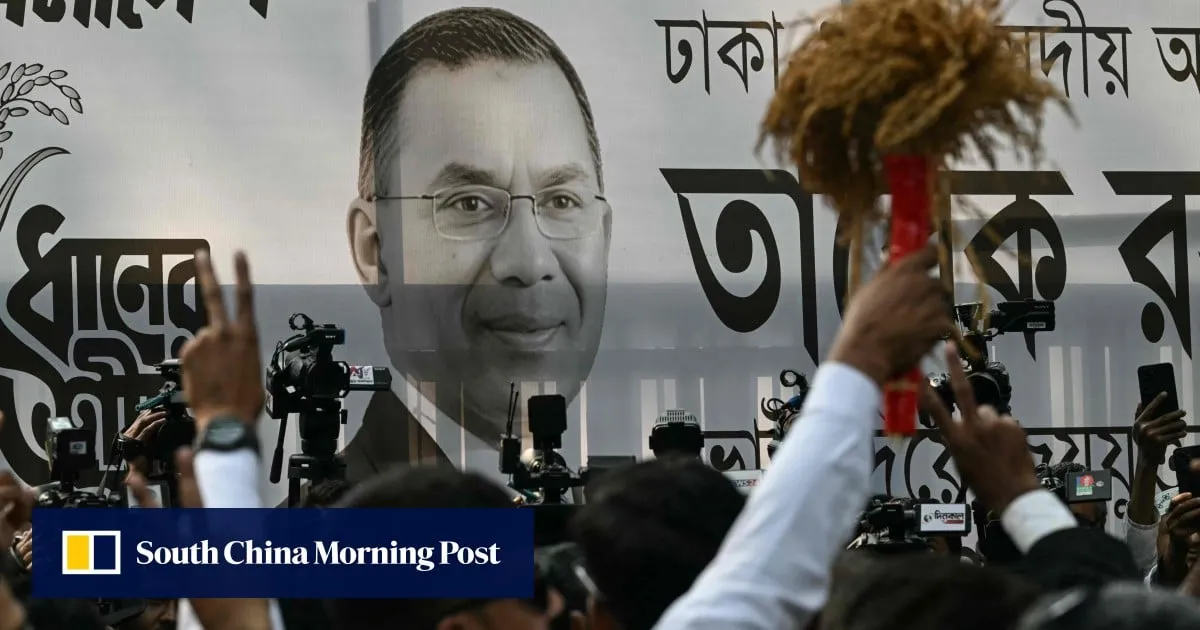
The Bangladesh Nationalist Party (BNP) is poised to recalibrate Dhaka’s ties with India, Pakistan and China, while also addressing US concerns over Beijing’s growing influence in South Asia, following its decisive victory in Thursday’s general election.Analysts said this foreign policy agenda aligned with the party’s focus on economic development, even as it aimed to restore law and order after months of political unrest.The BNP said on social media that it had won enough parliamentary seats to form a government on its own. Its key rival, Bangladesh Jamaat-e-Islami, however, raised concerns over a delay in announcing official results.Led by 60-year-old Tarique Rahman, the BNP is expected to return to power for the first time in nearly two decades. Rahman, who has lived in self-exile in London for 17 years, is set to become prime minister upon his return. He is the son of former leader Khaleda Zia, who died in December.Bangladesh’s interim government leader Muhammad Yunus was appointed after student-led protests in 2024 toppled former prime minister Sheikh Hasina and her Awami League government.Since Hasina fled to India following her ousting, Bangladesh has urged New Delhi to extradite her. In November, a Bangladeshi tribunal sentenced Hasina to death in absentia for crimes against humanity linked to the crackdown on protesters.
SRCSouth China Morning Post
LANGEN
LEANCenter-Right
WORDS209
ENT10
FRI · 2026-02-13 · 11:08 GMTBRIEF NSR-2026-0213-15973
NSR-2026-0213-15973News Report·EN·Political Strategy
Bangladesh’s BNP set to balance ties with regional powers, US to avoid crossing ‘red line’
Following a decisive victory in Thursday's general election, Bangladesh's BNP, led by Tarique Rahman, is set to form a government for the first time in nearly two decades. The BNP aims to balance relations with regional powers like India, Pakistan, and China, while addressing US concerns about China's influence in South Asia.
Biman MukherjiSouth China Morning PostFiled 2026-02-13 · 11:08 GMTLean · Center-RightRead · 1 min
South China Morning PostFIG 01
Reading time
1min
Word count
209words
Sources cited
1cited
Entities identified
10entities
Quality score
100%
§ 01
Briefing Summary
AI-generatedNEWSAR · AI
Following a decisive victory in Thursday's general election, Bangladesh's BNP, led by Tarique Rahman, is set to form a government for the first time in nearly two decades. The BNP aims to balance relations with regional powers like India, Pakistan, and China, while addressing US concerns about China's influence in South Asia. This foreign policy approach aligns with the party's focus on economic development and restoring law and order after recent political unrest. The BNP's victory follows the ousting of former Prime Minister Sheikh Hasina and her Awami League government in 2024. Hasina, who fled to India, has been sentenced to death in absentia by a Bangladeshi tribunal.
Confidence 0.90Sources 1Claims 5Entities 10
§ 02
Article analysis
Model · rule-basedFraming
Political Strategy
Diplomatic
Tone
Mixed Tone
AI-assessed
CalmNeutralAlarmist
Factuality
0.70 / 1.00
Factual
LowHigh
Sources cited
1
Limited
FewMany
§ 03
Key claims
5 extracted01
A Bangladeshi tribunal sentenced Hasina to death in absentia in November.
factual
Confidence
1.00
02
Tarique Rahman has lived in self-exile in London for 17 years.
factual
Confidence
1.00
03
Bangladesh Jamaat-e-Islami raised concerns over a delay in announcing official results.
quoteBangladesh Jamaat-e-Islami
Confidence
0.90
04
The BNP said on social media that it had won enough parliamentary seats to form a government on its own.
quoteBNP
Confidence
0.90
05
The BNP is poised to recalibrate Dhaka’s ties with India, Pakistan and China.
predictionAnalysts
Confidence
0.70
§ 04
Full report
1 min read · 209 words§ 05
Entities
10 identifiedKey playerOppositionContextPositiveNeutralNegative
People4
Organizations2
§ 06
Keywords & salience
10 termstarique rahman
0.90
economic development
0.80
election results
0.80
bangladesh politics
0.80
beijing influence
0.70
regional influence
0.70
us-china relations
0.60
south asia politics
0.60
india-pakistan relations
0.50
law and order
0.50
§ 07
Topic connections
Interactive graph Network visualization showing 51 related topics
View Full Graph Person Organization Location Event|Click node to navigate|Edge numbers = shared articles