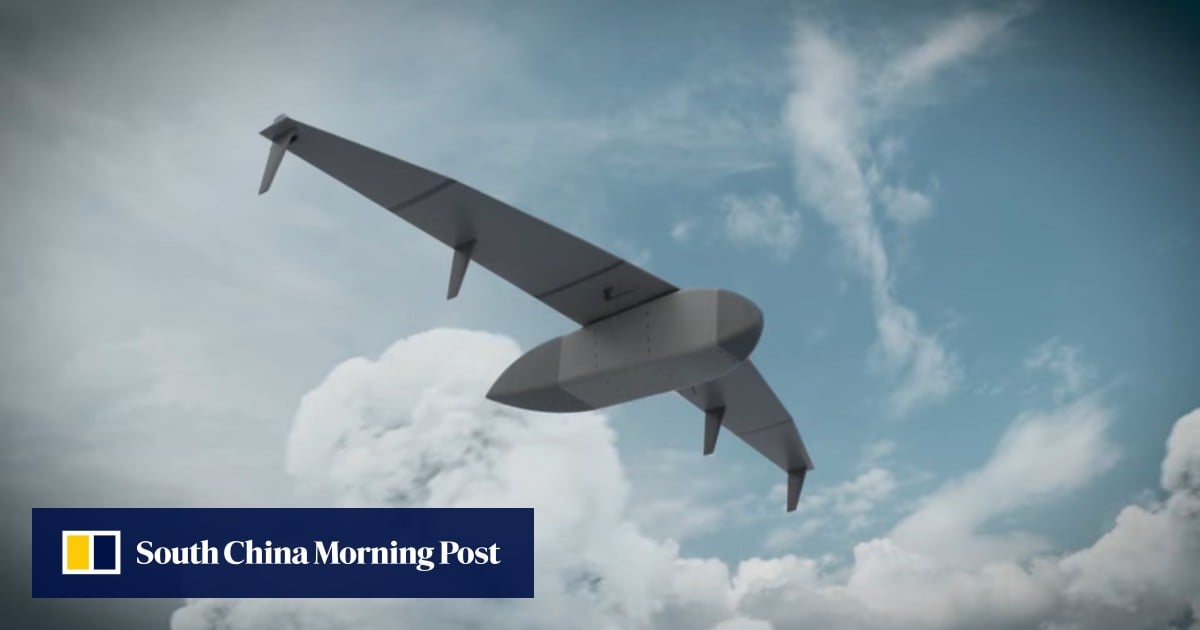
A German defence company has successfully tested an uncrewed cargo glider designed to support frontline military units, a technology that Tokyo is also exploring as it looks to bolster its capabilities in islands to the far southwest of the Japanese archipelago.Munich-based Hensoldt said on February 5 that it had marked a milestone in the development of its High-Altitude Drop Infiltrating System, or HADIS, after releasing a scale version of the uncrewed vehicle from a transport aircraft during trials last autumn.HADIS is an uncrewed, autonomous, disposable, remotely operated carrier system designed to be released from a transport aircraft to deliver cargo – everything that a military unit would require, from medical equipment to munitions – to troops on the ground.The glider can be steered remotely, is silent and therefore difficult to detect because it has no engine and can more accurately deliver cargoes over further distances.Tests have shown that while a conventional parachute drop can typically deliver supplies to a distance of 50km from the point of release and cannot be guided, the HADIS system can accurately transport cargo of up to 500kg over a range of 120km.The ability to launch HADIS a long way behind the front line also helps protect the relatively slow and less well-defended cargo aircraft that are tasked with carrying out resupply operations.
SRCSouth China Morning Post
LANGEN
LEANCenter-Right
WORDS217
ENT4
SAT · 2026-02-14 · 03:00 GMTBRIEF NSR-2026-0214-16149
NSR-2026-0214-16149News Report·EN·National Security
Can German stealth cargo gliders boost Japan’s remote island defence and logistics?
Hensoldt, a German defense company, has successfully tested its High-Altitude Drop Infiltrating System (HADIS), an uncrewed cargo glider designed for military resupply. The HADIS is launched from transport aircraft and can deliver up to 500kg of supplies, including medical equipment and munitions, to troops on the ground.
Julian RyallSouth China Morning PostFiled 2026-02-14 · 03:00 GMTLean · Center-RightRead · 1 min
South China Morning PostFIG 01
Reading time
1min
Word count
217words
Sources cited
1cited
Entities identified
4entities
Quality score
100%
§ 01
Briefing Summary
AI-generatedNEWSAR · AI
Hensoldt, a German defense company, has successfully tested its High-Altitude Drop Infiltrating System (HADIS), an uncrewed cargo glider designed for military resupply. The HADIS is launched from transport aircraft and can deliver up to 500kg of supplies, including medical equipment and munitions, to troops on the ground. Unlike conventional parachute drops with a 50km range, HADIS can accurately deliver cargo over 120km and is difficult to detect due to its silent, engine-free operation. Japan is exploring similar technologies to improve logistics and defense capabilities on its remote southwestern islands. The HADIS system offers a safer and more precise method of resupply, protecting cargo aircraft and delivering essential supplies further behind enemy lines.
Confidence 0.90Sources 1Claims 5Entities 4
§ 02
Article analysis
Model · rule-basedFraming
National Security
Technology
Tone
Measured
AI-assessed
CalmNeutralAlarmist
Factuality
0.80 / 1.00
Factual
LowHigh
Sources cited
1
Limited
FewMany
§ 03
Key claims
5 extracted01
A conventional parachute drop can typically deliver supplies to a distance of 50km from the point of release and cannot be guided.
factual
Confidence
1.00
02
HADIS can accurately transport cargo of up to 500kg over a range of 120km.
statistic
Confidence
1.00
03
Hensoldt said on February 5 that it had marked a milestone in the development of its High-Altitude Drop Infiltrating System, or HADIS.
quoteHensoldt
Confidence
1.00
04
Tokyo is exploring uncrewed cargo gliders to bolster its capabilities in islands to the far southwest of the Japanese archipelago.
factual
Confidence
1.00
05
A German defence company has successfully tested an uncrewed cargo glider.
factual
Confidence
1.00
§ 04
Full report
1 min read · 217 words§ 05
Entities
4 identifiedKey playerOppositionContextPositiveNeutralNegative
Organizations1
§ 06
Keywords & salience
9 termscargo glider
1.00
hadis
0.90
remote island defence
0.80
military logistics
0.70
defence technology
0.60
uncrewed vehicle
0.60
resupply operations
0.50
hensoldt
0.50
autonomous systems
0.50
§ 07
Topic connections
Interactive graph Network visualization showing 50 related topics
View Full Graph Person Organization Location Event|Click node to navigate|Edge numbers = shared articles