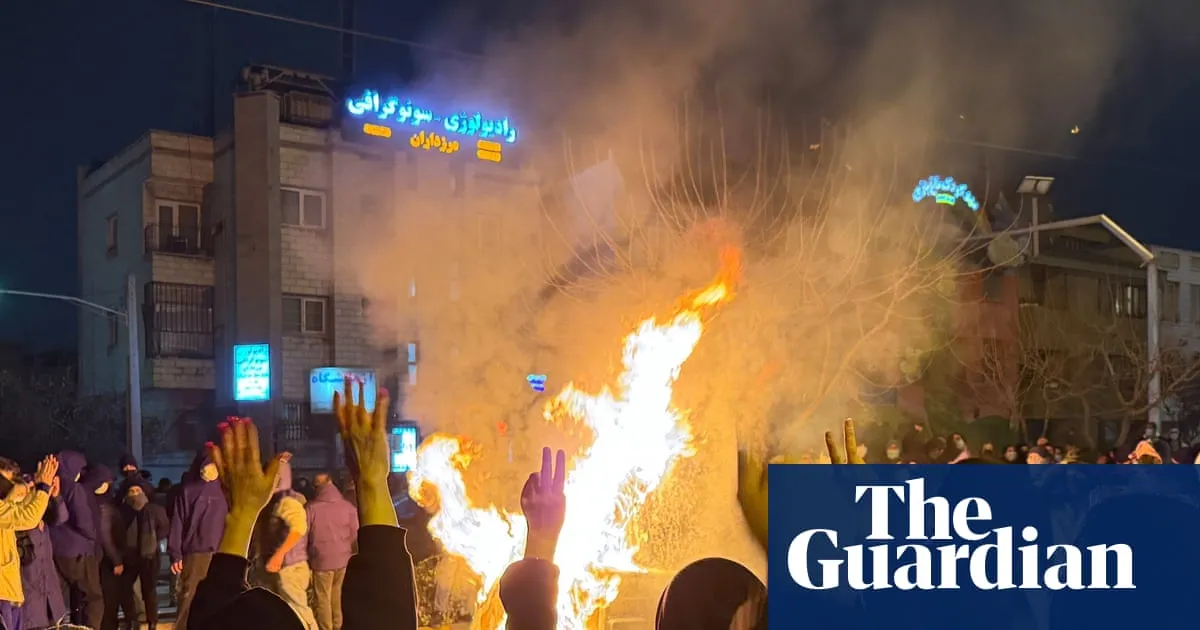
For nearly two decades, the US quietly funded a global effort to keep the internet from splintering into fiefdoms run by authoritarian governments. Now that money is seriously threatened and a large part of it is already gone, putting into jeopardy internet freedoms around the world.Managed by the US state department and the US Agency for Global Media, the programme – broadly called Internet Freedom – funds small groups all over the world, from Iran to China to the Philippines, who built grassroots technologies to evade internet controls imposed by governments. It has dispensed well over $500m (£370m) in the past decade, according to an analysis by The Guardian, including $94m in 2024.Then came Doge, Donald Trump’s department of government efficiency, tasked with reducing the size of US government agencies and initiatives. Career employees who staffed Internet Freedom resigned or were sacked in 2025 as part of larger reductions. Many of its programmes were cut permanently; its main granting office issued no money in 2025. The Open Technology Fund (OTF), a nonprofit that works with the government to direct roughly half of this money, won a lawsuit to get some of this funding restored in December; the Trump administration is now appealing against that ruling.Meanwhile, the Trump administration this January withdrew from the Freedom Online Coalition, a global alliance set up by the US to defend digital rights.The cuts risk curtailing technologies that helped Iranians to coordinate during recent anti-government protests, and that allowed videos and images of massacres to reach the outside world. They could have a major impact in other nations too; the efforts of groups in Myanmar to get past the junta’s “digital iron curtain”, and the ability of users in China to avoid surveillance.“The programme was effectively gutted,” said a former US official. “They didn’t issue any grants this year.”“I would like to live in a world where a single US programme is not such a linchpin, such a load-bearing programme, but it has been. It’s hard to deny it has been,” said one digital rights expert based in Europe who has worked on a number of projects for Internet Freedom.To report this story, The Guardian spoke to 10 people with knowledge of Internet Freedom, including six of its grantees, and reviewed documents related to its operations and budget.The US Department of State has been approached for comment. The OTF declined to comment.The purpose of the programme was to make it extremely difficult to do what North Korea has accomplished through decades of censorship efforts, and what Iran succeeded in doing this January during a bloody crackdown on anti-government protests: cut an entire population off from the global internet.The US aimed to circumvent this by funding groups capable of building and harnessing technologies that evade such restrictions and censorship. These include familiar tools, such as the encrypted messaging service Signal and the Tor browser, which allows users to be anonymous online.They also include far more powerful tools. Advanced circumvention technologies can make it possible to get past even extremely powerful censorship regimes – to leap the firewall in China, for example, or to obtain international news in Iran even when mobile phone networks are out, through methods like satellite datacasting, in which data is broadcast in a similar way to television signal.Another technology has allowed Iranians to securely communicate during recent anti-government protests, alerting each other to shootings and police presence, even as the rest of the internet has been cut off.The soft-power aim behind this was to keep the internet as it is: mostly accessible, mostly a global commons. The groups it funded made censorship costly and difficult. “When you challenge censorship, the long-term effect is that oppressive governments must either open their internet, or to go in the direction of North Korea,” said the former US official.“But because each of those options is costly for them, they’ll keep trying to censor their networks so as to have the economic benefits of the internet without the drawbacks of freedom of speech and access to information. So the fight continues.”“Internet Freedom funded the development of many of the censorship-circumvention technologies that millions of people around the world depend on to maintain a link to the outside world,” said Doug Madory, an internet infrastructure expert who works closely with many of these groups.Their makers are “often operating on a shoestring and passion. They believe in the cause. There’s no fancy offices, they’re working out of their apartments. It’s not a moneyed industry.”Most recipients of this money keep it quiet; it’s a dangerous thing, in some places, to take state department funds. But even as the funds run out, more and more organisations – journalists, activists, and civil society – are seeking out these technologies, and the groups that build them. Censorship regimes are getting worse worldwide.“It’s a massive blow. The need is bigger and other funding is also gone. Organisations that provide these tools are being overwhelmed,” said the digital rights expert. “It’s not sustainable.”Some of the groups working on these technologies have laid off staff; others are continuing without pay. A few hold out hope that some money can be restored – although they fear that the Trump administration might more overtly politicise its aims. While a recent appropriations bill contains a budget line for Internet Freedom, it names no specific programmes as recipients of this cash.Others say they’re existing in a brief grace period as the rest of the funds run out.“Everybody’s just waiting right now, to be honest. But at the same time, wait at your own risk,” said an Iranian technologist funded through Internet Freedom.Meanwhile, censorship tech is growing cheaper and easier to access. Chinese companies have exported sophisticated middleboxes – devices that sit on network cables and allow authorities to monitor internet traffic – to countries across Africa and Asia in the past year. These allow regimes such as Iran’s to fine-tune their control over the domestic internet – allowing commerce to continue, for example, while communication is throttled.Several recipients of the US money expressed hope that Europe might fund these technologies in the future; some have already petitioned EU officials for funding.The cuts “make it easier to build a ‘digital iron curtain’. It makes it easier for the Kremlin to put Russians in a digital information bubble that reinforces specific narratives about people outside of Russia. This makes it easier for China to do this. For Iran to do this,” one said.
SRCThe Guardian - World News
LANGEN
LEANCenter-Left
WORDS1 071
ENT9
THU · 2026-02-19 · 05:00 GMTBRIEF NSR-2026-0219-17448
NSR-2026-0219-17448News Report·EN·Human Rights
US funding for global internet freedom ‘effectively gutted’
The US government's Internet Freedom program, which funded global efforts to circumvent internet censorship in countries like Iran, China, and Myanmar, has been significantly curtailed. Managed by the State Department and the US Agency for Global Media, the program distributed over $500 million in the past decade to organizations developing technologies to bypass government controls.
Aisha DownThe Guardian - World NewsFiled 2026-02-19 · 05:00 GMTLean · Center-LeftRead · 5 min
The Guardian - World NewsFIG 01
Reading time
5min
Word count
1 071words
Sources cited
10cited
Entities identified
9entities
Quality score
100%
§ 01
Briefing Summary
AI-generatedNEWSAR · AI
The US government's Internet Freedom program, which funded global efforts to circumvent internet censorship in countries like Iran, China, and Myanmar, has been significantly curtailed. Managed by the State Department and the US Agency for Global Media, the program distributed over $500 million in the past decade to organizations developing technologies to bypass government controls. In 2025, the Trump administration's "Doge" initiative led to staff reductions and program cuts, halting grant issuance. While the Open Technology Fund (OTF) successfully sued to restore some funding, the administration is appealing. The US also withdrew from the Freedom Online Coalition. These cuts jeopardize technologies used to bypass censorship and surveillance, potentially impacting internet freedom globally.
Confidence 0.90Sources 10Claims 5Entities 9
§ 02
Article analysis
Model · rule-basedFraming
Human Rights
Political Strategy
Tone
Mixed Tone
AI-assessed
CalmNeutralAlarmist
Factuality
0.70 / 1.00
Factual
LowHigh
Sources cited
10
Well sourced
FewMany
§ 03
Key claims
5 extracted01
The Trump administration this January withdrew from the Freedom Online Coalition.
factual
Confidence
1.00
02
The Internet Freedom program has dispensed well over $500m in the past decade, including $94m in 2024.
statisticthe Guardian
Confidence
1.00
03
The US has funded a global effort to keep the internet from splintering for nearly two decades.
factual
Confidence
1.00
04
Career employees who staffed Internet Freedom resigned or were sacked in 2025 as part of larger reductions.
factual
Confidence
0.90
05
The programme was effectively gutted. They didn’t issue any grants this year.
quotea former US official
Confidence
0.80
§ 04
Full report
5 min read · 1 071 words§ 05
Entities
9 identifiedKey playerOppositionContextPositiveNeutralNegative
Organizations5
§ 06
Keywords & salience
9 termsinternet freedom
1.00
us funding
0.80
digital rights
0.70
internet controls
0.60
authoritarian governments
0.60
open technology fund
0.50
global internet
0.50
trump administration
0.40
digital surveillance
0.40
§ 07
Topic connections
Interactive graph Network visualization showing 51 related topics
View Full Graph Person Organization Location Event|Click node to navigate|Edge numbers = shared articles