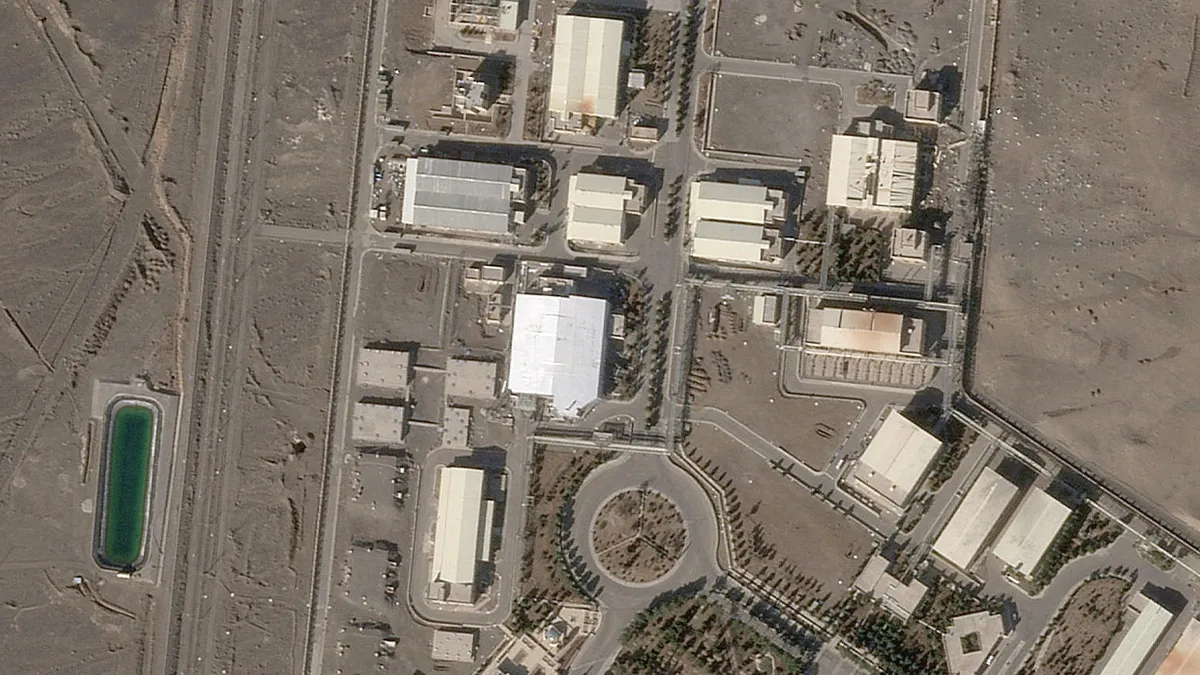
Iran is rebuilding nuclear sites damaged in previous U.S. strikes and "preparing for war," despite engaging in talks with the Trump administration, according to a prominent Iranian opposition figure. Alireza Jafarzadeh, deputy director of the Washington office of the National Council of Resistance of Iran (NCRI), said newly released satellite images also prove the regime has accelerated its efforts to restore its "$2 trillion" uranium enrichment capabilities. "The regime has clearly stepped up efforts to rebuild its uranium enrichment capabilities," Jafarzadeh told Fox News Digital. "It is preparing itself for a possible war by trying to preserve its nuclear weapons program and ensure its protection." Iran SAYS US MUST 'PROVE THEY WANT TO DO A DEAL' ON NUCLEAR TALKS IN GENEVA "That said, the ongoing rebuilding of Iran’s uranium enrichment capabilities is particularly alarming as the regime is now engaged in nuclear talks with the United States," he added. New satellite images released by Earth intelligence monitor, Planet Labs , show reconstruction activity appears to be underway at the Isfahan complex. Isfahan is one of three Iranian uranium enrichment plants targeted in the U.S. military operation known as "Midnight Hammer." The June 22 operation involved coordinated Air Force and Navy strikes on the Fordow, Natanz and Isfahan facilities. US POSITIONS AIRCRAFT CARRIERS, STRIKE PLATFORMS ACROSS MIDDLE EAST AS Iran TALKS SHIFT TO OMAN Despite the damage, the satellite images show Iran has buried entrances to a tunnel complex at the site, according to Reuters. Similar steps were reportedly taken at the Natanz facility, which houses two additional enrichment plants. "These efforts in Isfahan involve rebuilding its centrifuge program and other activities related to uranium enrichment," Jafarzadeh said. The renewed movements come as Iran participated in talks with the U.S. in Geneva. On Thursday, President Donald Trump warned that "bad things" would happen if Iran did not make a deal. While the talks were aimed at curbing Iran's nuclear program in exchange for sanctions relief, Jafarzadeh argues that for the regime, talks would be nothing more than a tactical delay. TRUMP SAYS Iran ALREADY HAS US TERMS AS MILITARY STRIKE CLOCK TICKS "Supreme Leader Ali Khamenei agreed to the nuclear talks as it would give the regime crucial time to avoid or limit the consequences of confrontation with the West," he said. Jafarzadeh also described the regime spending at least "$2 trillion" on nuclear capabilities, which he said "is higher than the entire oil revenue generated since the regime came to power in Iran in 1979." "Tehran is trying to salvage whatever has remained of its nuclear weapons program and quickly rebuild it," he said. "It has heavily invested in the nuclear weapons program as a key tool for the survival of the regime." IRANIAN OFFICIAL SAYS NUCLEAR TALKS WILL CONTINUE AFTER US, TEHRAN NEGOTIATIONS HAD 'A GOOD START' IN OMAN Jafarzadeh is best known for publicly revealing the existence of Iran’s Natanz nuclear site in 2002, which led to inspections by the International Atomic Energy Agency and intensified global scrutiny of Tehran’s nuclear ambitions. "The insistence of the Iranian regime during the nuclear talks on maintaining its uranium enrichment capabilities, while rebuilding its damaged sites, is a clear indication that Supreme Leader Ali Khamenei has no plans to abandon its nuclear weapons program," he said. The National Council of Resistance of Iran, led by Maryam Rajavi, exposed for the first time the nuclear sites in Natanz, Arak, Fordow and more than 100 other sites and projects, Jafarzadeh said, "despite a massive crackdown by the regime on this movement."
SRCFox News - World
LANGEN
LEANCenter-Right
WORDS588
ENT11
FRI · 2026-02-20 · 03:05 GMTBRIEF NSR-2026-0220-17740
NSR-2026-0220-17740News Report·EN·National Security
Iran rebuilding nuclear program despite Trump talks, opposition figure claims
According to Iranian opposition figure Alireza Jafarzadeh, Iran is rebuilding its nuclear program, including uranium enrichment capabilities, despite ongoing talks with the U.S. The claim is supported by newly released satellite images showing reconstruction activity at the Isfahan complex, one of three Iranian uranium enrichment plants targeted in a previous U.S.
Emma BusseyFox News - WorldFiled 2026-02-20 · 03:05 GMTLean · Center-RightRead · 3 min
Fox News - WorldFIG 01
Reading time
3min
Word count
588words
Sources cited
2cited
Entities identified
11entities
Quality score
100%
§ 01
Briefing Summary
AI-generatedNEWSAR · AI
According to Iranian opposition figure Alireza Jafarzadeh, Iran is rebuilding its nuclear program, including uranium enrichment capabilities, despite ongoing talks with the U.S. The claim is supported by newly released satellite images showing reconstruction activity at the Isfahan complex, one of three Iranian uranium enrichment plants targeted in a previous U.S. military operation. Jafarzadeh, deputy director of the NCRI's Washington office, asserts that Iran is burying entrances to tunnel complexes at Isfahan and taking similar steps at the Natanz facility. He believes the regime is preparing for a possible war and using the talks as a tactical delay to avoid confrontation with the West. The U.S. and Iran recently participated in nuclear talks in Geneva, with President Trump warning of consequences if a deal is not reached.
Confidence 0.90Sources 2Claims 5Entities 11
§ 02
Article analysis
Model · rule-basedFraming
National Security
Political Strategy
Tone
Mixed Tone
AI-assessed
CalmNeutralAlarmist
Factuality
0.60 / 1.00
Mixed
LowHigh
Sources cited
2
Limited
FewMany
§ 03
Key claims
5 extracted01
New satellite images show reconstruction activity appears to be underway at the Isfahan complex.
factualPlanet Labs
Confidence
0.90
02
Iran has buried entrances to a tunnel complex at the Isfahan site.
factualReuters
Confidence
0.80
03
Iran is rebuilding nuclear sites damaged in previous U.S. strikes.
factualAlireza Jafarzadeh
Confidence
0.80
04
The regime has accelerated its efforts to restore its uranium enrichment capabilities.
factualAlireza Jafarzadeh
Confidence
0.70
05
Iran is preparing for war.
predictionAlireza Jafarzadeh
Confidence
0.60
§ 04
Full report
3 min read · 588 words§ 05
Entities
11 identifiedKey playerOppositionContextPositiveNeutralNegative
Organizations3
Locations5
§ 06
Keywords & salience
8 termsiran nuclear program
1.00
uranium enrichment
0.90
nuclear talks
0.80
rebuilding nuclear sites
0.70
alireza jafarzadeh
0.60
isfahan
0.50
sanctions relief
0.50
military strike
0.40
§ 07
Topic connections
Interactive graph Network visualization showing 51 related topics
View Full Graph Person Organization Location Event|Click node to navigate|Edge numbers = shared articles