High-level talks with the US administration over the threat of increased tariffs are under way as the UK government says it wants “the best possible deal” for UK companies.Business leaders said they expected the UK to “double down” on the existing Economic Prosperity Deal (EPD) – announced by Donald Trump and Keir Starmer in May last year – rather than walk away.Trump’s deals with about 20 countries, including the UK, the EU, Switzerland, Japan, Lesotho and others, were put in doubt on Friday after the US supreme court ruled that the president’s existing “reciprocal” tariffs were illegal.The ruling infuriated Trump, who on Saturday announced a 15% global tariff on all foreign imports, under the 1974 Trade Act, a different legal framework to the one investigated by the US supreme court.It would potentially mean a 5% increase in the existing 10% tariff for UK exporters and a possible rise for EU exporters, too, as the 15% deal it secured was “inclusive” of previous tariffs and the new tariff is not.The UK education secretary, Bridget Phillipson, admitted on Sunday that UK businesses faced “uncertainty” after the latest developments but insisted in an interview on Sky News that the UK expected its “preferential” trade arrangements with the US to continue.“We, through the work that the prime minister has been leading in engaging with the US government and with President Trump, would hope and expect that to continue, but these discussions are ongoing,” she said.“This is an evolving situation. But, of course, we want to get the best possible deal for British businesses. I understand the uncertainty it does cause for them but they can be assured that we will always be working to make sure they get everything that they need.”The German MEP Bernd Lange, the chair of the international trade committee at the European parliament, suggested a planned vote on the US deal this week would now be postponed.The EU-US deal has been implemented in the US but not yet in the EU, where it needs parliamentary approval.“Pure tariff chaos from the US administration. No one can make sense of it anymore – only open questions and growing uncertainty for the EU and other US trading partners,” Lange wrote in a post on X on Sunday.William Bain, the head of trade policy at the British Chambers of Commerce, said he expected the UK to “double down” and use the latest twist to secure a better long-term deal.He said the US-UK deal struck in May was “never really about the 10% tariff but the carve-outs” that included a 10% tariff on cars – lower than for some other countries – retention of the existing 0% tariff on the UK pharma industry and a promise of a reduction in the 25% steel tariffs, which has yet to materialise.“What the EPD deal did was create a framework for negotiations on other sectors such as auto and steel and aluminium.“The government sees value in keeping the deal, and this will give them the perfect opportunity to try to nail the EPD down with legal text,” Bain said.“My sense is their strategy will be double down on the EPD.”David Henig, the director of the UK trade policy project at the European Centre for International Political Economy, said: “The nature of dealing with this US administration is no deal can be expected to last, so all governments will be working out what to do next, or what the deal actually is.”Under the 1974 Trade Act, the new 15% tariffs can be applied for only 150 days, or until 23 August, when Trump will need Congressional approval to extend.“What if Congress doesn’t approve. Could Trump turn around and say: ‘I’m now going to impose 14% tariffs for the next 150 days,’” Bain said.“But what is different now is that Congress is a player which it wasn’t before, so a whole new route for lobbying by business opens up.”Trump may also look to impose tariffs under section 301 of the 1974 Trade Act, which authorises levies in the event of foreign countries being “discriminatory” or “unreasonable”, Bain said.Lange’s international trade committee, which holds the key to the EU parliamentary process on ratification of the US tariff deal, will meet on Monday to discuss the next moves.Parliament’s international partnerships committee had been due to vote on it on 24 February followed by a final vote by the full parliament in March.
SRCThe Guardian - World News
LANGEN
LEANCenter-Left
WORDS730
ENT11
SUN · 2026-02-22 · 14:15 GMTBRIEF NSR-2026-0222-18299
NSR-2026-0222-18299News Report·EN·Economic Impact
UK in talks with US over ‘best possible deal’ for British firms amid higher tariffs threat
The UK government is in discussions with the US following a US Supreme Court ruling that challenged existing "reciprocal" tariffs, leading to President Trump's announcement of a potential 15% global tariff on all foreign imports. This new tariff could increase costs for UK and EU exporters.
Lisa O’CarrollThe Guardian - World NewsFiled 2026-02-22 · 14:15 GMTLean · Center-LeftRead · 3 min
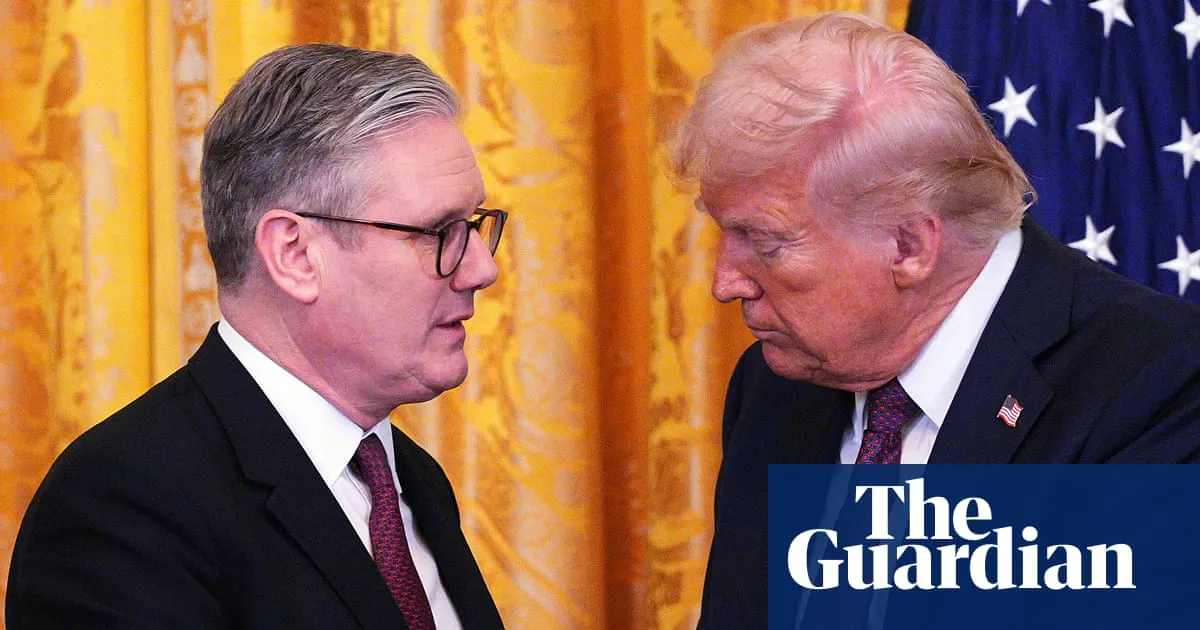
The Guardian - World NewsFIG 01
Reading time
3min
Word count
730words
Sources cited
4cited
Entities identified
11entities
Quality score
100%
§ 01
Briefing Summary
AI-generatedNEWSAR · AI
The UK government is in discussions with the US following a US Supreme Court ruling that challenged existing "reciprocal" tariffs, leading to President Trump's announcement of a potential 15% global tariff on all foreign imports. This new tariff could increase costs for UK and EU exporters. UK Education Secretary Bridget Phillipson acknowledged the uncertainty for British businesses but stated the UK expects its preferential trade arrangements with the US to continue. The UK aims to secure the "best possible deal" for its companies amidst this evolving situation. A planned EU parliamentary vote on the US deal may be postponed due to the uncertainty. Business leaders anticipate the UK will work to strengthen the existing Economic Prosperity Deal with the US.
Confidence 0.90Sources 4Claims 5Entities 11
§ 02
Article analysis
Model · rule-basedFraming
Economic Impact
Political Strategy
Tone
Measured
AI-assessed
CalmNeutralAlarmist
Factuality
0.70 / 1.00
Factual
LowHigh
Sources cited
4
Well sourced
FewMany
§ 03
Key claims
5 extracted01
The EU-US deal has been implemented in the US but not yet in the EU.
factualnull
Confidence
1.00
02
Trump announced a 15% global tariff on all foreign imports, under the 1974 Trade Act.
factualnull
Confidence
1.00
03
UK businesses faced “uncertainty” after the latest developments.
quoteBridget Phillipson, UK education secretary
Confidence
0.90
04
High-level talks with the US administration over the threat of increased tariffs are under way.
factualUK government
Confidence
0.90
05
The government sees value in keeping the EPD deal.
quoteWilliam Bain, British Chambers of Commerce
Confidence
0.80
§ 04
Full report
3 min read · 730 words§ 05
Entities
11 identifiedKey playerOppositionContextPositiveNeutralNegative
People5
§ 06
Keywords & salience
8 termstariffs
1.00
uk-us trade deal
0.90
trade policy
0.70
international trade
0.60
british businesses
0.50
economic prosperity deal
0.50
trade act
0.40
foreign imports
0.40
§ 07
Topic connections
Interactive graph Network visualization showing 51 related topics
View Full Graph Person Organization Location Event|Click node to navigate|Edge numbers = shared articles