A new study aims to jolt Israel’s security and technology establishment into embracing a new post-Oct. 7, 2023, business model that will advance the U.S.-Israel strategic partnership in the heart of the Middle East and across the globe. The Henry Jackson Society study titled "Israel 2048: A Blueprint for a Rising Asymmetric Geopolitical Power" jumps into the future, with a view toward advancing American and Israeli security interests. Co-author of the report, Barak M. Seener, told Fox News Digital that America requires Israel for "its security architecture in the region via the Abraham Accords and, more broadly, will be a force multiplier regarding the technological edge against China." During President Donald Trump’s first term, his administration sealed diplomatic normalization deals between Sunni Gulf and North African countries: Bahrain, United Arab Emirates, Morocco, Sudan and Israel . TRUMP’S AMERICA FIRST STRATEGY BUILDS DETERRENCE THROUGH STRONG US-Israel ALLIANCE, EXPERTS SAY Seener and co-author David Wurmser argue that there is a pressing need to reframe the U.S.–Israel strategic partnership "around technology," and "shift from military aid dependency towards joint R&D and investment in shared technological platforms in defence-tech, AI, quantum computing and next generational warfare capabilities." They wrote, "Israel must prioritize passing negotiated regulations for technology sharing to prevent AI/ quantum technology leakage to China." Seener noted that the Pentagon’s National Defense Strategy (released in January) describes Israel as a strategic military partner. "That has never happened before." He continued, "Israel is not only achieving regional dominance but international power by connecting trade routes and digital connectivity. Israel simply cannot remain in a purely defensive posture and hunker down and react to threats on its borders." Seener said following Israel’s successful air war campaign against the Islamic Republic of Iran in June 2025, "America now wants to be part of this success story. " He argues that President Donald Trump entered on the side of Israel with military attacks because "Israel demonstrated intelligence acumen and military prowess. For the first time, America joined Israel" in the prosecution of a war. TRUMP ADMIN LABELS Israel 'MODEL US ALLY' AHEAD OF MAJOR MILITARY AID TALKS Consequently, Seener said Israel’s " defense technology makes it indispensable for nations." Seener and Wurmser’s 51-page study contains granular information on how the U.S. can strengthen American security and recommend embedding "Israel as a defense-tech and deep-tech power that is indispensable to Western security and global technological competition in supply chains for AI, semiconductors, missile defense, cyber capabilities and critical materials. Israel’s technological dominance must be leveraged to anchor alliances and shape global supply chains." The wobbliness of America’s European partners is also highlighted to show the need for Israel to "Accelerate domestic lines of production of critical military systems, munitions and energy infrastructure to reduce vulnerability to foreign political pressure such as Europe’s growing ambivalence, coupled with episodic constraints on arms transfers," according to the authors. Earlier this month, Britain’s left-leaning government reportedly denied the U.S. military’s use of British bases to strike Iran. Israel is uniquely positioned to help regenerate relations among Western powers, the study notes. According to the authors, there is an opportunity to "use Israel’s defense-tech, quantum computing, AI and cyber capabilities as a tool of statecraft to deepen alliances, deter political isolation and strengthen influence in Europe, the Gulf and Asia." Seener said, "Israel is not a superpower but a geopolitical power that gives nations a force multiplier, and they benefit from Israel as a tech defense nation ."
SRCFox News - World
LANGEN
LEANCenter-Right
WORDS575
ENT10
TUE · 2026-02-24 · 13:29 GMTBRIEF NSR-2026-0224-18857
NSR-2026-0224-18857News Report·EN·National Security
New study proposes major shift in US-Israel strategic partnership approach
A new Henry Jackson Society study proposes a significant shift in the U.S.-Israel strategic partnership, urging a move beyond military aid dependency towards joint research and development in advanced technologies. The study, titled "Israel 2048: A Blueprint for a Rising Asymmetric Geopolitical Power," argues for reframing the relationship around technology, specifically defense-tech, AI, quantum computing, and next-generation warfare capabilities.
Benjamin WeinthalFox News - WorldFiled 2026-02-24 · 13:29 GMTLean · Center-RightRead · 3 min
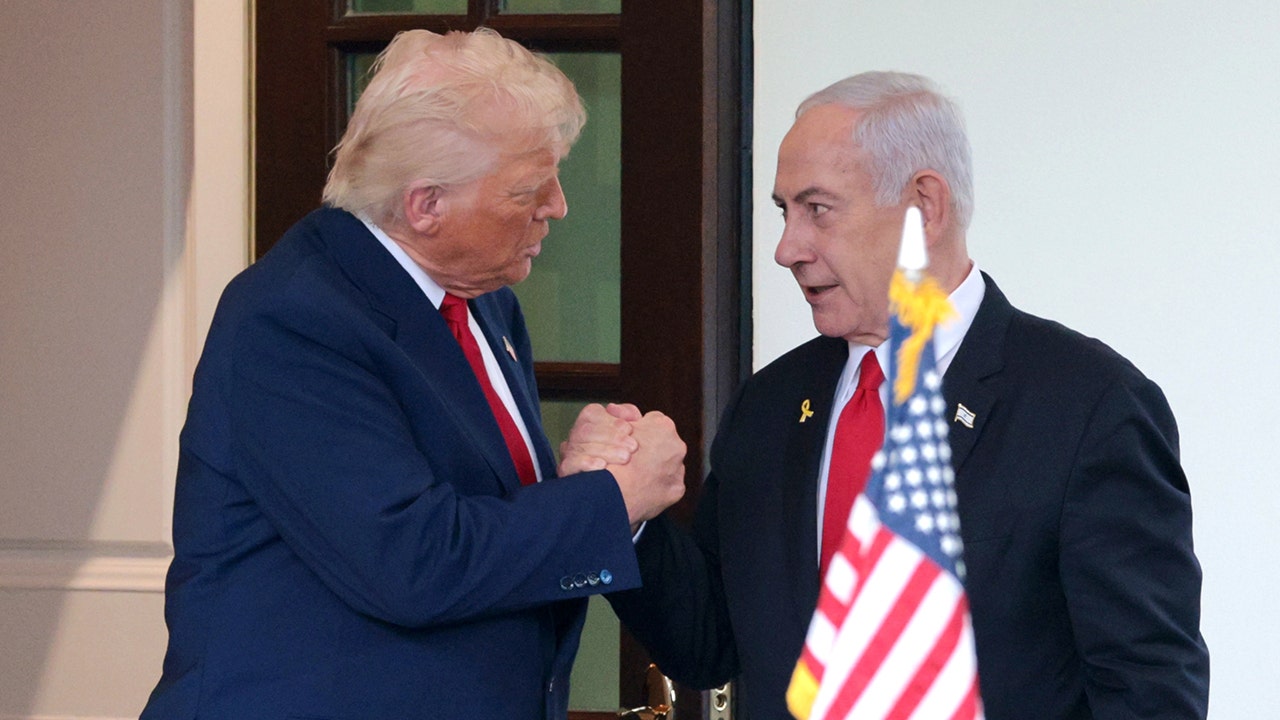
Fox News - WorldFIG 01
Reading time
3min
Word count
575words
Sources cited
1cited
Entities identified
10entities
Quality score
100%
§ 01
Briefing Summary
AI-generatedNEWSAR · AI
A new Henry Jackson Society study proposes a significant shift in the U.S.-Israel strategic partnership, urging a move beyond military aid dependency towards joint research and development in advanced technologies. The study, titled "Israel 2048: A Blueprint for a Rising Asymmetric Geopolitical Power," argues for reframing the relationship around technology, specifically defense-tech, AI, quantum computing, and next-generation warfare capabilities. Authors Barak M. Seener and David Wurmser emphasize the need for Israel to prioritize technology sharing regulations to prevent leakage to China. They highlight Israel's growing regional and international influence through trade routes and digital connectivity, advocating for a more proactive role beyond a purely defensive posture. The study suggests that Israel's demonstrated military capabilities and technological advancements make it an indispensable partner for the U.S. and other nations.
Confidence 0.90Sources 1Claims 5Entities 10
§ 02
Article analysis
Model · rule-basedFraming
National Security
Technology
Tone
Mixed Tone
AI-assessed
CalmNeutralAlarmist
Factuality
0.60 / 1.00
Mixed
LowHigh
Sources cited
1
Limited
FewMany
§ 03
Key claims
5 extracted01
The Pentagon’s National Defense Strategy describes Israel as a strategic military partner.
quoteSeener
Confidence
1.00
02
Israel must prioritize passing negotiated regulations for technology sharing to prevent AI/ quantum technology leakage to China.
quoteSeener and Wurmser
Confidence
0.90
03
There is a pressing need to reframe the U.S.–Israel strategic partnership around technology.
quoteSeener and David Wurmser
Confidence
0.90
04
America requires Israel for its security architecture in the region via the Abraham Accords.
quoteBarak M. Seener
Confidence
0.90
05
Israel is not only achieving regional dominance but international power by connecting trade routes and digital connectivity.
quoteSeener
Confidence
0.70
§ 04
Full report
3 min read · 575 words§ 05
Entities
10 identifiedKey playerOppositionContextPositiveNeutralNegative
Organizations1
Locations7
§ 06
Keywords & salience
10 termsus-israel strategic partnership
1.00
technology
0.90
security
0.80
defense technology
0.70
military aid
0.70
quantum computing
0.60
artificial intelligence
0.60
abraham accords
0.50
china
0.50
middle east
0.40
§ 07
Topic connections
Interactive graph Network visualization showing 51 related topics
View Full Graph Person Organization Location Event|Click node to navigate|Edge numbers = shared articles