Capitulation in the form of a deal will not stave off US aggression. Defiance through regional alliances could.People walk with Iranian national flags near a ballistic missile launch vehicle in Tehran on February 11, 2026 [AFP]Researcher at the Horizon Insights Centre.Published On 24 Feb 2026Last week, American diplomats and their Iranian counterparts sat down in Geneva for yet another round of talks mediated by Oman. The outcome seemed unclear. While the Iranians said “good progress” had been made, the Americans claimed there was “a little progress”. Meanwhile, United States President Donald Trump threatened once again to strike Iran.In recent weeks, there has been a heavy US military build-up in the Middle East in preparation for what many observers see as an imminent attack. In this context, it may be apt to question whether the current negotiations are not simply a tactic to buy time to better prepare for the inevitable.In the face of US military might, some have suggested that Iran’s only option is negotiating an agreement with the US, however unfair it may be. While Iranian military capabilities stand no chance against an army with the world’s biggest budget, accepting capitulation through a debilitating deal that may be broken again by Washington may not necessarily be Tehran’s only choice.There is another way in which Iran can stand up to US bullying and win.The fate of past negotiationsThe ongoing US-Iran talks cannot be viewed in isolation. For Iran, any diplomatic engagement with the US is overshadowed by the legacy of the Joint Comprehensive Plan of Action (JCPOA).Signed by the US, China, Russia, France, the United Kingdom, Germany, the European Union and Iran in 2015, the agreement provided sanctions relief in exchange for full transparency of the Iranian nuclear programme. Tehran accepted the deal even though it had some unfair provisions, including some US sanctions remaining in place.Nevertheless, it fulfilled its obligations – a fact that was repeatedly verified by the International Atomic Energy Agency.In return, however, the US as a signatory did not uphold its end of the deal. In 2018, Trump unilaterally withdrew from the JCPOA and reimposed maximum pressure sanctions aimed at crippling Iran’s economy.It was a stark reminder that American promises are nonbinding. As a leader who has shown no regard for the interests of American allies in pursuit of an “America first” policy, Trump could hardly be expected to respect the interests of American adversaries.However, even if a Democratic president had been in the White House, there would not have been any guarantee that the JCPOA would have remained in place. In the US’s polarised political climate, an American president’s signature is only valid until the next election.For the US, negotiations can also be little more than a facade intended to lull adversaries into a false sense of security. Last year, just as US and Iranian representatives were scheduled to meet in Oman for another round of talks, Israel, a key American ally, launched a massive military campaign against Iran.While the US denied direct involvement, it acknowledged having received prior notice. Given the close ties between the two countries, this prior knowledge strongly implied that the US had given Israel tacit approval for the air attacks.Today, Iran is engaging in negotiations with the US again, and it is being pressured to accept an even more unfair deal. Should it back down and submit to US demands, then Trump – who preys on perceived weakness – would simply move the goalpost. Demands would shift from Iran’s nuclear programme today to its ballistic missiles tomorrow and regime change the day after.The special US relationship with Israel means that Washington is fundamentally hostile to an Iranian government that sees the Israeli state as an enemy. Consequently, Trump’s goal is not to reach a durable agreement but to ensure that Iran can never fully comply with his demands, thereby justifying a permanent campaign of maximum pressure and hostility.In this context and given its recent experience, it would be foolish for Iran to rely on US promises and negotiated agreements.Leverage through strong regional tiesThe current US-Iran standoff is a high-stakes game in which an all-out war is a likely outcome. While the US could achieve an initial victory through overwhelming military superiority, it could also get bogged down fighting a protracted counterinsurgency in Iran’s mountainous terrain.Conversely, while Iran could eventually repel an American invasion – just as its Afghan neighbours did – the country would be reduced to rubble in the process.That does not mean Iran should back down. The Greenland crisis and the China-US trade war have demonstrated that Trump’s propensity for sabre-rattling is tempered by his aversion to losses. Even though the EU and China are far more powerful than Iran, a clear show of resolve could compel Trump to retreat.And Tehran does not have to be alone in its defiance. In its neighbourhood, there are other big players who recognise that another disastrous war led by the US is not in their interests. Iran can and should leverage the regional desire for stability.For years, Iran pursued a policy of confrontation in the region until it realised that carving out a sphere of influence was actually exacerbating its security dilemma. This recognition ultimately led to the historic normalisation of relations with Saudi Arabia in 2023 – a breakthrough facilitated by China, Oman and Iraq – which in turn set in motion a broader detente with other Arab countries.Three years later, that decision is yielding dividends. Notably, Saudi Arabia, Oman, Turkiye and Qatar are lobbying Trump to exercise restraint. Building on this neighbourly diplomacy and investing in developing regional stability and a security architecture could help stave off another major US war in the region.The most important path to peace – and the only means of countering American gunboat diplomacy – does not lie in matching American military might, a contest Iran is destined to lose, but in establishing good relations with its neighbours and accepting regional stability as part of its national security.The views expressed in this article are the author’s own and do not necessarily reflect Al Jazeera’s editorial stance.
SRCAl Jazeera
LANGEN
LEANCenter
WORDS1 012
ENT12
TUE · 2026-02-24 · 14:15 GMTBRIEF NSR-2026-0224-18864
NSR-2026-0224-18864Analysis·EN·Political Strategy
Iran cannot defeat US military might, but it can still win
Iranian diplomats and US officials met in Geneva for talks mediated by Oman, with both sides expressing differing levels of progress. The US has been increasing its military presence in the Middle East, leading some to speculate that negotiations are a tactic to buy time before an attack.
Yang XiaotongAl JazeeraFiled 2026-02-24 · 14:15 GMTLean · CenterRead · 5 min
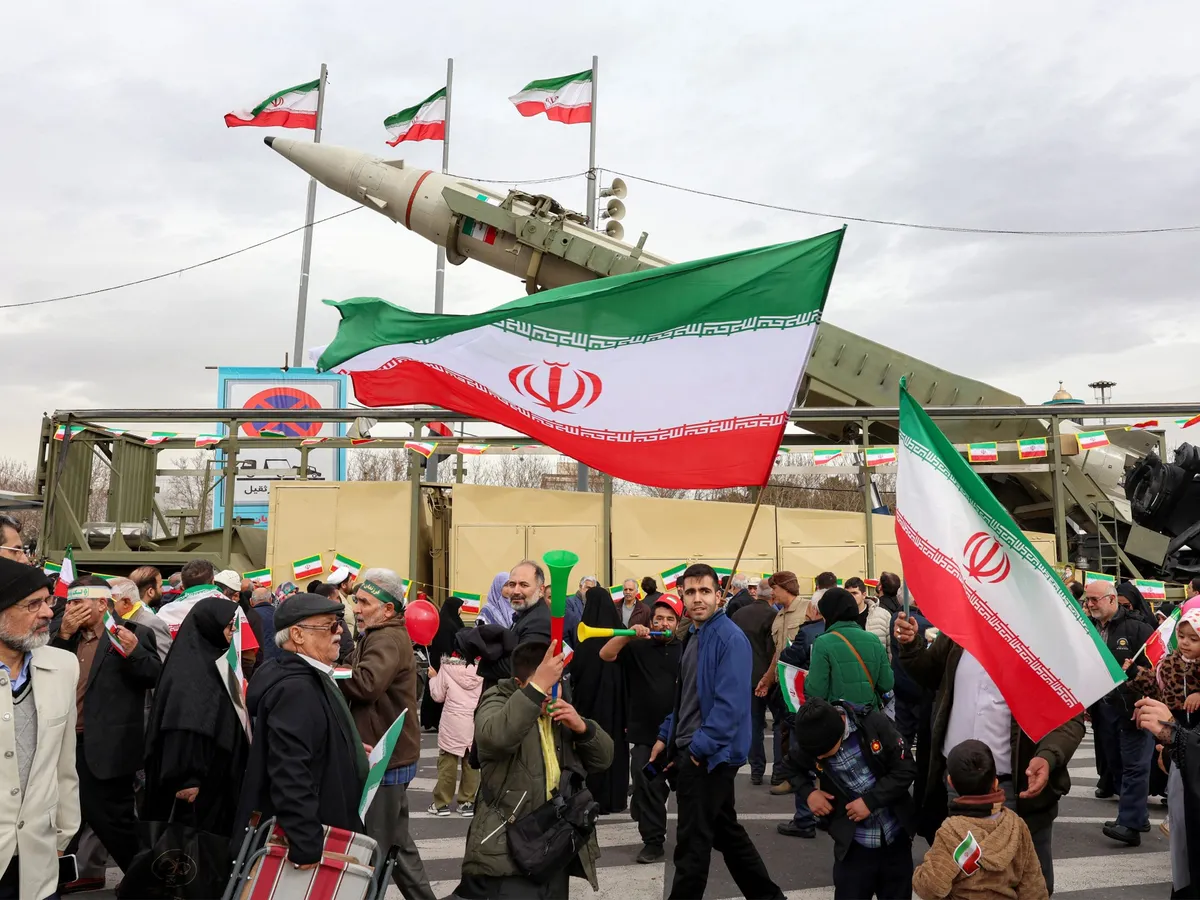
Al JazeeraFIG 01
Reading time
5min
Word count
1 012words
Sources cited
1cited
Entities identified
12entities
Quality score
100%
§ 01
Briefing Summary
AI-generatedNEWSAR · AI
Iranian diplomats and US officials met in Geneva for talks mediated by Oman, with both sides expressing differing levels of progress. The US has been increasing its military presence in the Middle East, leading some to speculate that negotiations are a tactic to buy time before an attack. Iran's military capabilities are no match for the US, but accepting a debilitating deal may not be Tehran's only choice. The Joint Comprehensive Plan of Action (JCPOA) is relevant, as it provided sanctions relief in exchange for Iranian nuclear transparency. However, the US withdrew from the agreement in 2018 and reimposed maximum pressure sanctions, demonstrating that American promises are nonbinding. Iran has a history of fulfilling its obligations under the JCPOA, which may be an alternative to capitulation in the face of US aggression.
Confidence 0.90Sources 1Claims 5Entities 12
§ 02
Article analysis
Model · rule-basedFraming
Political Strategy
National Security
Tone
Mixed Tone
AI-assessed
CalmNeutralAlarmist
Factuality
0.60 / 1.00
Mixed
LowHigh
Sources cited
1
Limited
FewMany
§ 03
Key claims
5 extracted01
In 2018, Trump unilaterally withdrew from the JCPOA and reimposed maximum pressure sanctions.
factual
Confidence
1.00
02
United States President Donald Trump threatened once again to strike Iran.
factual
Confidence
1.00
03
Iranians said “good progress” had been made in talks.
quoteIranians
Confidence
1.00
04
American diplomats and their Iranian counterparts sat down in Geneva for talks mediated by Oman.
factual
Confidence
1.00
05
Accepting capitulation through a debilitating deal may not necessarily be Tehran’s only choice.
prediction
Confidence
0.70
§ 04
Full report
5 min read · 1 012 words§ 05
Entities
12 identifiedKey playerOppositionContextPositiveNeutralNegative
Organizations1
Locations9
§ 06
Keywords & salience
7 termsjcpoa
0.90
us-iran relations
0.80
us military might
0.80
iranian nuclear programme
0.70
american promises
0.70
regional alliances
0.60
diplomatic engagement
0.50
§ 07
Topic connections
Interactive graph Network visualization showing 51 related topics
View Full Graph Person Organization Location Event|Click node to navigate|Edge numbers = shared articles