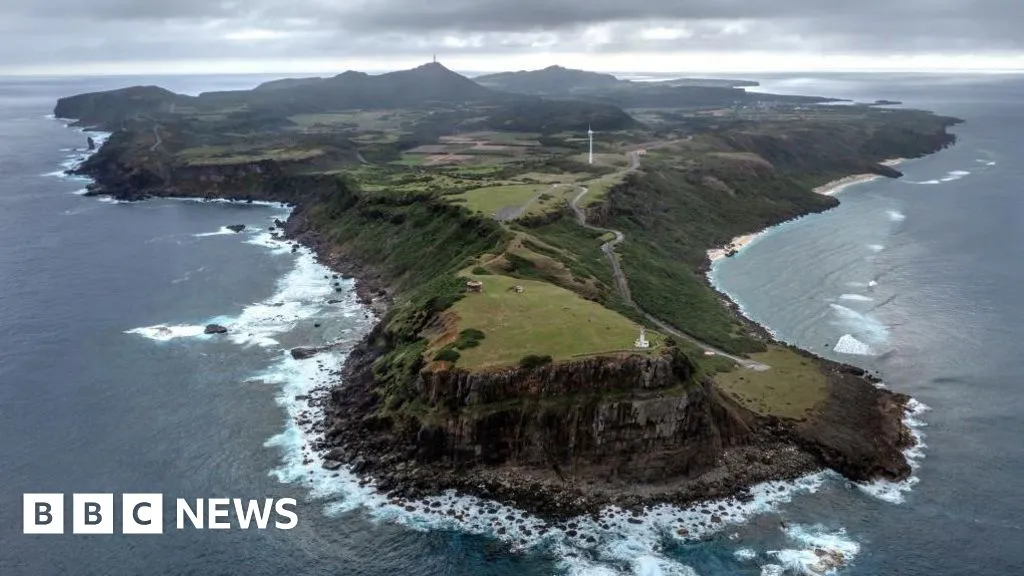
29 minutes agoKelly NgandShaimaa Khalil,Tokyo correspondentGetty ImagesYonaguni is visible from Taiwan's shores on a clear dayJapan plans to deploy surface-to-air missiles to its remote western island near Taiwan by March 2031, its defence minister said, as regional tensions simmer.It is the first time that Japan specified a timeline for the missile deployment to Yonaguni island since it was announced in 2022.China claims self-ruled Taiwan as its own and has not ruled out the use of force to "reunify" with it. Yonaguni is visible from Taiwan's shores on a clear day, located just 110km (68 miles) away.Tensions between Tokyo and Beijing have run high since November when Japanese Prime Minister Sanae Takaichi appeared to suggest that Japan would activate its self-defence force in the event of an attack on Taiwan.The worry has long been that any attack on Taiwan, which counts the US as an ally, could result in a direct military conflict between Washington and Beijing, then widen to include other US allies in the region such as Japan.Takaichi's remarks to parliament plunged ties with China to their lowest level in years and Beijing has been piling on the pressure in a wide range of ways - sending warships, throttling rare earth exports, curbing Chinese tourism, cancelling concerts and even reclaiming its pandas.Japanese defence minister Shinjiro Koizumi announced the timeline for the missiles on Tuesday, a day after China imposed export curbs on 20 Japanese companies and entities, citing national security concerns.Koizumi said the Yonaguni unit will be equipped with medium-range surface-to-air missiles able to intercept incoming aircraft and missiles.China has yet to react to Koizumi's announcement. But when Koizumi visited Yonaguni in November, Beijing said Japan was moving to "create regional tension and provoke military confrontation".Within days, it flew drones near the island to express its anger, prompting Japan to scramble aircraft jets in response.The latest developments come after Takaichi, a conservative China hawk, secured a landslide victory in parliamentary elections earlier this month.That victory gave Takaichi political space to double down on boosting Japan's defence capabilities.It makes the announcement on Yonaguni island more than just a military adjustment. It looks like the opening chapter of a more assertive Tokyo — and that it is unlikely to end here.It shows where Japan sees its front line and how far it is prepared to go to defend it.Over the past decade, Japan has transformed sleepy Yonaguni into a military outpost. It currently handles coastal surveillance and is staffed by some 160 members of Japan's self-defence force. An electronic warfare unit capable of disrupting enemy communications and radar will be set up in fiscal year 2026, which runs from April to March next year. The timing for the deployment of the missile unit "may change depending on the progress of future facility improvements, but the current plan is for fiscal year 2030", Koizumi said.
SRCBBC News - World
LANGEN
LEANCenter
WORDS473
ENT8
WED · 2026-02-25 · 03:30 GMTBRIEF NSR-2026-0225-19034
NSR-2026-0225-19034News Report·EN·National Security
Japan to deploy missiles on island near Taiwan by 2031
Japan plans to deploy surface-to-air missiles on Yonaguni Island, its westernmost island near Taiwan, by March 2031. The announcement, made by Japan's defense minister, comes amid rising tensions with China, which claims Taiwan as its own territory.
BBC News - WorldFiled 2026-02-25 · 03:30 GMTLean · CenterRead · 2 min
BBC News - WorldFIG 01
Reading time
2min
Word count
473words
Sources cited
2cited
Entities identified
8entities
Quality score
100%
§ 01
Briefing Summary
AI-generatedNEWSAR · AI
Japan plans to deploy surface-to-air missiles on Yonaguni Island, its westernmost island near Taiwan, by March 2031. The announcement, made by Japan's defense minister, comes amid rising tensions with China, which claims Taiwan as its own territory. Yonaguni is strategically located just 110km from Taiwan. This deployment, first announced in 2022, is intended to intercept incoming aircraft and missiles. The move follows recent actions by both countries, including export curbs imposed by China on Japanese companies and previous drone flights by China near the island. The deployment signals a potentially more assertive defense posture by Japan in the region.
Confidence 0.90Sources 2Claims 5Entities 8
§ 02
Article analysis
Model · rule-basedFraming
National Security
Political Strategy
Tone
Mixed Tone
AI-assessed
CalmNeutralAlarmist
Factuality
0.70 / 1.00
Factual
LowHigh
Sources cited
2
Limited
FewMany
§ 03
Key claims
5 extracted01
China imposed export curbs on 20 Japanese companies and entities.
factual
Confidence
1.00
02
Yonaguni is located just 110km (68 miles) away from Taiwan.
factual
Confidence
1.00
03
Japan plans to deploy surface-to-air missiles to Yonaguni island by March 2031.
factualits defence minister
Confidence
1.00
04
Tensions between Tokyo and Beijing have run high since November.
factual
Confidence
0.90
05
The timing for the deployment of the missile unit may change depending on the progress of future facility improvements.
factual
Confidence
0.80
§ 04
Full report
2 min read · 473 words§ 05
Entities
8 identifiedKey playerOppositionContextPositiveNeutralNegative
§ 06
Keywords & salience
10 termsmissile deployment
0.90
japan
0.80
taiwan
0.80
china
0.80
regional tensions
0.70
yonaguni island
0.70
surface-to-air missiles
0.60
military conflict
0.50
self-defense force
0.50
export curbs
0.40
§ 07
Topic connections
Interactive graph Network visualization showing 51 related topics
View Full Graph Person Organization Location Event|Click node to navigate|Edge numbers = shared articles