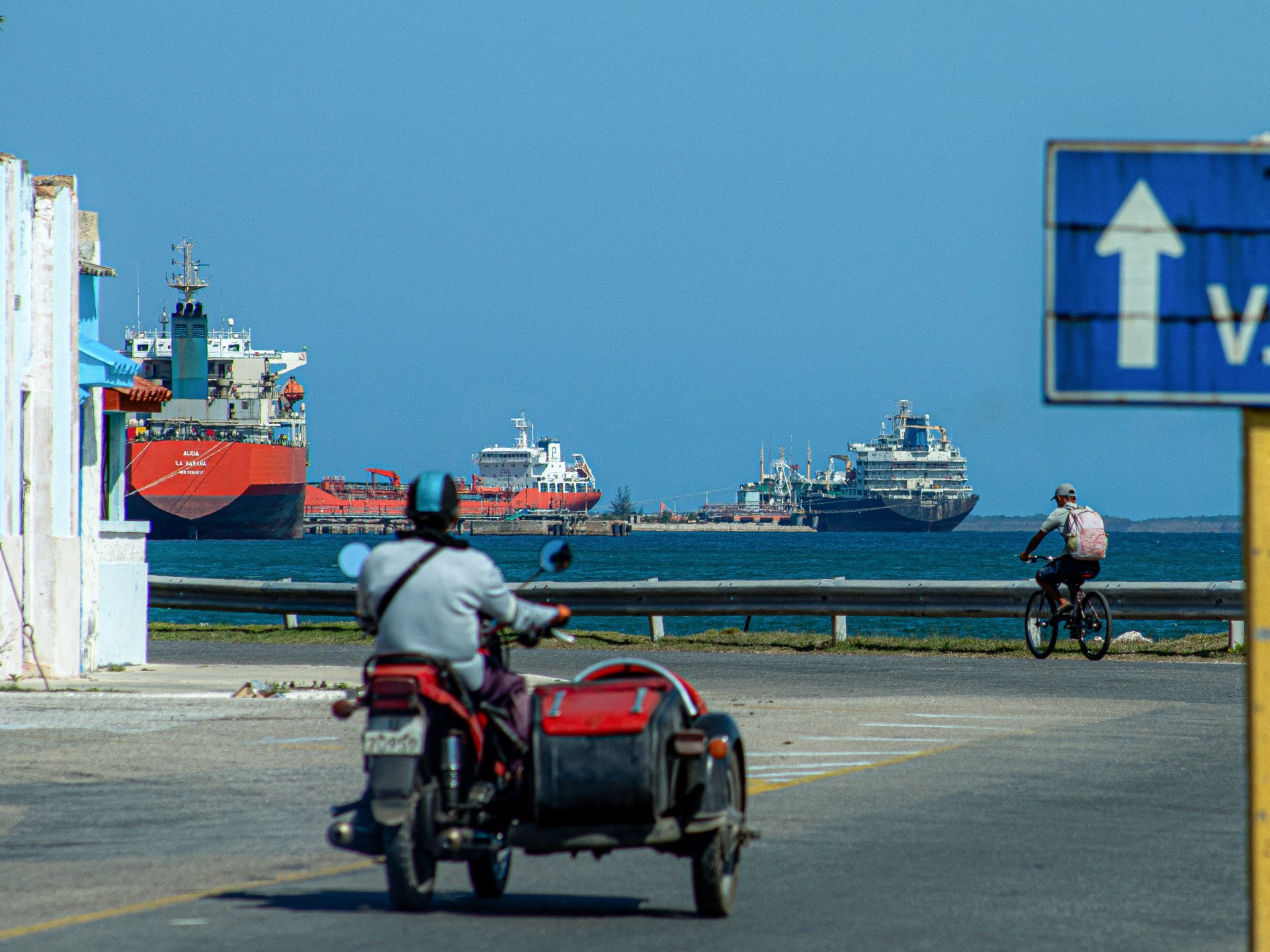
US eases oil embargo on Cuba as Caribbean neighbours warn worsening humanitarian crisis could destabilise region.The Nicos IV oil tanker, sailing under the flag of Saint Vincent and the Grenadines, is seen alongside other tanker vessels in the Port of Matanzas, Cuba, on February 17, 2026 [Stringer/AFP]Published On 26 Feb 2026The United States has said it will allow the resale of some Venezuelan oil to Cuba in a move that could ease the island’s acute fuel shortages, as neighbouring countries raised the alarm over a rapidly deteriorating humanitarian situation caused by Washington’s oil blockade.In a statement on Wednesday, the US Department of the Treasury said it would authorise companies seeking licences to resell Venezuelan oil for “commercial and humanitarian use in Cuba”.Recommended Stories list of 4 itemslist 1 of 4Cuban border agents fire upon Florida-tagged speedboat, killing fourlist 2 of 4Cuba: Technological Disobediencelist 3 of 4Russia’s Putin meets Cuban FM, says US restrictions ‘unacceptable’list 4 of 4Russia considers fuel support for Cuba as Canada pledges food aidend of listIt said the new “favorable licensing policy” would not cover “persons or entities associated with the Cuban military, intelligence services, or other government institutions”.Venezuela had been the main supplier of crude and fuel to Cuba for the past 25 years through a bilateral pact mostly based on the barter of products and services. But since the US abducted Venezuelan President Nicolas Maduro last month and took control of the country’s oil exports, Caracas’s supply to Cuba has ceased.Mexico, which had emerged as an alternate supplier, also halted shipments to the Caribbean island after the US threatened tariffs on countries that send oil to Cuba. The US blockade has worsened an energy crisis in Cuba that is hitting power generation and fuel for vehicles, houses and aviation.The shift in US policy came as Caribbean leaders gathering in Saint Kitts and Nevis expressed alarm at the impacts of the blockade on the island nation of some 10.9 million people. Speaking to Caribbean leaders during a meeting of the regional political group CARICOM on Tuesday, Jamaican Prime Minister Andrew Holness affirmed solidarity with Cuba.“Humanitarian suffering serves no one,” Holness said at the meeting. “A prolonged crisis in Cuba will not remain confined to Cuba.”The Caribbean summit’s host, Saint Kitts and Nevis Prime Minister Terrance Drew, who studied in Cuba to be a doctor, said friends have told him of food scarcity and rubbish strewn in the streets.“A destabilised Cuba will destabilise all of us,” Drew said.But addressing the meeting in Saint Kitts and Nevis on Wednesday, US Secretary of State Marco Rubio claimed that the humanitarian crisis had been caused by the Cuban government’s policies, not Washington’s blockade.Rubio, whose parents migrated to the US from Cuba in 1956, warned that the sanctions would be snapped back if the oil winds up going to the government or military.“Cuba needs to change. It needs to change dramatically because it is the only chance that it has to improve the quality of life for its people,” Rubio told reporters.It is “a system that’s in collapse, and they need to make dramatic reforms”, he said.Rubio went on to blame economic mismanagement and the lack of a vibrant private sector for the dire situation in Cuba, which has been under communist rule since Fidel Castro’s 1959 revolution.“This is the worst economic climate Cuba has faced. And it is the authorities there, and that government, who are responsible for that,” Rubio said.The US pressure on Venezuela and Cuba has left several fuel cargoes undelivered since December, according to the Reuters news agency, contributing to the island’s inability to keep the lights on and cars circulating. A Cuba-related vessel that loaded Venezuelan gasoline in early February at a port operated by state-run company PDVSA remained this week anchored in Venezuelan waters waiting for authorisation to set sail.Mexico and Canada have meanwhile announced they would be sending aid to Cuba, and Russia’s Deputy Prime Minister Alexander Novak also said his government was discussing the possibility of providing fuel to the island.Separately on Wednesday, Cuba’s Ministry of the Interior announced killing four people and wounding six others on board a Florida-registered speedboat that it said entered Cuban waters.Rubio told reporters it was not a US operation and that no US government personnel were involved.“Suffice it to say, it is highly unusual to see shootouts in open sea like that,” he said. “ It’s not something that happens every day. It’s something frankly that hasn’t happened with Cuba in a very long time.”
SRCAl Jazeera
LANGEN
LEANCenter
WORDS748
ENT6
THU · 2026-02-26 · 04:17 GMTBRIEF NSR-2026-0226-19385
NSR-2026-0226-19385News Report·EN·Economic Impact
US to allow Venezuelan oil sales to Cuba as alarm grows in the Caribbean
The United States will allow the resale of some Venezuelan oil to Cuba, easing restrictions amid a worsening energy crisis on the island. The US Treasury Department stated licenses would be granted for commercial and humanitarian use, excluding entities linked to the Cuban government.
Lyndal RowlandsAl JazeeraFiled 2026-02-26 · 04:17 GMTLean · CenterRead · 3 min
Al JazeeraFIG 01
Reading time
3min
Word count
748words
Sources cited
4cited
Entities identified
6entities
Quality score
100%
§ 01
Briefing Summary
AI-generatedNEWSAR · AI
The United States will allow the resale of some Venezuelan oil to Cuba, easing restrictions amid a worsening energy crisis on the island. The US Treasury Department stated licenses would be granted for commercial and humanitarian use, excluding entities linked to the Cuban government. This policy shift comes after Venezuela's oil supply to Cuba ceased following US actions against Venezuelan President Maduro, and Mexico halted shipments due to US tariff threats. Caribbean leaders, meeting in Saint Kitts and Nevis, expressed concerns that the blockade's humanitarian impact could destabilize the region. Jamaican Prime Minister Holness emphasized that a prolonged crisis in Cuba would have wider consequences.
Confidence 0.90Sources 4Claims 5Entities 6
§ 02
Article analysis
Model · rule-basedFraming
Economic Impact
Diplomatic
Tone
Measured
AI-assessed
CalmNeutralAlarmist
Factuality
0.70 / 1.00
Factual
LowHigh
Sources cited
4
Well sourced
FewMany
§ 03
Key claims
5 extracted01
The new licensing policy would not cover entities associated with the Cuban military or intelligence services.
factualUS Department of the Treasury
Confidence
1.00
02
US will allow the resale of some Venezuelan oil to Cuba.
factualUS Department of the Treasury
Confidence
1.00
03
Venezuela had been the main supplier of crude and fuel to Cuba for the past 25 years.
factualnull
Confidence
0.90
04
A prolonged crisis in Cuba will not remain confined to Cuba.
quoteJamaican Prime Minister Andrew Holness
Confidence
0.80
05
The humanitarian crisis had been caused by the Cuban government’s policies, not Washington’s blockade.
quoteUS Secretary of State Marco Rubio
Confidence
0.70
§ 04
Full report
3 min read · 748 words§ 05
Entities
6 identifiedKey playerOppositionContextPositiveNeutralNegative
§ 06
Keywords & salience
10 termscuba
1.00
us oil embargo
0.90
venezuelan oil
0.80
humanitarian crisis
0.80
fuel shortages
0.70
caribbean
0.70
energy crisis
0.60
us department of the treasury
0.50
nicolas maduro
0.40
caricom
0.40
§ 07
Topic connections
Interactive graph Network visualization showing 51 related topics
View Full Graph Person Organization Location Event|Click node to navigate|Edge numbers = shared articles