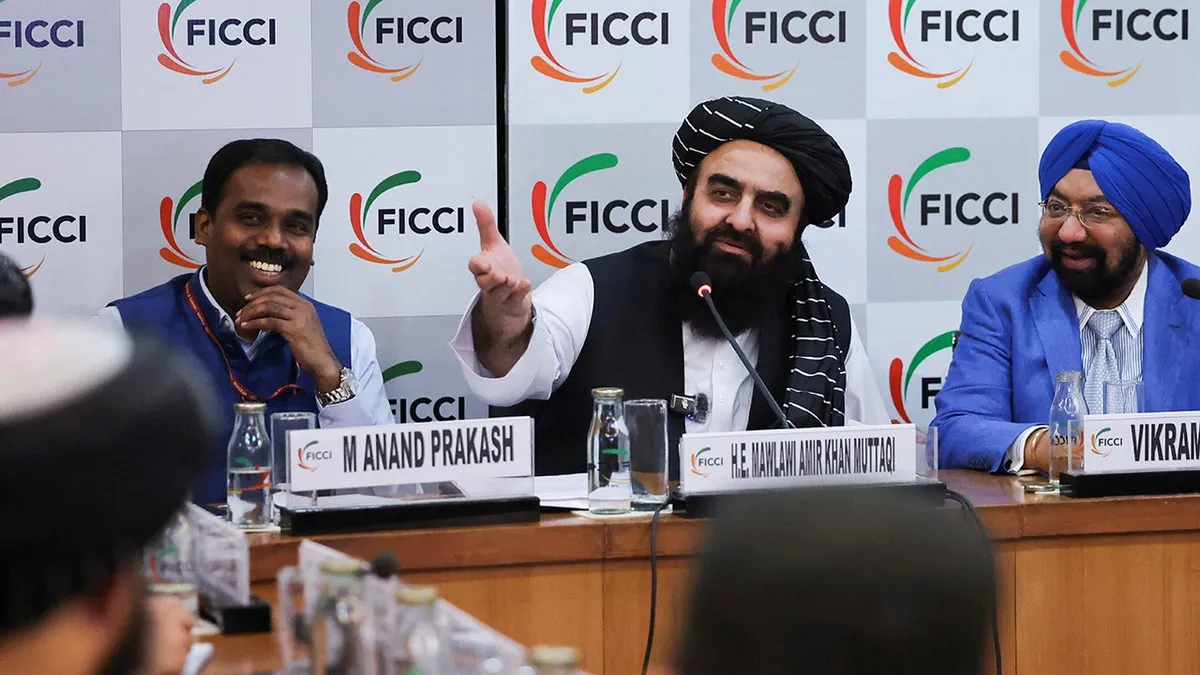
Nearly five years after the Taliban’s takeover of Afghanistan, Kabul has appointed its first envoy to India , marking a significant milestone in diplomatic engagement between the two countries. Noor Ahmad Noor, a Taliban-appointed diplomat, has assumed responsibility as Chargé d’Affaires at the Afghan Embassy in New Delhi, the first such posting to India since the Taliban returned to power more than four years ago. The move is the latest step in cultivating goodwill, as India's role evolves in Afghanistan. Pakistan THREATENS TO 'OBLITERATE' Taliban AFTER PEACE TALKS FALL APART The renewed political and economic engagement with the Taliban comes at a time of surging cross-border violence between Afghanistan and Pakistan, which has plunged relations between the two neighbors to a dangerously low point. Just this week, tensions flared back up after a fresh round of deadly strikes and clashes. And nuclear-armed India wasted no time in strongly condemning Islamabad over the attacks and voiced support for Kabul’s sovereignty. Against this backdrop of sustained hostilities, India stands out as one country that has much to gain. Experts say India’s reset with the Taliban reflects a pragmatic policy, aimed at countering Pakistani influence while protecting its own long-term security interests in the region. "This is a classic case of ‘the enemy of my enemy is my friend,’" Sid Dubey, a visiting professor at Bennet University in India, told Fox News. "The only thing the two parties are mutually aligned on is Pakistan and the enmity both have toward the Islamic Republic ." Kabul’s rapidly deteriorating relationship with Islamabad factors heavily into India’s calculations. For decades, Pakistan sought what it called "strategic depth" in Afghanistan, backing Taliban factions to ensure a friendly government in Kabul. But now, as frictions rise over border disputes, closer coordination between India and Afghanistan stretches Pakistan’s capacity to manage tensions on multiple fronts. At the same time, analysts say, it gives India the opportunity to extend its influence in the region at the expense of another rival, China. Furthermore, Pakistan buffers India and Afghanistan, making strategic alignment between New Delhi and Kabul particularly significant. TRUMP: US TRYING TO GET BAGRAM AIRBASE 'BACK' FROM Taliban IN Afghanistan "Afghanistan is cursed by its geography and proximity to foreign powers who will always meddle," Dubey explained, as regional fault lines only continue to sharpen. "And with virtually no American influence on the Taliban government anymore, Delhi feels secure in going ahead with its own India-centric Afghan policy." Like most other countries, India does not formally recognize the Taliban regime in Afghanistan. Nevertheless, both nations have been taking a series of quiet but significant steps to deepen ties. Over the last year, several high-level diplomatic interactions have been billed as groundbreaking. Cooperation has expanded across the board, from healthcare and humanitarian aid to cultural exchanges and economic projects. Dubey claimed there's another big reason for Delhi's push. "India supports all this in the hope or understanding that one day, if needed, India can use Afghanistan as a platform to strike Pakistan." For its part, Kabul is embracing this new era of cooperation, hailing the stronger ties with India as Pakistan views these developments with deep suspicion. Engagement with India also offers the Taliban a measure of legitimacy on the world stage. As Dubey noted, Afghanistan remains one of the poorest and least developed countries in the world, heavily dependent on external assistance, making India’s aid extremely beneficial. If sustained, India’s growing engagement with the Taliban could reshape changing regional dynamics. A weakened Pakistan-Taliban relationship undercuts Islamabad’s long-standing leverage in Kabul, altering the formerly established balance of power. It also complicates China’s calculus , as Beijing weighs its own security concerns. Looking further ahead, if Washington again expands its involvement in Afghanistan, New Delhi could serve as a key intermediary, given that U.S. and Indian ties are also on an upward trajectory.
SRCFox News - World
LANGEN
LEANCenter-Right
WORDS640
ENT9
THU · 2026-02-26 · 14:47 GMTBRIEF NSR-2026-0226-19559
NSR-2026-0226-19559News Report·EN·Diplomatic
Taliban sends first envoy to India in diplomatic milestone as regional tensions reshape alliances
The Taliban has appointed its first envoy to India in nearly five years, with Noor Ahmad Noor assuming the role of Chargé d'Affaires at the Afghan Embassy in New Delhi. This diplomatic milestone occurs amidst escalating tensions between Afghanistan and Pakistan, marked by cross-border violence and strained relations.
Kyra ColahFox News - WorldFiled 2026-02-26 · 14:47 GMTLean · Center-RightRead · 3 min
Fox News - WorldFIG 01
Reading time
3min
Word count
640words
Sources cited
1cited
Entities identified
9entities
Quality score
100%
§ 01
Briefing Summary
AI-generatedNEWSAR · AI
The Taliban has appointed its first envoy to India in nearly five years, with Noor Ahmad Noor assuming the role of Chargé d'Affaires at the Afghan Embassy in New Delhi. This diplomatic milestone occurs amidst escalating tensions between Afghanistan and Pakistan, marked by cross-border violence and strained relations. India has condemned Pakistan's actions and voiced support for Afghanistan's sovereignty. Experts suggest India's engagement with the Taliban is a pragmatic move to counter Pakistani influence and protect its regional security interests. The deteriorating relationship between Kabul and Islamabad factors into India's strategy, offering New Delhi an opportunity to extend its influence while Pakistan faces challenges on multiple fronts.
Confidence 0.90Sources 1Claims 5Entities 9
§ 02
Article analysis
Model · rule-basedFraming
Diplomatic
Political Strategy
Tone
Measured
AI-assessed
CalmNeutralAlarmist
Factuality
0.70 / 1.00
Factual
LowHigh
Sources cited
1
Limited
FewMany
§ 03
Key claims
5 extracted01
Like most other countries, India does not formally recognize the Taliban regime in Afghanistan.
factual
Confidence
1.00
02
Noor Ahmad Noor has assumed responsibility as Chargé d’Affaires at the Afghan Embassy in New Delhi.
factual
Confidence
1.00
03
Taliban has appointed its first envoy to India in nearly five years.
factual
Confidence
1.00
04
The only thing the two parties are mutually aligned on is Pakistan.
quoteSid Dubey, a visiting professor at Bennet University in India
Confidence
0.90
05
India's reset with the Taliban reflects a pragmatic policy, aimed at countering Pakistani influence.
factual
Confidence
0.80
§ 04
Full report
3 min read · 640 words§ 05
Entities
9 identifiedKey playerOppositionContextPositiveNeutralNegative
§ 06
Keywords & salience
9 termstaliban
1.00
india
0.90
afghanistan
0.90
diplomatic engagement
0.80
pakistan
0.80
regional tensions
0.70
strategic alignment
0.60
political and economic engagement
0.50
cross-border violence
0.50
§ 07
Topic connections
Interactive graph Network visualization showing 51 related topics
View Full Graph Person Organization Location Event|Click node to navigate|Edge numbers = shared articles