DEVELOPING STORY, Al Jazeera's correspondent in Kabul reports explosions and anti-aircraft fire as Pakistan bombs the capital city.Taliban security check a vehicle at a checkpoint in Kabul, Afghanistan, 26 February 2026. [File: Samiullah Popal/EPA]Published On 27 Feb 2026Pakistan has bombed Afghanistan’s capital, Kabul, and other cities, as fighting spread following attacks by Afghan forces against Pakistani military positions along their shared border earlier.Pakistani Defence Minister Khawaja Asif said on Friday that his country’s “patience has run out” with the Taliban authorities in neighbouring Afghanistan, and that Pakistan would now be waging “open war”.Recommended Stories list of 4 itemslist 1 of 4Pakistan claims at least 70 fighters killed in strikes along Afghan borderlist 2 of 4Afghanistan bombing: What’s Pakistan’s strategy as India-Taliban ties grow?list 3 of 4New Afghan, Pakistani border clashes follow deadly strikeslist 4 of 4Afghanistan launches attacks against Pakistan, draws ‘immediate response’end of listAl Jazeera’s correspondent in Kabul, Nasser Shadid, reported early on Friday that a bombing raid targeted the Afghan capital at 1:50 am local time (21:20 GMT), followed by a second air raid.Afghan anti-aircraft guns opened fire after the first raid and continued firing after the second, according to Shadid.An Afghan government source confirmed to Al Jazeera that an air strike had hit Kabul, and Pakistani warplanes also hit a military base in Kandahar province in southern Afghanistan.Pakistan’s Defence Minister Asif framed the attack as one that his country had been forced to make, and followed “aggression” from Afghanistan.Pakistani Information Minister Attaullah Tarar claimed that 133 Afghan Taliban fighters had been killed in Pakistan’s attacks on Friday, and that Taliban positions had been targeted in Kabul, Kandahar, and Paktia.Tarar said that nine Taliban positions had been captured, and 27 destroyed, while adding that Pakistani attacks were continuing.Afghan government spokesperson Zabihullah Mujahid said that Afghanistan had launched its own attacks against Pakistani military bases in Kandahar and Helmand following the latest Pakistani attacks.The strikes followed attacks by Afghan forces late on Thursday on Pakistani positions on the border shared by the two countries.An Afghan military source told Al Jazeera that 10 Pakistani soldiers were killed in the attacks, and 13 outposts captured.The source added that the attacks were a response to Pakistani attacks on Afghan positions in the border region on Sunday.Pakistan claimed that its attacks on Sunday had killed at least 70 fighters, but Afghanistan rejected the claim, saying that civilians had been killed.Poor relationsA statement from the office of Pakistani Prime Minister Shehbaz Sharif said that the whole country was united behind Pakistan’s armed forces.“The people of Pakistan and its Armed Forces are fully prepared to safeguard the nation’s security, sovereignty, and territorial integrity,” the statement said. “There will be no leniency in defending our beloved homeland, and any aggression will be met with a fitting response.”Relations between Pakistan and Afghanistan, which share a 2,611km-long (1,622-mile-long) border, have nose-dived since fighting in October killed more than 70 people on both sides of the border.The tension stems from Pakistani accusations that Kabul has allowed armed groups such as the Pakistan Taliban to use Afghanistan as a base, and launch attacks on Pakistan.The Pakistan Taliban shares deep ideological ties with the Taliban in Afghanistan, but is a distinct movement.“Pakistan made every effort to keep the situation normal through direct means and through friendly countries,” said Asif. “It engaged in full-fledged diplomacy. But the Taliban became a proxy for India.”“In the past, Pakistan’s role has been positive. It has hosted five million Afghans for 50 years. Even today, millions of Afghans are earning their livelihood on our soil. Our cup of patience has overflowed. Now it is open war between us and you,” Asif said.The United Nations has called for urgent de-escalation. “[UN Secretary-General] Antonio Guterres urges the parties to uphold their obligations under international law, including international humanitarian law, and to ensure the protection of civilians,” Stephane Dujarric, the spokesperson for the UN Secretary-General, said.“The Secretary-General urges the parties to continue seeking to resolve any differences through diplomatic channels and commends the mediation efforts undertaken by several Member States in recent months,” he added.Meanwhile, Zalmay Khalilzad, a former US ambassador to Afghanistan, said earlier on Thursday that the tit-for-tat attacks over recent days were a “terrible dynamic that must stop”.“A better option is a diplomatic agreement between the [two] countries that neither would allow its territory to be used by individuals and groups to threaten the security of the other,” Khalilzad said. “The implementation of the agreement should be monitored by a trusted [third] party, for example Turkiye. This approach is a much wiser course than continuing with attacks and counter-attacks.”
SRCAl Jazeera
LANGEN
OutletState media · Qatar
WORDS763
ENT10
FRI · 2026-02-27 · 01:44 GMTBRIEF NSR-2026-0227-19677
NSR-2026-0227-19677News Report·EN·Conflict
Pakistan says ‘patience has run out’ as it bombs Taliban across Afghanistan
On February 27, 2026, Pakistan bombed Kabul and other Afghan cities, citing escalating attacks by Afghan forces on Pakistani military positions along their shared border. Pakistani Defence Minister Khawaja Asif stated that Pakistan's "patience has run out" and declared "open war" against the Taliban in Afghanistan.
Al JazeeraFiled 2026-02-27 · 01:44 GMTOutlet · State media · QatarRead · 4 min
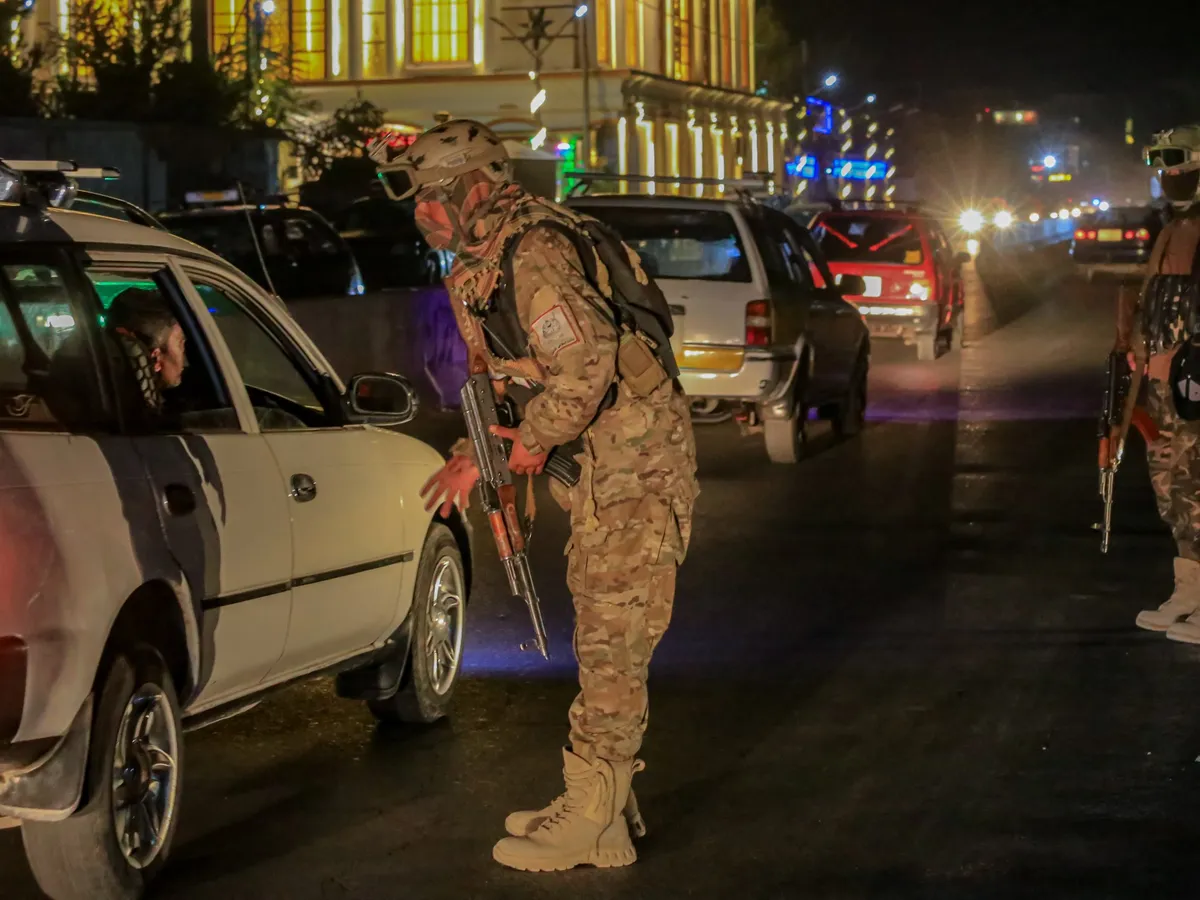
Al JazeeraFIG 01
Reading time
4min
Word count
763words
Sources cited
6cited
Entities identified
10entities
NEWSAR · AI
On February 27, 2026, Pakistan bombed Kabul and other Afghan cities, citing escalating attacks by Afghan forces on Pakistani military positions along their shared border. Pakistani Defence Minister Khawaja Asif stated that Pakistan's "patience has run out" and declared "open war" against the Taliban in Afghanistan. According to Pakistani officials, the strikes targeted Taliban positions in Kabul, Kandahar, and Paktia, resulting in numerous casualties and the capture/destruction of several positions. In response, an Afghan government spokesperson said that Afghanistan launched attacks against Pakistani military bases in Kandahar and Helmand. The strikes follow earlier attacks by Afghan forces on Pakistani border outposts, reportedly resulting in casualties and captured outposts.
Confidence 0.90Sources 6Claims 5Entities 10
Framing
Conflict
National Security
Tone
Mixed Tone
AI-assessed
CalmNeutralAlarmist
Factuality
0.70 / 1.00
Factual
LowHigh
Sources cited
6
Well sourced
FewMany
01
Pakistani Defence Minister Khawaja Asif said his country’s “patience has run out” with the Taliban authorities.
quoteKhawaja Asif
Confidence
1.00
02
Pakistan has bombed Afghanistan’s capital, Kabul, and other cities.
factualAl Jazeera
Confidence
1.00
03
Afghan government spokesperson Zabihullah Mujahid said that Afghanistan had launched attacks against Pakistani military bases.
factualZabihullah Mujahid
Confidence
0.90
04
Pakistani Information Minister Attaullah Tarar claimed that 133 Afghan Taliban fighters had been killed.
factualAttaullah Tarar
Confidence
0.80
05
An Afghan military source told Al Jazeera that 10 Pakistani soldiers were killed in the attacks.
factualAfghan military source
Confidence
0.70
§ 04
Full report
4 min read · 763 wordsKey playerOppositionContextPositiveNeutralNegative
People3
Organizations1
afghanistan
1.00
pakistan
1.00
bombing
0.90
taliban
0.90
military attacks
0.80
air strikes
0.70
border clashes
0.70
kabul
0.60
open war
0.60
military positions
0.50
§ 07
Connections
Who appears together in the newsIn this articleWider coverageLine weight = articles in common
Laying out network…
Strongest ties articles in common
- 245
- 226
- 139
- 114
- 99
- 91
Recurring context not named in this article
- LIslamabadlinks 9
- LPaktikalinks 8
- LKhostlinks 8
- LKhyber Pakhtunkhwalinks 8
- OAfghan Talibanlinks 8
- LQatarlinks 8
- LUnited Stateslinks 7
- LIranlinks 7