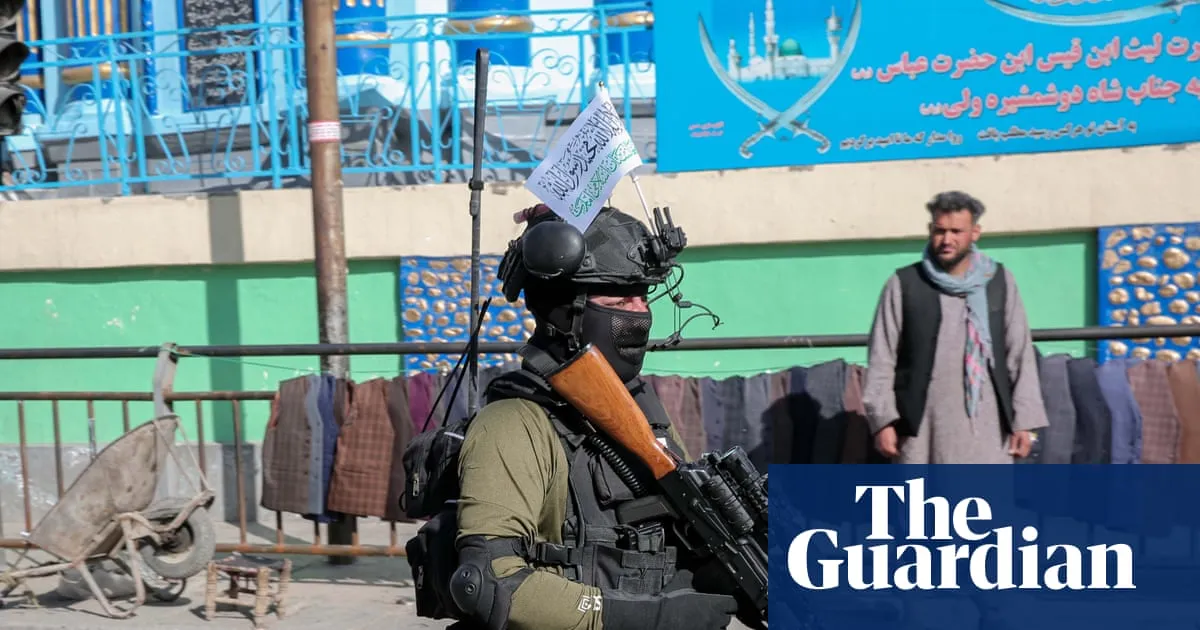
Pakistan has bombed major cities in Afghanistan including the capital, Kabul, with Islamabad’s defence minister declaring that the hostile neighbours were in a state of “open war” as a cycle of retaliatory attacks escalated further.Witnesses in Kabul and Kandahar, the southern Afghan city, reported explosions and jets overhead until dawn, while the Taliban government said later that Pakistani surveillance aircraft were still flying over Afghanistan.The wave of attacks came after Afghan forces attacked Pakistani border troops on Thursday night following earlier airstrikes by Islamabad.The operation was Pakistan’s most widespread bombardment of the Afghan capital and its first airstrikes on Kandahar, the southern power base of the Taliban movement, which returned to power in 2021.Afghan authorities in the eastern Nangarhar province said on Friday morning that fighting was continuing in the Torkham border area. The province’s information directorate said that Pakistani mortar fire hit civilian areas, including a refugee camp. In response, Afghanistan was targeting Pakistani army posts across the border, it said. Dozens of casualties were reported, with at least 12 people killed.Tensions have been high between Pakistan and Afghanistan for months, with border clashes in October killing dozens of soldiers, civilians and suspected militants.Pakistan accuses Afghanistan’s Taliban government of harbouring militant groups that stage attacks across the border and of allying with its historic enemy and regional rival, India.A man reads about cross-border clashes with Afghanistan in a newspaper at a roadside stall in Karachi, Pakistan, on Friday. Photograph: Rehan Khan/EPAA Qatari-mediated ceasefire ended the fighting last year but several rounds of peace talks in Istanbul in November failed to produce a formal agreement.On Thursday at about 8pm, Afghanistan launched a cross-border attack on Pakistan, saying it was in retaliation for deadly Pakistani airstrikes on Afghan border areas on Sunday. Hours later, Pakistan bombed Afghanistan’s capital of Kabul and two other provinces on Friday, hours after a cross-border attack.At least three explosions were heard in Kabul, with both sides making different claims about the number of casualties and sites hit.A resident in Kabul’s affluent Wazir Akbar Khan neighbourhood, adjacent to the Taliban headquarters where the Pakistan air force had struck on Thursday night, said he heard a huge blast not far from his house near Taliban administrative offices and ministries.He said: “The blast was followed by firing and we remained in the house under fear and did not go out. We just knew it was Pakistan’s airstrikes like … in October but we did not know if anyone was killed because no one was allowed to go the area and Taliban media said there was no casualties.”The resident, while requesting anonymity fearing Taliban reprisals, said many people in Kabul were anxious and frightened. “It is clear even after the withdrawal of American forces, the war never ends in Afghanistan … We just need to live in peace. Sadly, the civilians always suffer anywhere, particularly in Afghanistan.”Pakistan’s federal minister for information and broadcasting, Attaullah Tarar, claimed the strikes on Friday in Kabul, Paktia, and Kandahar killed 133 Afghan Taliban officials and wounded more than 200, with further possible casualties.Pakistan’s prime minister, Shehbaz Sharif, said on Friday that his country’s armed forces could “crush” aggressors, while the defence minister proclaimed “open war”.In a post on X, the defence minister, Khawaja Mohammad Asif, said Pakistan had hoped for peace in Afghanistan after the withdrawal of Nato forces and expected the Taliban to focus on the welfare of the Afghan people and regional stability. Instead, he claimed the Taliban had gathered militants from around the world and begun “exporting terrorism”.“Our patience has now run out. Now it is open war between us,” he said.Islamabad frequently accuses its western neighbour of being behind surging militant violence in Pakistan, accusing Afghanistan of supporting the Pakistani Taliban, or TTP, and outlawed Baloch separatist groups.Pakistan accuses the TTP – which is separate from but closely allied with Afghanistan’s Taliban – of operating from inside Afghanistan. Both the group and Kabul deny that charge.Pakistan has also frequently accused neighbouring India of backing the outlawed Baloch Liberation Army and the Pakistani Taliban, allegations New Delhi deniesAfghanistan’s defence ministry said that 55 Pakistani soldiers had been killed in the border clashes on Thursday, with some bodies taken into Afghanistan, including several “captured alive”. It said eight Afghan soldiers were reported killed, with 11 others wounded. The ministry reported the destruction of 19 Pakistani army posts and two bases.Mosharraf Ali Zaidi, the spokesperson for Pakistan’s prime minister, Shehbaz Sharif, previously denied that any Pakistani soldiers had been captured.The border clashes began after 8pm on Thursday night when the Afghan Taliban attacked various border posts in several districts of Pakistan’s north-western Khyber Pakhtunkhwa province, bordering Afghanistan.A soldier stands guard at the Friendship Gate at the border crossing in Chaman, Pakistan, after exchanges of fire between Pakistan and Afghanistan. Photograph: Abdul Khaliq Achakzai/ReutersThe volatile districts of Bajaur and Kurram bordering Afghanistan were worst affected by Afghan Taliban firings and mortar shells. A resident in Bajaur district said mortar shells hit Bara Lagharai village in neighbouring Mahmund district killing at least two civilians and injuring at least six others.The Bajaur resident said: “The village is on the border and mortar shells directly landed at people’s houses as the village remained at the mercy of Taliban firings. They were firing on security posts and the village is [very close to] Afghanistan.”Bajaur’s deputy commissioner, Shahid Ali, confirmed the death toll and injured and said five rounds of artillery were fired by the Afghan Taliban across the border hitting the civilian houses.Tensions between Afghanistan and Pakistan have risen steeply in recent months, with land border crossings largely shut since deadly fighting in October that killed more than 70 people on both sides.Efforts to produce a lasting agreement between the two nations has failed, with negotiations and an initial ceasefire brokered by Qatar and Turkey in October looking increasingly shaky.Pakistan and Afghanistan share a 1,640 mile (2,611km) border known as the Durand Line, which Afghanistan has not formally recognised.
SRCThe Guardian - World News
LANGEN
LEANCenter-Left
WORDS991
ENT12
FRI · 2026-02-27 · 14:19 GMTBRIEF NSR-2026-0227-19860
NSR-2026-0227-19860News Report·EN·Conflict
Pakistan declares state of ‘open war’ after bombing major Afghan cities
Tensions between Pakistan and Afghanistan have escalated, with Pakistan declaring a state of "open war" after bombing major Afghan cities, including Kabul and Kandahar. The attacks followed cross-border attacks by Afghan forces on Pakistani troops, which Afghanistan claimed were retaliation for earlier Pakistani airstrikes.
Jason Burke in London, Shah Meer Baloch in Islamabad and Kate Lamb in SydneyThe Guardian - World NewsFiled 2026-02-27 · 14:19 GMTLean · Center-LeftRead · 4 min
The Guardian - World NewsFIG 01
Reading time
4min
Word count
991words
Sources cited
5cited
Entities identified
12entities
Quality score
100%
§ 01
Briefing Summary
AI-generatedNEWSAR · AI
Tensions between Pakistan and Afghanistan have escalated, with Pakistan declaring a state of "open war" after bombing major Afghan cities, including Kabul and Kandahar. The attacks followed cross-border attacks by Afghan forces on Pakistani troops, which Afghanistan claimed were retaliation for earlier Pakistani airstrikes. Fighting is ongoing in the Torkham border area, with reports of civilian casualties from mortar fire. The conflict is fueled by Pakistan's accusations that the Taliban government in Afghanistan is harboring militants and allied with India. Despite a Qatari-mediated ceasefire last year and peace talks, tensions remain high, with dozens of casualties reported on both sides.
Confidence 0.90Sources 5Claims 5Entities 12
§ 02
Article analysis
Model · rule-basedFraming
Conflict
National Security
Tone
Mixed Tone
AI-assessed
CalmNeutralAlarmist
Factuality
0.80 / 1.00
Factual
LowHigh
Sources cited
5
Well sourced
FewMany
§ 03
Key claims
5 extracted01
Afghan authorities in Nangarhar province said that Pakistani mortar fire hit civilian areas, including a refugee camp.
factualAfghan authorities in Nangarhar province
Confidence
1.00
02
Afghan forces attacked Pakistani border troops on Thursday night following earlier airstrikes by Islamabad.
factualArticle
Confidence
1.00
03
Islamabad’s defence minister declared that the hostile neighbours were in a state of “open war”.
quoteIslamabad’s defence minister
Confidence
1.00
04
Pakistan has bombed major cities in Afghanistan including Kabul.
factualArticle
Confidence
1.00
05
Dozens of casualties were reported, with at least 12 people killed.
statisticArticle
Confidence
0.90
§ 04
Full report
4 min read · 991 words§ 05
Entities
12 identifiedKey playerOppositionContextPositiveNeutralNegative
Organizations1
§ 06
Keywords & salience
9 termspakistan afghanistan conflict
1.00
open war
0.90
airstrikes
0.80
cross-border attacks
0.70
border clashes
0.60
taliban
0.60
kabul
0.50
ceasefire
0.40
mortar fire
0.40
§ 07
Topic connections
Interactive graph Network visualization showing 51 related topics
View Full Graph Person Organization Location Event|Click node to navigate|Edge numbers = shared articles