Donald Trump’s likely casus belli for an attack on Iran – which would be the largest US intervention since the Iraq war – is fraught with contradictions, and his top advisers have been left to cover for him as the White House makes the case for intervention.In his State of the Union address this week, Trump alleged that Iran posed a direct threat to the US and that the country was “working to build missiles that will soon reach the United States of America”. But that claim has not been backed up with evidence by the White House or the Pentagon, and US intelligence reports from just last year say that it would take Iran 10 years to develop an intercontinental ballistic missile that could reach the US.A public US defense intelligence agency assessment from 2025 says that Iran could use its space-launch vehicles to “develop a militarily-viable ICBM by 2035 should Tehran decide to pursue the capability”. But that threat to the US homeland, as laid out in the document, pales in comparison to the ones already presented by Russia and China, as well as other hostile states like North Korea.And a separate annual threat assessment of the US intelligence community released by the office of the director of national intelligence in March did not address any direct military threat from Iran to the US homeland from its ballistic missiles programme at all.In remarks to the press on Thursday, the US secretary of state and national security adviser, Marco Rubio, sought to square the circle by hedging Trump’s remarks without directly contradicting the president.“They are trying to achieve intercontinental ballistic missiles,” he said, adding he wouldn’t speculate how long it would take. “For example, you’ve seen them try to launch satellites into space. You’ve seen them increasing the range of the missiles they have now, and clearly they are headed in the pathway to one day being able to develop weapons that could reach the continental US.”Trump’s insistence on negotiating an end to Iran’s ballistic missile programme, which Tehran has called a “red line”, may be a key stumbling block in the talks meant to avert a war. The Iranian foreign minister called Trump’s remarks on the Iran’s ballistic missiles and its suddenly revitalised nuclear programme “big lies”.Those include the claim by Middle East envoy Steve Witkoff, a real-estate developer and longtime friend of Trump’s, that Iran was “probably a week away from having industrial-grade bomb-making material” during an interview with Trump’s daughter-in-law Lara Trump. That came less than a year after the president claimed to have “obliterated” the Iranian nuclear programme during the B-2 bombing runs launched by the US last summer.Once again the White House has had to backpedal, both boasting of its success in crippling Iran’s nuclear ambitions while simultaneously making the case for war. “Operation Midnight Hammer was an overwhelmingly successful mission that did, in fact, obliterate Iran’s nuclear facilities,” said Karoline Leavitt, the White House press secretary. “However, this does not mean Iran may never try again to establish a nuclear programme that could directly threaten the United States and our allies abroad; that is what the president wants to ensure can never happen again.”Iran’s stockpile of missiles, the largest in the region, according to US intelligence estimates, does threaten Israel as well as a number of US bases in the region, including Al Udeid airbase in Qatar. During the 12-day war, Iran fired more than 550 ballistic missiles and 1,000 one-way attack drones, testing both Israeli and US missile defenses. About 43 were said to have penetrated the defense systems to hit their targets.In the event of an all-out conflict, Iran could increase that number dramatically and potentially exploit shortages of US anti-air missiles to hit targets in Israel as well as US military bases throughout the region. Gen Dan Caine, the chair of the joint chiefs of staff, has told Trump that a new war with Iran could further drain US stockpiles of interceptor missiles that could be needed to counteract other future threats, including those from China.Overall stockpiles of Iranian missiles are a subject of debate. Israeli officials recently estimated that Iran had 1,500 ballistic missiles and 200 launchers after the war with Israel, but that number has likely increased as Iran has sought to replenish stockpiles.Crucially, the Iranian leadership sees those weapons as one of the only factors preventing a US or Israeli attack at the moment.“Iran sees its ballistic missiles as a key bargaining chip and essential for deterrence, implying a need to preserve the force for future standoffs,” wrote Benjamin Jensen, the director of the Futures Lab and a senior fellow for the Defense and Security Department at the Center for Strategic and International Studies.
SRCThe Guardian - World News
LANGEN
LEANCenter-Left
WORDS787
ENT12
FRI · 2026-02-27 · 20:24 GMTBRIEF NSR-2026-0227-19942
NSR-2026-0227-19942News Report·EN·National Security
Trump advisers scramble to justify US military intervention in Iran
The article reports that President Trump's claim that Iran poses a direct threat to the US, justifying potential military intervention, is being questioned. Trump stated Iran is developing missiles that will soon reach the US, but this claim lacks supporting evidence.
Andrew Roth in WashingtonThe Guardian - World NewsFiled 2026-02-27 · 20:24 GMTLean · Center-LeftRead · 4 min
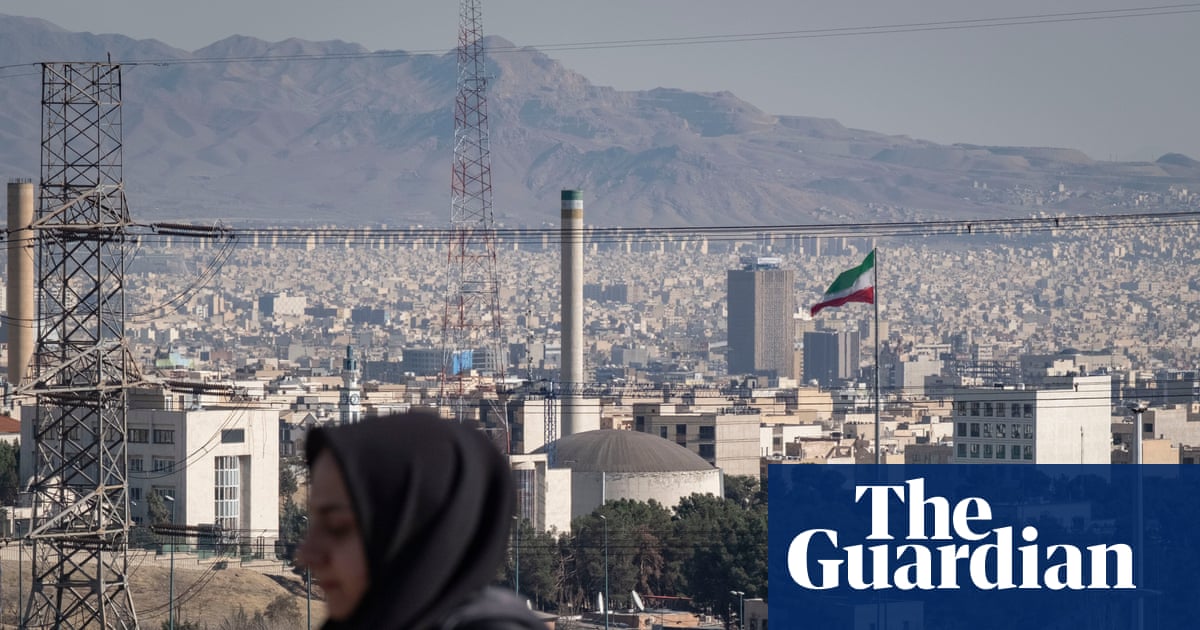
The Guardian - World NewsFIG 01
Reading time
4min
Word count
787words
Sources cited
5cited
Entities identified
12entities
Quality score
100%
§ 01
Briefing Summary
AI-generatedNEWSAR · AI
The article reports that President Trump's claim that Iran poses a direct threat to the US, justifying potential military intervention, is being questioned. Trump stated Iran is developing missiles that will soon reach the US, but this claim lacks supporting evidence. US intelligence reports suggest it would take Iran significantly longer to develop such a capability, with one assessment projecting 2035. Trump's advisors are attempting to reconcile the President's statements with intelligence assessments, highlighting Iran's efforts to develop intercontinental ballistic missiles. This discrepancy is occurring as Trump insists on negotiating an end to Iran's ballistic missile program, a point of contention in talks aimed at averting war.
Confidence 0.90Sources 5Claims 5Entities 12
§ 02
Article analysis
Model · rule-basedFraming
National Security
Political Strategy
Tone
Mixed Tone
AI-assessed
CalmNeutralAlarmist
Factuality
0.70 / 1.00
Factual
LowHigh
Sources cited
5
Well sourced
FewMany
§ 03
Key claims
5 extracted01
Trump claimed to have “obliterated” the Iranian nuclear programme during B-2 bombing runs last summer.
quoteDonald Trump
Confidence
1.00
02
A 2025 US defense intelligence agency assessment says Iran could develop a militarily-viable ICBM by 2035.
factualUS defense intelligence agency
Confidence
1.00
03
US intelligence reports from last year say it would take Iran 10 years to develop an ICBM that could reach the US.
factualUS intelligence reports
Confidence
1.00
04
Trump alleged that Iran posed a direct threat to the US and was building missiles to reach the US.
quoteDonald Trump
Confidence
1.00
05
Iran was “probably a week away from having industrial-grade bomb-making material”.
quoteSteve Witkoff
Confidence
0.80
§ 04
Full report
4 min read · 787 words§ 05
Entities
12 identifiedKey playerOppositionContext
I
Iran location · Opposition
95
DT
Donald Trump person · Key Player
90
US
United States location · Key Player
85
WH
White House location · Key Player
70
P
Pentagon organization
60
MR
Marco Rubio person
50
IW
Iraq war event · Context
50
T
Tehran location · Opposition
40
NK
North Korea location · Opposition
35
C
China location · Opposition
35
R
Russia location · Opposition
35
SW
Steve Witkoff person
30
§ 06
Keywords & salience
9 termsiran
1.00
us military intervention
0.90
ballistic missile programme
0.80
intercontinental ballistic missile
0.70
white house
0.70
us intelligence
0.60
threat assessment
0.60
casus belli
0.50
nuclear programme
0.40
§ 07
Topic connections
Interactive graph Network visualization showing 51 related topics
View Full Graph Person Organization Location Event|Click node to navigate|Edge numbers = shared articles