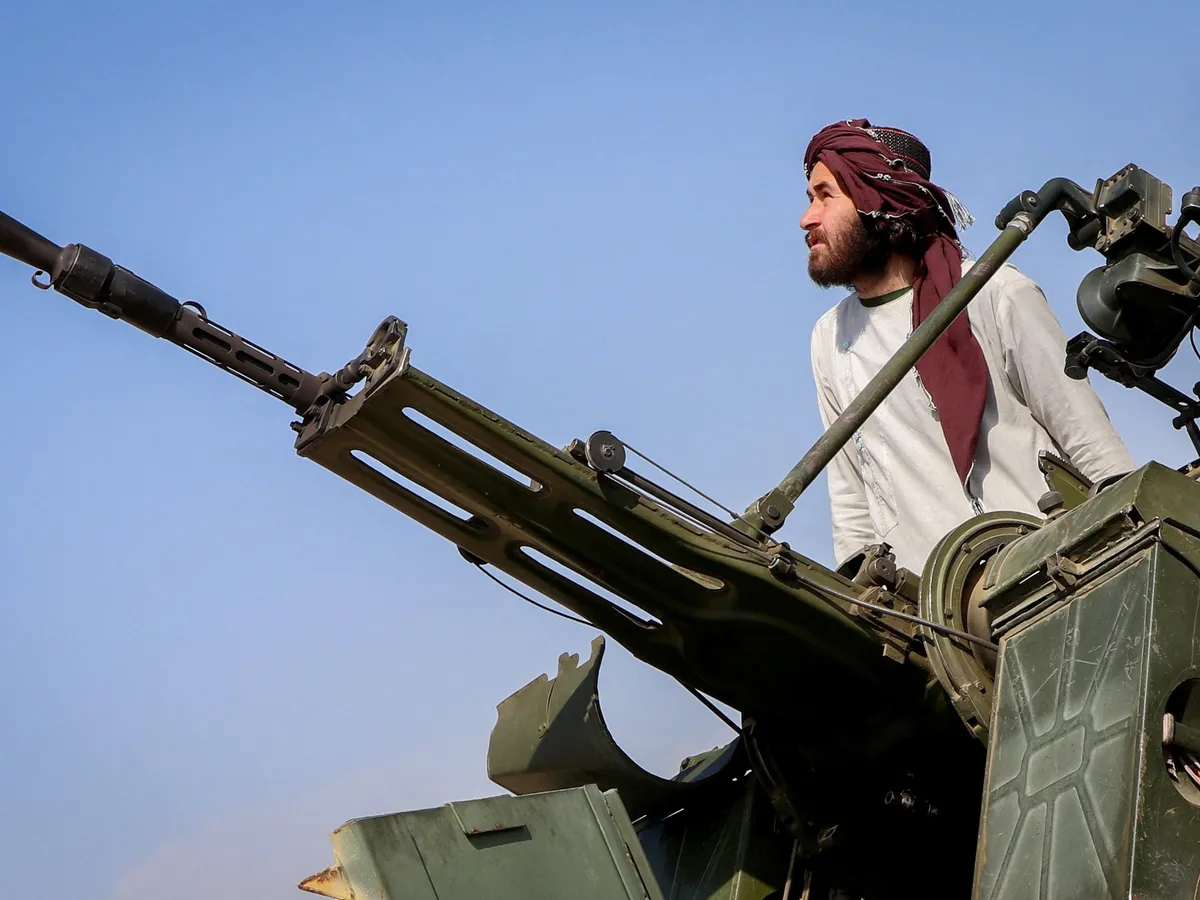
The Taliban said their leaders are willing to negotiate with Pakistan as both sides claim to inflict heavy losses on their opponents in fighting.A Taliban soldier stands next to an anti-aircraft gun while on lookout for Pakistani fighter jets, in Khost province, Afghanistan [File: Reuters]By Adam Hancock, Agence France Presse, Reuters and The Associated PressPublished On 27 Feb 2026Afghanistan’s Taliban leaders said they were willing to negotiate after Pakistan bombed a number of major cities, with Islamabad’s defence minister declaring the neighbours in “open war”, following months of tensions and tit-for-tat clashes.Pakistan struck the Afghan capital Kabul and the city of Kandahar, where Taliban leaders are based, as well as other towns, on Friday, with fighting also continuing along the border. Both sides have reported heavy losses.Recommended Stories list of 4 itemslist 1 of 4Pakistan claims at least 70 fighters killed in strikes along Afghan borderlist 2 of 4Afghanistan bombing: What’s Pakistan’s strategy as India-Taliban ties grow?list 3 of 4New Afghan, Pakistani border clashes follow deadly strikeslist 4 of 4World reacts to eruption of fighting between Pakistan, Afghanistanend of listPakistan’s Defence Minister Khawaja Asif declared an “all-out confrontation” with the Taliban government, posting on X: “Now it is open war between us and you.”Afghan government spokesman Zabihullah Mujahid said the Taliban’s leaders were ready to negotiate with Pakistan in order to bring an end to the violence.“The Islamic Emirate of Afghanistan has always tried to resolve issues through dialogue, and now also we want to resolve this matter through dialogue,” said Mujahid.The latest violence erupted after Pakistan’s air strikes on Afghan territory last weekend triggered Afghan retaliatory attacks along the border on Thursday, escalating long‑simmering tensions over Pakistan’s claim that Afghanistan shelters Pakistan Taliban fighters. Afghanistan denies this.Mujahid said Pakistani strikes hit parts of Kabul, Kandahar and Paktia on Thursday night, and on Paktia, Paktika, Khost and Laghman on Friday.That followed Afghan drone strikes that began late on Thursday on Pakistani military positions and installations in northwest Pakistan along their shared border.Pakistan’s army spokesperson, Lieutenant General Ahmed Sharif Chaudhry, said Pakistani air and ground operations had killed at least 274 members of the Afghan forces and affiliated fighters, and wounded more than 400 others, while 12 Pakistani soldiers were killed and 27 others were wounded. One Pakistani soldier was missing in action.Mujahid rejected the claims of a high number of Afghan casualties as “false”. He said that 55 Pakistani soldiers were killed, with the bodies of 23 of them taken to Afghanistan. He also said “many” Pakistani soldiers were captured. Thirteen Afghan soldiers had been killed, he said, and another 22 wounded, while 13 civilians were also wounded.Later on Friday, the Afghan government said that 19 civilians were killed and 26 others injured when Pakistan struck the provinces of Khost and Paktika in southeastern Afghanistan.Casualty claims from both sides have not been independently verified by Al Jazeera.Relations plungedThe operation was Pakistan’s most widespread bombardment of the Afghan capital and its first air strikes on the southern power base of the Taliban authorities since they returned to power in 2021.Abdul Sayed, a Sweden-based analyst on conflict in Afghanistan and Pakistan, says domestic factors in Pakistan constitute a significant constraint on its ability to initiate a full-scale war against Afghanistan.“This limitation stems from the deep ties between the populations of both countries, particularly the tribes residing on either side of the Durand Line,” a 2,575-kilometre (1,600-mile) frontier that is internationally recognised as Pakistan’s border but which Afghanistan does not recognise as legitimate.“Consequently, despite its substantial military capabilities, Pakistan cannot sustain the large-scale bloodshed that an armed conflict with Afghanistan would entail,” he told Al Jazeera.Relations between the neighbours have plunged in recent months, with land border crossings largely shut since deadly fighting in October that killed more than 70 people on both sides.Several rounds of negotiations between Islamabad and Kabul followed an initial ceasefire brokered by Qatar and Turkiye, but the efforts have failed to produce a lasting agreement.After repeated breaches of the initial truce, Saudi Arabia intervened this month, mediating the release of three Pakistani soldiers captured by Afghanistan in October.UN Secretary-General Antonio Guterres said he was “deeply concerned by the escalation of violence” between Afghanistan and Pakistan and the impact that is having on civilian populations, his spokesperson Stephane Dujarric told a news briefing. Russia, Iran and Iraq are among the countries that have called for an immediate end to the fighting.
SRCAl Jazeera
LANGEN
LEANCenter
WORDS732
ENT11
FRI · 2026-02-27 · 23:05 GMTBRIEF NSR-2026-0228-19949
NSR-2026-0228-19949News Report·EN·Conflict
Afghanistan’s Taliban says open to talks after Pakistan bombs major cities
Following months of escalating tensions and clashes, Pakistan bombed major cities in Afghanistan, including Kabul and Kandahar, leading Pakistan's defense minister to declare "open war." The Taliban government in Afghanistan responded by expressing a willingness to negotiate with Pakistan to end the violence. This recent escalation was triggered by Pakistani air strikes on Afghan territory, which Pakistan claims targeted Pakistani Taliban fighters, followed by retaliatory attacks from Afghanistan.
Adam HancockAl JazeeraFiled 2026-02-27 · 23:05 GMTLean · CenterRead · 3 min
Al JazeeraFIG 01
Reading time
3min
Word count
732words
Sources cited
6cited
Entities identified
11entities
Quality score
100%
§ 01
Briefing Summary
AI-generatedNEWSAR · AI
Following months of escalating tensions and clashes, Pakistan bombed major cities in Afghanistan, including Kabul and Kandahar, leading Pakistan's defense minister to declare "open war." The Taliban government in Afghanistan responded by expressing a willingness to negotiate with Pakistan to end the violence. This recent escalation was triggered by Pakistani air strikes on Afghan territory, which Pakistan claims targeted Pakistani Taliban fighters, followed by retaliatory attacks from Afghanistan. Both sides report inflicting heavy losses on the other. The Taliban maintains that they are open to resolving the conflict through dialogue.
Confidence 0.90Sources 6Claims 5Entities 11
§ 02
Article analysis
Model · rule-basedFraming
Conflict
Diplomatic
Tone
Mixed Tone
AI-assessed
CalmNeutralAlarmist
Factuality
0.80 / 1.00
Factual
LowHigh
Sources cited
6
Well sourced
FewMany
§ 03
Key claims
5 extracted01
Pakistan's Defence Minister declared an 'all-out confrontation' with the Taliban government.
quoteKhawaja Asif
Confidence
1.00
02
Taliban leaders said they were willing to negotiate after Pakistan bombed a number of major cities.
quoteTaliban leaders
Confidence
0.90
03
Pakistan claims at least 70 fighters killed in strikes along Afghan border.
factualPakistan
Confidence
0.80
04
Mujahid said 55 Pakistani soldiers were killed, with the bodies of 23 of them taken to Afghanistan.
statisticZabihullah Mujahid
Confidence
0.70
05
Pakistani air and ground operations had killed at least 274 members of the Afghan forces.
statisticLieutenant General Ahmed Sharif Chaudhry
Confidence
0.70
§ 04
Full report
3 min read · 732 words§ 05
Entities
11 identifiedKey playerOppositionContextPositiveNeutralNegative
Organizations1
§ 06
Keywords & salience
10 termstaliban
0.90
pakistan
0.90
afghanistan
0.90
air strikes
0.70
negotiations
0.70
border clashes
0.60
open war
0.60
violence
0.50
heavy losses
0.50
dialogue
0.40
§ 07
Topic connections
Interactive graph Network visualization showing 30 related topics
View Full Graph Person Organization Location Event|Click node to navigate|Edge numbers = shared articles