EXPLAINERHit by Israeli and US missiles, Iran struck Israel and the Gulf hosts of US bases. What weapons power its response?People attend the 47th anniversary of the Islamic revolution in Tehran [File: Majid Asgaripour/West Asia News Agency via Reuters]Published On 1 Mar 2026After the United States and Israel launched joint strikes on Iran on Saturday, killing Supreme Leader Ayatollah Ali Khamenei and several senior officials, Tehran moved quickly to respond.Iran said its retaliation targeted Israel and US-linked military sites across the region, including in Gulf states that host US forces.Recommended Stories list of 3 itemslist 1 of 3Iranian drone strikes US military facility in Kuwaitlist 2 of 3The Take: ‘The Truth Social war’ – the US playbook for war with Iranlist 3 of 3Huge fire at Bahrain port home to US Navy’s Fifth Fleetend of listThe opening exchange has sharpened the central question for regional capitals and global markets: Will this remain a cycle of reciprocal strikes, or will it evolve into a longer campaign shaped by Iran’s strike reach, allied forces and pressure on shipping and energy infrastructure?At the heart of the question is Iran’s missile arsenal and the other platforms and tools at its disposal to inflict pain on the US and others.Why this time looks differentUnlike the 12-day war that the US and Israel waged on Iran in June 2025, Khamenei’s killing appears to have convinced Tehran that the clash is a battle for the Islamic Republic’s very survival.In Tehran’s narrative, delayed or restrained retaliation risks being seen as weakness and an invitation to further attacks.On Sunday, Iranian President Masoud Pezeshkian said seeking revenge for the killing of Khamenei and other senior officials is the country’s “duty and legitimate right”.But what are the ways in which Iran is taking that “revenge”?(Al Jazeera)Iran’s missile playbook: Arsenal, range and strategyIran’s missile force is central to how it fights and signals. Defence analysts describe it as the Middle East’s largest and most varied, spanning ballistic and cruise missiles, and designed to give Tehran reach even without a modern air force.Iranian officials cast the country’s missile programme as the backbone of deterrence, in part because the air force relies on ageing aircraft. Western governments argue that Iran’s missiles fuel regional instability and could support a future nuclear delivery role – a claim Tehran rejects.The longest-range Iranian ballistic missiles can travel between 2,000km (1,243 miles) and 2,500km (1,553 miles). That means that these missiles can reach Israel, US-linked bases across the Gulf and much of the wider region — but contrary to claims by Trump and some in his orbit, these missiles cannot come close to reaching the US.Short-range missiles: The ‘first punch’Short-range ballistic missiles – roughly 150-800km (93-500 miles) – are built for nearby military targets and rapid regional strikes.Core systems include the Fateh variants: Zolfaghar, Qiam-1 and older Shahab-1/2 missiles. Their shorter range can be an advantage in a crisis. They can be launched in volleys, compressing warning time and making pre-emption harder.Iran used this playbook in January 2020, firing ballistic missiles at Iraq’s Ain al-Assad airbase after the US killed Qassem Soleimani, the country’s highest-profile general. The attack damaged infrastructure and left more than 100 US personnel with traumatic brain injuries, demonstrating that Iran could inflict high costs without matching US air power.(Al Jazeera)Medium-range missiles: Changing the mapIf short-range missiles are Iran’s rapid-volley answer, medium-range ballistic missiles – roughly 1,500-2,000km (900-1,200 miles) – are what turn retaliation into a regional equation. Systems such as Shahab-3, Emad, Ghadr-1, the Khorramshahr variants and Sejjil underpin Iran’s ability to hit further afield, alongside newer designs like Kheibar Shekan and Haj Qassem.Sejjil stands out as a solid-fuel system, generally allowing faster launch readiness than liquid-fuel missiles – an advantage if Iran expects incoming strikes and needs survivable, responsive options.Taken together, these medium-range missiles place Israel and a wide arc of US-linked facilities in Qatar, Bahrain, Kuwait, Saudi Arabia and the United Arab Emirates within range, widening both Iran’s target list and the region’s exposure.Cruise missiles and drones: The low‑flying problemCruise missiles fly low, can hug terrain, and are often harder to detect and track – especially when launched alongside drones or ballistic salvoes designed to overload air defences.Iran is widely assessed to field land-attack and antiship cruise missiles, such as Soumar, Ya-Ali, the Quds variants, Hoveyzeh, Paveh and Ra’ad. The Soumar has a range of 2,500km (1,553 miles).Drones add another layer of pressure. Slower than missiles but cheaper and easier to launch in large numbers, one-way attack drones may be used in repeated waves to wear down air defences and keep airports, ports and energy sites on rolling alert for hours, not minutes. Analysts say this saturation tactic is likely to feature more prominently if the confrontation deepens.Underground ‘missile cities’: Surviving the first blowsMissile numbers matter, but in a sustained confrontation, the key question is how long Iran can keep firing after absorbing strikes.Tehran has spent years hardening parts of its programme in underground storage tunnels, concealed bases and protected launch sites across the country. That network makes it harder to quickly degrade Iran’s ability to launch, and forces adversaries to assume that some capability will survive even a large first wave of attacks.For military planners, that survivability means decisions to further hit Iran’s missile infrastructure carry the risk of prolonged exchanges rather than a short, decisive campaign.Strait of Hormuz: Disruption without a formal blockadeIran’s deterrence playbook is not limited to land targets. The Gulf and the Strait of Hormuz, through which a significant share of the world’s traded oil and gas passes, give Tehran a fast route to shake global markets.Iran can threaten naval forces and commercial shipping using antiship missiles, naval mines, drones and fast-attack craft. It has also showcased what it calls “hypersonic” systems, such as the Fattah series, touting very high speeds and manoeuvrability, though independent evidence about their operational status remains limited.A formal blockade is not necessary to move markets. Radio warnings attributed to Iran’s Revolutionary Guard Corps (IRGC) tankers holding outside the strait and rising war-risk insurance are already influencing ship movements and freight costs. The IRGC has also said that it has struck three US- and UK-linked oil tankers near the Strait of Hormuz.Danish container shipping group Maersk said on Sunday that it was suspending all vessel crossings through the Strait of Hormuz.(Al Jazeera)US forces in the Gulf: More firepower, more targetsWashington has surged naval and air assets into the region, building what officials describe as one of the largest concentrations of US firepower near Iran in years. That strengthens strike and air-defence capacity, but it also increases the list of potential targets.US forces are spread across multiple countries and depend on a network of bases, logistics hubs and command centres that cannot all be protected to the same level, all the time. Military analysts say penetrating defences in a few locations could shift political calculations in Washington, raise pressure on regional neighbours, and increase the cost of keeping the conflict contained.Tehran’s message: No ‘limited’ warIranian officials have long warned that any US or Israeli attack on Iranian soil would be treated as the start of a wider war, not a contained operation. After Khamenei’s killing, that message has hardened.
SRCAl Jazeera
LANGEN
LEANCenter
WORDS1 194
ENT11
SUN · 2026-03-01 · 23:56 GMTBRIEF NSR-2026-0302-20478
NSR-2026-0302-20478News Report·EN·National Security
What are Iran’s weapons as it fights the US and Israel?
Following joint US-Israeli strikes on Iran that killed Supreme Leader Ayatollah Ali Khamenei in March 2026, Iran retaliated by targeting Israel and US-linked military sites in the region, including in Gulf states hosting US forces. The exchange raises concerns about escalating conflict and Iran's capacity to strike back.
Enes AbuomerAl JazeeraFiled 2026-03-01 · 23:56 GMTLean · CenterRead · 5 min
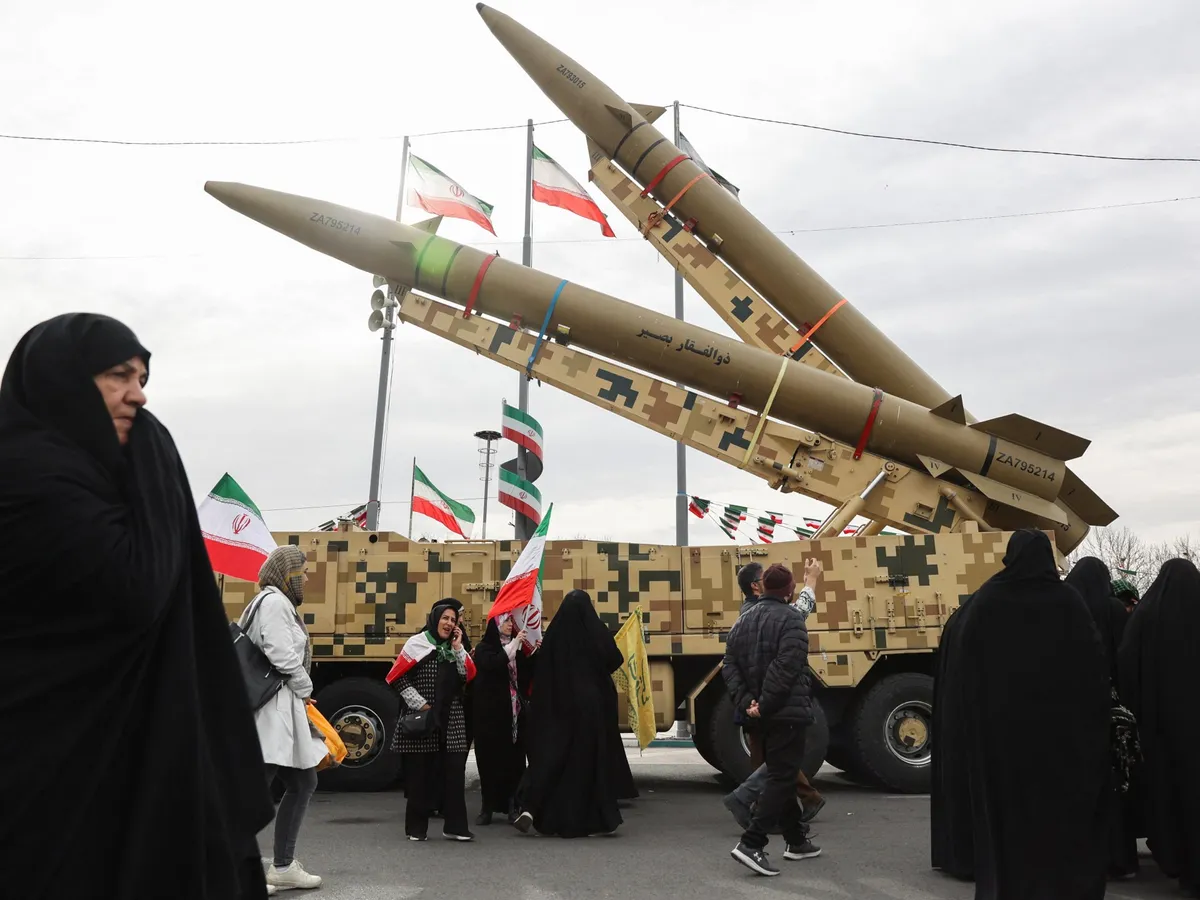
Al JazeeraFIG 01
Reading time
5min
Word count
1 194words
Sources cited
0cited
Entities identified
11entities
Quality score
100%
§ 01
Briefing Summary
AI-generatedNEWSAR · AI
Following joint US-Israeli strikes on Iran that killed Supreme Leader Ayatollah Ali Khamenei in March 2026, Iran retaliated by targeting Israel and US-linked military sites in the region, including in Gulf states hosting US forces. The exchange raises concerns about escalating conflict and Iran's capacity to strike back. Central to Iran's strategy is its large and diverse missile arsenal, including ballistic and cruise missiles, providing long-range capabilities. Iranian officials consider the missile program a key deterrent, especially given its aging air force. Western governments, however, view Iran's missile capabilities as destabilizing and potentially linked to nuclear ambitions, claims Iran denies.
Confidence 0.90Claims 5Entities 11
§ 02
Article analysis
Model · rule-basedFraming
National Security
Conflict
Tone
Mixed Tone
AI-assessed
CalmNeutralAlarmist
Factuality
0.70 / 1.00
Factual
LowHigh
Sources cited
0
No named sources
FewMany
§ 03
Key claims
5 extracted01
Iranian President Masoud Pezeshkian said seeking revenge for Khamenei's killing is the country’s “duty and legitimate right”.
quoteIranian President Masoud Pezeshkian
Confidence
1.00
02
Longest-range Iranian ballistic missiles can travel between 2,000km and 2,500km.
statisticAl Jazeera
Confidence
1.00
03
Iran retaliated by targeting Israel and US-linked military sites, including in Gulf states.
factualAl Jazeera
Confidence
1.00
04
The US and Israel launched joint strikes on Iran, killing Supreme Leader Ayatollah Ali Khamenei.
factualAl Jazeera
Confidence
1.00
05
Iran's missile force is described as the Middle East's largest and most varied.
factualDefence analysts
Confidence
0.90
§ 04
Full report
5 min read · 1 194 words§ 05
Entities
11 identifiedKey playerOppositionContextPositiveNeutralNegative
People2
§ 06
Keywords & salience
9 termsiran
1.00
missile arsenal
0.90
us
0.80
israel
0.80
military strikes
0.70
retaliation
0.70
weapons
0.50
regional instability
0.50
islamic republic
0.40
§ 07
Topic connections
Interactive graph Network visualization showing 51 related topics
View Full Graph Person Organization Location Event|Click node to navigate|Edge numbers = shared articles