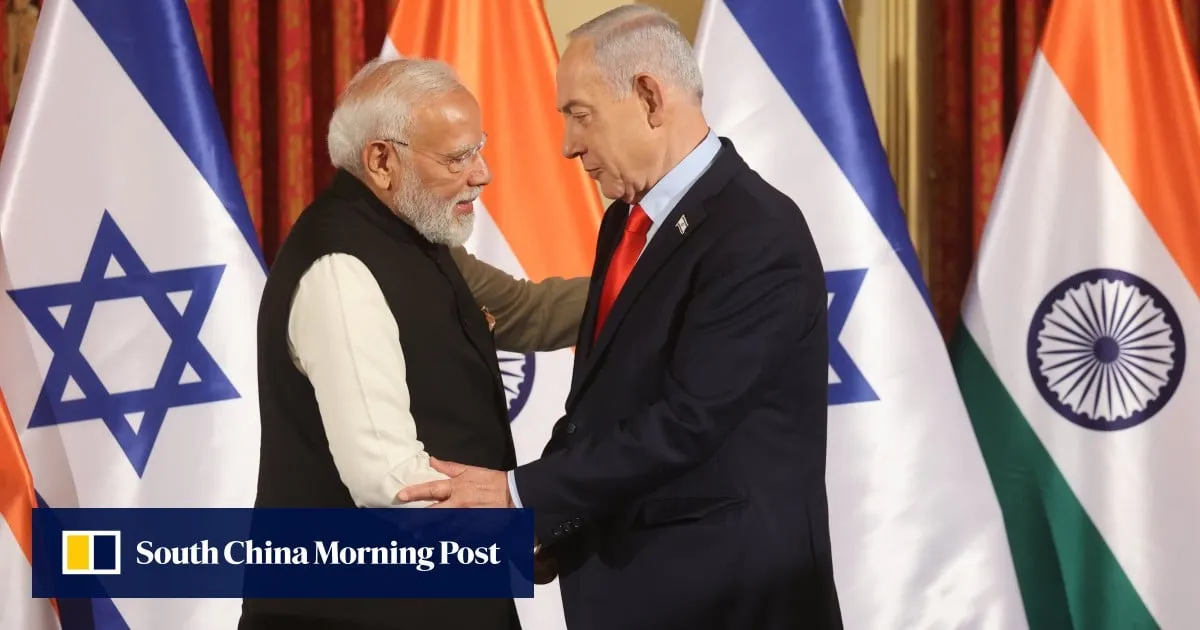
For years, India has prided itself on a foreign policy doctrine of “dehyphenation”: maintaining productive, parallel relations with conflicting countries such as Israel, Iran and the Arab Gulf states without letting any one bilateral tie poison the others.That doctrine is now being tested to the limit.The killing of Iranian supreme leader Ayatollah Ali Khamenei by US-Israeli strikes within days of Narendra Modi returning from a high-profile visit to Tel Aviv provided instant ammunition for the Indian prime minister’s political opposition.“Two days after Mr Modi celebrated his visit to Israel, Israel and the US have begun their joint assault on Iran,” Jairam Ramesh, general secretary of the Congress party, wrote on social media on Saturday.“This was fully expected given their military build-up in the last few months,” he said, calling the timing of Modi’s trip “shameful” in light of the strikes that followed.Modi’s government, for its part, has said India is “deeply concerned” about the Iran conflict and called for restraint and dialogue.
SRCSouth China Morning Post
LANGEN
LEANCenter-Right
WORDS162
ENT7
MON · 2026-03-02 · 09:00 GMTBRIEF NSR-2026-0302-20590
NSR-2026-0302-20590News Report·EN·Political Strategy
Iran conflict puts India’s cherished Middle East neutrality to the test
India's foreign policy of maintaining neutral relations with conflicting Middle Eastern nations is being tested by the recent escalation of the Iran conflict. Following a visit by Prime Minister Modi to Tel Aviv, US-Israeli strikes against Iran have drawn criticism from the Indian political opposition.
Junaid KathjuSouth China Morning PostFiled 2026-03-02 · 09:00 GMTLean · Center-RightRead · 1 min
South China Morning PostFIG 01
Reading time
1min
Word count
162words
Sources cited
1cited
Entities identified
7entities
Quality score
100%
§ 01
Briefing Summary
AI-generatedNEWSAR · AI
India's foreign policy of maintaining neutral relations with conflicting Middle Eastern nations is being tested by the recent escalation of the Iran conflict. Following a visit by Prime Minister Modi to Tel Aviv, US-Israeli strikes against Iran have drawn criticism from the Indian political opposition. The opposition Congress party has accused Modi of poor timing, suggesting his visit emboldened the strikes. The Indian government has responded by expressing deep concern over the conflict and urging restraint and dialogue. India's traditional "dehyphenation" doctrine, which seeks to balance relationships with countries like Israel and Iran, is now facing significant pressure. The situation highlights the challenges India faces in navigating complex geopolitical tensions in the Middle East.
Confidence 0.90Sources 1Claims 4Entities 7
§ 02
Article analysis
Model · rule-basedFraming
Political Strategy
Diplomatic
Tone
Measured
AI-assessed
CalmNeutralAlarmist
Factuality
0.70 / 1.00
Factual
LowHigh
Sources cited
1
Limited
FewMany
§ 03
Key claims
4 extracted01
India is “deeply concerned” about the Iran conflict and called for restraint and dialogue.
quoteModi’s government
Confidence
1.00
02
The killing of Iranian supreme leader Ayatollah Ali Khamenei by US-Israeli strikes.
factualnull
Confidence
0.90
03
India has prided itself on a foreign policy doctrine of “dehyphenation”.
factualnull
Confidence
0.90
04
Two days after Mr Modi celebrated his visit to Israel, Israel and the US have begun their joint assault on Iran.
quoteJairam Ramesh
Confidence
0.80
§ 04
Full report
1 min read · 162 words§ 05
Entities
7 identifiedKey playerOppositionContextPositiveNeutralNegative
§ 06
Keywords & salience
10 termsiran conflict
1.00
india foreign policy
0.90
iran
0.90
middle east neutrality
0.80
dehyphenation
0.70
israel
0.60
narendra modi
0.60
political opposition
0.50
us
0.50
restraint and dialogue
0.40
§ 07
Topic connections
Interactive graph Network visualization showing 49 related topics
View Full Graph Person Organization Location Event|Click node to navigate|Edge numbers = shared articles