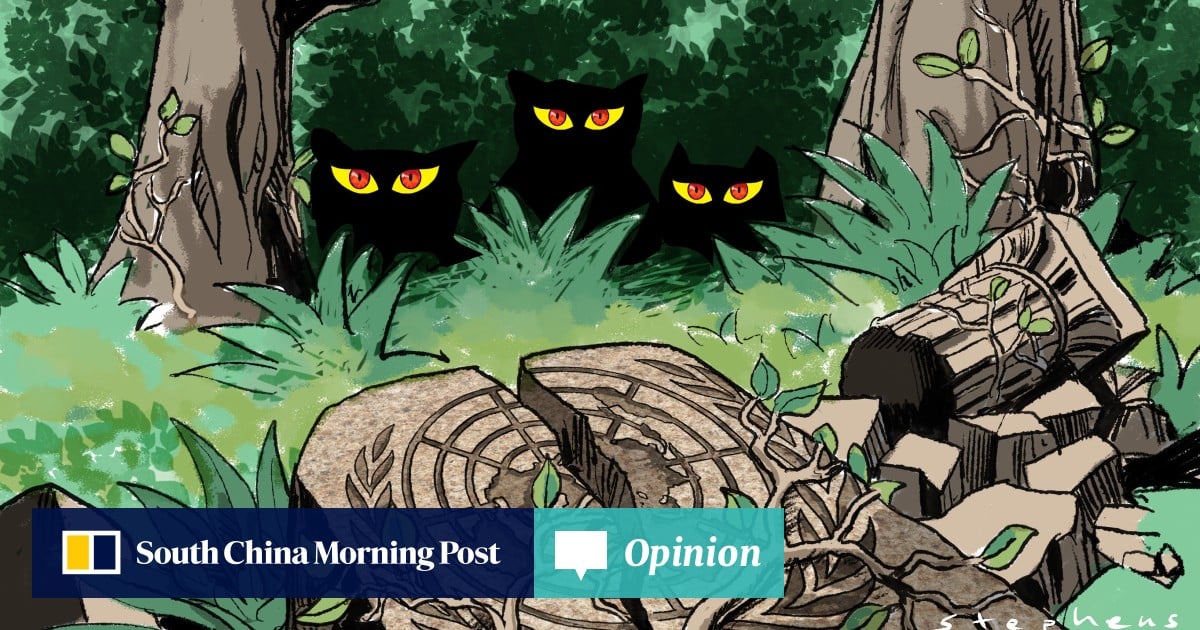
The smoke rising from Iran on Saturday signalled more than just a localised escalation in the Middle East. Coming on the heels of the United States’ military invasion of Venezuela earlier this year, the joint US-Israeli strikes on Iran represent a watershed moment for the 21st century.We are witnessing the systematic dismantling of the post-1945 legal order, replaced by the unvarnished “law of the jungle” where strategic interests supersede legality, and the UN Charter is treated as a relic of a more optimistic age.The foundational architecture of modern international law rests upon Article 2(4) of the UN Charter, which strictly prohibits the threat or use of force against the territorial integrity or political independence of any state. The exceptions are intentionally narrow: authorisation by the UN Security Council or a clear case of self-defence under Article 51.In the current strikes against Iran, neither criterion has been met. There was no Security Council resolution authorising “Operation Epic Fury”. Furthermore, the claim of self-defence fails the most basic legal scrutiny. Under the long-standing “Caroline test”, the necessity of self-defence must be “instant, overwhelming [and] leaving no choice of means, and no moment for deliberation”.Iran had not launched an armed attack against the US or Israel. Instead, Washington and Tel Aviv have relied on a doctrine of “pre-emptive war” – striking a sovereign state to eliminate a perceived potential future capability. By stretching the definition of imminent threats to include hypothetical ones, the US has normalised aggression. If the mere pursuit of a technology or a shift in regional power becomes a justifiable trigger for bombardment, then the prohibition on force has been hollowed out from within.To understand why the US is pursuing this path of “jungle law” despite clear domestic war-weariness, one must look at the structural capture of US foreign policy. Public opinion polls consistently show that the American people are exhausted by the “forever wars” of the last two decades. Yet the political machinery in Washington operates in a vacuum, insulated from the public will.05:40Trump says US-Israeli strikes on Iran is beginning of ‘major combat operation’Trump says US-Israeli strikes on Iran is beginning of ‘major combat operation’
SRCSouth China Morning Post
LANGEN
LEANCenter-Right
WORDS357
ENT10
MON · 2026-03-02 · 12:30 GMTBRIEF NSR-2026-0302-20629
NSR-2026-0302-20629Analysis·EN·Political Strategy
Attack on Iran normalises global descent into the ‘law of the jungle’
The article argues that recent US-Israeli strikes on Iran, following a US military action in Venezuela, signal a dangerous shift away from international law and towards a "law of the jungle" in global affairs. It claims these actions violate Article 2(4) of the UN Charter, which prohibits the use of force against sovereign states without UN Security Council authorization or a clear case of self-defense.
Tian ShichenSouth China Morning PostFiled 2026-03-02 · 12:30 GMTLean · Center-RightRead · 2 min
South China Morning PostFIG 01
Reading time
2min
Word count
357words
Sources cited
0cited
Entities identified
10entities
Quality score
100%
§ 01
Briefing Summary
AI-generatedNEWSAR · AI
The article argues that recent US-Israeli strikes on Iran, following a US military action in Venezuela, signal a dangerous shift away from international law and towards a "law of the jungle" in global affairs. It claims these actions violate Article 2(4) of the UN Charter, which prohibits the use of force against sovereign states without UN Security Council authorization or a clear case of self-defense. The author asserts that the strikes against Iran do not meet these criteria, as Iran did not launch an armed attack. The US and Israel are accused of relying on a doctrine of "pre-emptive war," normalizing aggression by striking a sovereign state based on perceived future capabilities. The article suggests that US foreign policy is driven by factors detached from public opinion, despite American weariness of prolonged wars.
Confidence 0.90Claims 5Entities 10
§ 02
Article analysis
Model · rule-basedFraming
Political Strategy
Legal & Judicial
Tone
Mixed Tone
AI-assessed
CalmNeutralAlarmist
Factuality
0.40 / 1.00
Mixed
LowHigh
Sources cited
0
No named sources
FewMany
§ 03
Key claims
5 extracted01
Public opinion polls consistently show that the American people are exhausted by the “forever wars”.
factualnull
Confidence
0.90
02
Iran had not launched an armed attack against the US or Israel.
factualnull
Confidence
0.90
03
Washington and Tel Aviv have relied on a doctrine of “pre-emptive war”.
factualnull
Confidence
0.80
04
The current strikes against Iran did not meet the criteria for self-defense under Article 51 of the UN Charter.
factualnull
Confidence
0.80
05
Joint US-Israeli strikes on Iran represent a watershed moment for the 21st century.
predictionnull
Confidence
0.70
§ 04
Full report
2 min read · 357 words§ 05
Entities
10 identifiedKey playerOppositionContextPositiveNeutralNegative
Locations6
§ 06
Keywords & salience
10 termslaw of the jungle
0.90
international law
0.90
un charter
0.80
use of force
0.80
pre-emptive war
0.70
self-defence
0.60
armed attack
0.60
us foreign policy
0.60
iran
0.50
aggression
0.40
§ 07
Topic connections
Interactive graph Network visualization showing 51 related topics
View Full Graph Person Organization Location Event|Click node to navigate|Edge numbers = shared articles