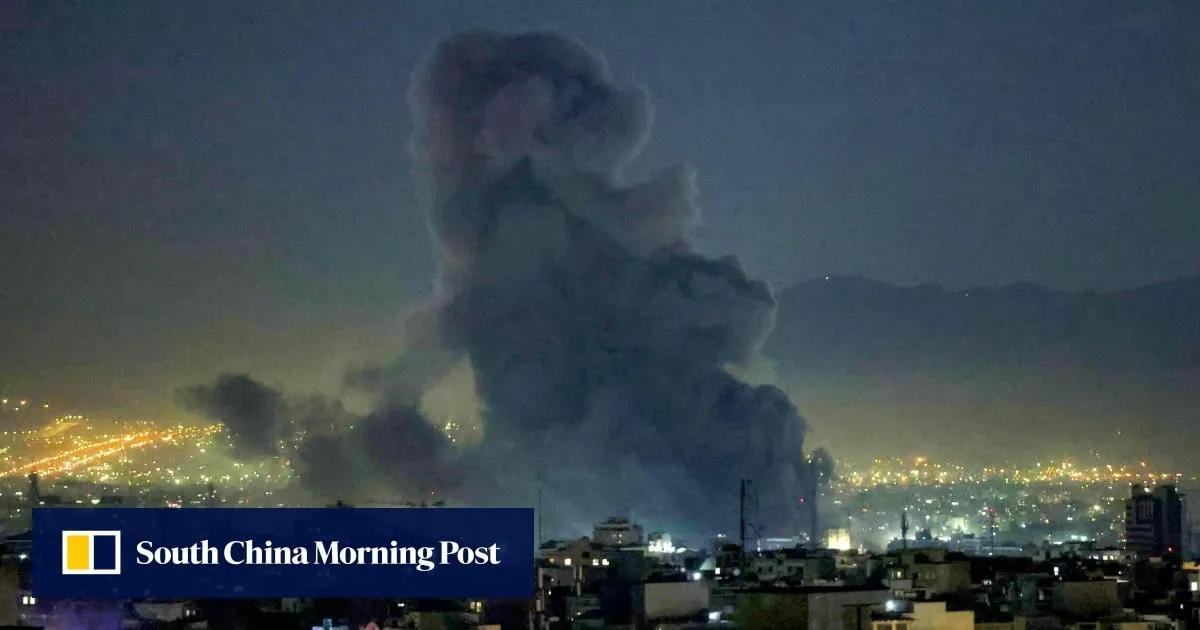
The escalating conflict in the Middle East – which is sending oil prices soaring and disrupting shipping traffic along the Strait of Hormuz – should not pose an immediate threat to China’s crude supply, but will add urgency to the country’s energy security drive, analysts said.Since the United States and Israel launched strikes against Iran over the weekend, commercial traffic has largely come to a standstill along the Strait of Hormuz – a waterway linking the Persian Gulf with the Indian Ocean that serves as a vital conduit for global crude flows.Given that roughly 65 per cent of China’s seaborne crude imports come from the Middle East, a prolonged disruption to shipping along the strait would ultimately affect China’s crude sourcing, according to Muyu Xu, a senior crude oil analyst at Kpler.“Elevated onshore crude inventories and substantial volumes already in transit to China mean there is no immediate threat to crude supply or energy security – unless the conflict leads to widespread and prolonged disruptions to energy flows,” Xu said.Even though China is highly exposed to supply disruptions on the Strait of Hormuz, it is better positioned than any other Asian refiner to manage a potential curtailment in refining feedstocks thanks to its sufficient crude stockpiles, according to June Goh, a senior oil market analyst at Sparta Commodities.China had been importing around 1.4 million barrels per day of oil from Iran, with most of the shipments feeding the country’s independent refineries, Goh said. If the US took control of Iranian oil flows, that trade could be at risk, she added.
SRCSouth China Morning Post
LANGEN
LEANCenter-Right
WORDS260
ENT6
MON · 2026-03-02 · 12:00 GMTBRIEF NSR-2026-0302-20633
NSR-2026-0302-20633News Report·EN·Economic Impact
Iran conflict will accelerate China’s push to become an ‘energy powerhouse’, analysts say
Analysts say the escalating conflict in the Middle East, disrupting shipping via the Strait of Hormuz, will accelerate China's energy security efforts. While the conflict doesn't pose an immediate threat to China's crude supply due to existing inventories and shipments already en route, prolonged disruptions would affect China's crude sourcing, as roughly 65% of its seaborne crude imports originate from the Middle East.
Ji Siqi,Mia NurmamatSouth China Morning PostFiled 2026-03-02 · 12:00 GMTLean · Center-RightRead · 2 min
South China Morning PostFIG 01
Reading time
2min
Word count
260words
Sources cited
2cited
Entities identified
6entities
Quality score
100%
§ 01
Briefing Summary
AI-generatedNEWSAR · AI
Analysts say the escalating conflict in the Middle East, disrupting shipping via the Strait of Hormuz, will accelerate China's energy security efforts. While the conflict doesn't pose an immediate threat to China's crude supply due to existing inventories and shipments already en route, prolonged disruptions would affect China's crude sourcing, as roughly 65% of its seaborne crude imports originate from the Middle East. China is considered better positioned than other Asian refiners to manage potential feedstock curtailment due to its substantial crude stockpiles. Previously, China imported around 1.4 million barrels per day of oil from Iran, primarily for independent refineries, a trade that could be at risk if the US takes control of Iranian oil flows.
Confidence 0.90Sources 2Claims 5Entities 6
§ 02
Article analysis
Model · rule-basedFraming
Economic Impact
National Security
Tone
Measured
AI-assessed
CalmNeutralAlarmist
Factuality
0.70 / 1.00
Factual
LowHigh
Sources cited
2
Limited
FewMany
§ 03
Key claims
5 extracted01
China had been importing around 1.4 million barrels per day of oil from Iran.
statisticJune Goh, a senior oil market analyst at Sparta Commodities
Confidence
0.90
02
Roughly 65 per cent of China’s seaborne crude imports come from the Middle East.
statisticMuyu Xu, a senior crude oil analyst at Kpler
Confidence
0.90
03
Escalating conflict in the Middle East is sending oil prices soaring and disrupting shipping traffic along the Strait of Hormuz.
factual
Confidence
0.90
04
China is better positioned than any other Asian refiner to manage a potential curtailment in refining feedstocks.
factualJune Goh, a senior oil market analyst at Sparta Commodities
Confidence
0.80
05
There is no immediate threat to crude supply or energy security to China.
predictionMuyu Xu, a senior crude oil analyst at Kpler
Confidence
0.70
§ 04
Full report
2 min read · 260 words§ 05
Entities
6 identifiedKey playerOppositionContextPositiveNeutralNegative
Organizations2
§ 06
Keywords & salience
10 termsenergy security
0.90
iran conflict
0.80
china
0.80
strait of hormuz
0.70
crude oil
0.70
supply disruption
0.60
oil prices
0.60
shipping traffic
0.50
middle east
0.50
crude imports
0.40
§ 07
Topic connections
Interactive graph Network visualization showing 51 related topics
View Full Graph Person Organization Location Event|Click node to navigate|Edge numbers = shared articles