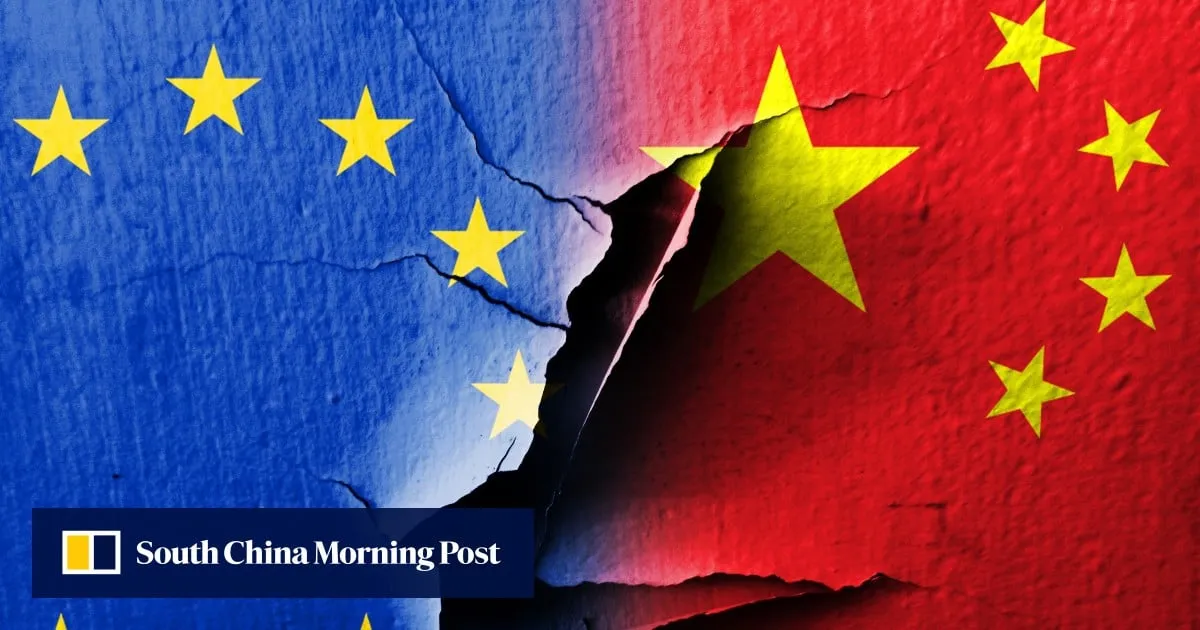
The European Union’s ambitious industrial policy to challenge China has been gutted, removing AI, semiconductors and quantum computing from a list of strategic technologies that must be “made in Europe” to tap billions in government funds.Biotechnology and robotics are other cutting-edge sectors to be cut from the Industrial Accelerator Act (IAA) ahead of the proposal’s formal unveiling by the European Commission on Wednesday, a leaked draft showed.Plans to exclude non-EU-based producers from government contracts and funds have been kicked down the road for six months, but the draft suggested those countries that align with the bloc’s economic security policies could eventually be included.The IAA is designed to promote local industries at the expense of competing companies from outside the EU market.While China is directly referred to only twice in 93 pages of legislation and annexes, the act is seen as a crucial prong of Brussels’ efforts to de-risk from the Asian giant.It aims to reduce EU dependence on China by mandating local content rules for strategic sectors such as electric vehicles and solar for public procurement and state support schemes, meaning a high proportion of qualifying products should be made in Europe.
SRCSouth China Morning Post
LANGEN
LEANCenter-Right
WORDS192
ENT5
TUE · 2026-03-03 · 13:51 GMTBRIEF NSR-2026-0303-20973
NSR-2026-0303-20973News Report·EN·Economic Impact
EU strips AI, chips and quantum from industrial plan aimed at countering China
The European Union has significantly scaled back its Industrial Accelerator Act (IAA), an industrial policy designed to counter China's economic influence. Leaked drafts reveal that key sectors like AI, semiconductors, quantum computing, biotechnology, and robotics have been removed from the list of strategic technologies prioritized for European production.
Finbarr BerminghamSouth China Morning PostFiled 2026-03-03 · 13:51 GMTLean · Center-RightRead · 1 min
South China Morning PostFIG 01
Reading time
1min
Word count
192words
Sources cited
0cited
Entities identified
5entities
Quality score
100%
§ 01
Briefing Summary
AI-generatedNEWSAR · AI
The European Union has significantly scaled back its Industrial Accelerator Act (IAA), an industrial policy designed to counter China's economic influence. Leaked drafts reveal that key sectors like AI, semiconductors, quantum computing, biotechnology, and robotics have been removed from the list of strategic technologies prioritized for European production. The IAA aims to reduce the EU's dependence on China by promoting local content in sectors like electric vehicles and solar through public procurement and state support. While the act doesn't explicitly target China, it's viewed as a key part of Brussels' strategy to "de-risk" from the Asian nation. Plans to exclude non-EU producers from government contracts have been delayed, but may eventually include countries aligned with the EU's economic security policies.
Confidence 0.90Claims 5Entities 5
§ 02
Article analysis
Model · rule-basedFraming
Economic Impact
Political Strategy
Tone
Measured
AI-assessed
CalmNeutralAlarmist
Factuality
0.80 / 1.00
Factual
LowHigh
Sources cited
0
No named sources
FewMany
§ 03
Key claims
5 extracted01
Plans to exclude non-EU-based producers from government contracts and funds have been kicked down the road for six months.
factualnull
Confidence
0.90
02
Biotechnology and robotics are other cutting-edge sectors to be cut from the Industrial Accelerator Act (IAA).
factualnull
Confidence
0.90
03
The EU's industrial policy to challenge China has been gutted, removing AI, semiconductors and quantum computing.
factualnull
Confidence
0.90
04
The act is seen as a crucial prong of Brussels’ efforts to de-risk from the Asian giant.
factualnull
Confidence
0.80
05
The IAA is designed to promote local industries at the expense of competing companies from outside the EU market.
factualnull
Confidence
0.80
§ 04
Full report
1 min read · 192 words§ 05
Entities
5 identifiedKey playerOppositionContextPositiveNeutralNegative
Organizations2
§ 06
Keywords & salience
10 termsindustrial policy
0.90
european union
0.80
china
0.80
strategic technologies
0.70
local content rules
0.60
de-risking
0.60
artificial intelligence
0.50
quantum computing
0.50
semiconductors
0.50
industrial accelerator act
0.50
§ 07
Topic connections
Interactive graph Network visualization showing 51 related topics
View Full Graph Person Organization Location Event|Click node to navigate|Edge numbers = shared articles