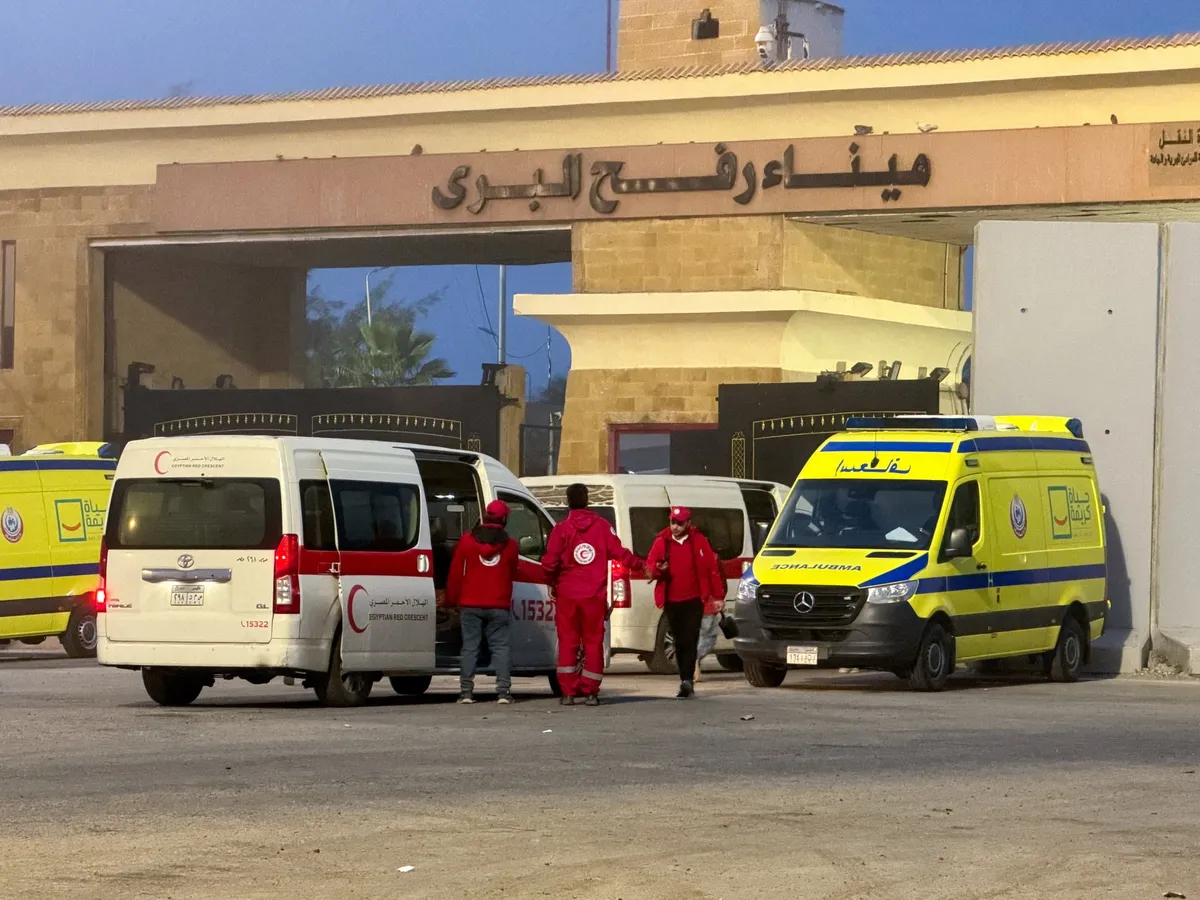
Crossings have been shut since Saturday as the displaced and war-weary population of Gaza remains dependent on humanitarian aid.Israel shut the Rafah border crossing after launching strikes on Iran in coordination with the US [File: Reuters]Published On 3 Mar 2026United Nations Secretary-General Antonio Guterres has called for Israel to reopen Gaza’s border crossings, which have been closed by Israel since its forces launched a war against Iran with the United States.“It is imperative that all crossings be reopened … as soon as possible,” Guterres’s spokesman Stephane Dujarric said on Tuesday. “In recent days, our partners have been forced to ration fuel, prioritise life-saving operations, albeit in reduced capacity as our local stocks are going down.”Recommended Stories list of 3 itemslist 1 of 3Iran holds mass funeral for girls, staff killed in US-Israel school attacklist 2 of 3Israeli strikes in Beirut as Hezbollah launches drones at Israellist 3 of 3Could the US run low on weapons for its assault on Iran?end of listDujarric said there were some stockpiles in Gaza but “when the doors are shut, we obviously stretch whatever we have to make it last longer.”The Rafah crossing into Gaza from Egypt, the only gateway for Palestinians in Gaza to the outside world that does not pass through Israel, had reopened for the movement of people on February 2, allowing a limited number of people to leave for the first time in months and a trickle to return to the devastated enclave to reunite with family.Thousands of Palestinians need urgent medical attention outside Gaza but have not yet been allowed to leave.Israel shut down the crossing again on Saturday as it launched attacks on Iran, citing “security adjustments”. The crossing is considered vital for the delivery of humanitarian aid and the evacuation of critically ill patients.Israeli authorities said late on Monday that they would reopen the Karem Abu Salem crossing, known as Kerem Shalom to Israelis, to allow for the “gradual entry of humanitarian aid” into the territory. That crossing sits at the intersection of the Gaza Strip boundary with the Israeli and Egyptian borders and was also shut on Saturday.The UN’s World Food Programme (WFP) expressed optimism on Tuesday. “The crossings will be opened, and that is timely for us, and we need to get in aid as fast as we can,” Samer Abdel Jaber, the WFP’s regional director for the Middle East, North Africa and Eastern Europe, told reporters.Gaza is wholly dependent on fuel brought in by trucks from Israel and Egypt, and a lack of supplies puts hospital operations further at risk and threatens water and sanitation services.Since the start of Israel’s genocidal war on Gaza in October 2023, Israeli border restrictions have depleted stocks of medicines, reconstruction materials, food and water inside the Strip, worsening conditions that were already dire after years of an Israeli blockade.A UN inquiry in September found genocidal intent in Israel’s war on Gaza, a landmark moment after nearly two years of war. In 2023, South Africa filed a case at the International Court of Justice in The Hague against Israel, accusing it of conduct in Gaza that was tantamount to genocide. That case is ongoing.West Bank tensions spiralIn the meantime, Israeli forces have continued the closure of the Al-Aqsa Mosque in occupied East Jerusalem for the fourth consecutive day on Tuesday.Palestine’s Jerusalem Governorate reported that the army prevented worshippers from entering the mosque, citing a state of emergency.The compound, the third holiest site in Islam, was sealed off on Saturday morning, hours after the Israeli-US military offensive on Iran began.For a second consecutive day, Israeli forces raided the Askar refugee camp east of the occupied West Bank city of Nablus, shutting down its entrances and searching several homes.Last month, the Israeli government approved a plan to claim large areas of the West Bank as “state property” if Palestinians cannot prove ownership, prompting a regional outcry and accusations of “de facto annexation”.More than 80 UN member states condemned the move and called on Israel to reverse the decision, which they said was contrary to Israel’s obligations under international law.
SRCAl Jazeera
LANGEN
LEANCenter
WORDS677
ENT10
TUE · 2026-03-03 · 11:56 GMTBRIEF NSR-2026-0303-21003
NSR-2026-0303-21003News Report·EN·Human Rights
UN chief warns of Israeli-made humanitarian crisis in Gaza amid war on Iran
UN Secretary-General Antonio Guterres is urging Israel to reopen Gaza's border crossings, which have been closed since Saturday when Israel launched attacks on Iran. The closures are hindering the delivery of crucial humanitarian aid to Gaza's war-weary population, forcing aid organizations to ration supplies.
Al Jazeera StaffAl JazeeraFiled 2026-03-03 · 11:56 GMTLean · CenterRead · 3 min
Al JazeeraFIG 01
Reading time
3min
Word count
677words
Sources cited
4cited
Entities identified
10entities
Quality score
100%
§ 01
Briefing Summary
AI-generatedNEWSAR · AI
UN Secretary-General Antonio Guterres is urging Israel to reopen Gaza's border crossings, which have been closed since Saturday when Israel launched attacks on Iran. The closures are hindering the delivery of crucial humanitarian aid to Gaza's war-weary population, forcing aid organizations to ration supplies. The Rafah crossing, a vital gateway for Palestinians and aid, was shut citing "security adjustments." While Israel announced the reopening of the Karem Abu Salem crossing for aid, the UN's World Food Programme expressed the need to get aid in as quickly as possible, as Gaza is wholly dependent on it. Thousands of Palestinians needing medical attention outside of Gaza are unable to leave due to the closures.
Confidence 0.90Sources 4Claims 5Entities 10
§ 02
Article analysis
Model · rule-basedFraming
Human Rights
Conflict
Tone
Mixed Tone
AI-assessed
CalmNeutralAlarmist
Factuality
0.70 / 1.00
Factual
LowHigh
Sources cited
4
Well sourced
FewMany
§ 03
Key claims
5 extracted01
Israel shut down Rafah crossing again on Saturday, citing “security adjustments”.
factualIsraeli authorities
Confidence
1.00
02
Guterres calls for Israel to reopen Gaza’s border crossings.
quoteAntonio Guterres
Confidence
1.00
03
Rafah crossing reopened on February 2nd, allowing limited movement after months.
factualArticle
Confidence
0.90
04
Crossings have been shut since Saturday, impacting Gaza's aid dependence.
factualArticle
Confidence
0.90
05
WFP expressed optimism that crossings will be opened soon.
quoteSamer Abdel Jaber, WFP
Confidence
0.80
§ 04
Full report
3 min read · 677 words§ 05
Entities
10 identifiedKey playerOppositionContextPositiveNeutralNegative
§ 06
Keywords & salience
9 termsgaza
1.00
border crossings
0.90
humanitarian crisis
0.90
humanitarian aid
0.80
israel
0.70
rafah crossing
0.60
iran
0.60
united nations
0.50
karem abu salem crossing
0.50
§ 07
Topic connections
Interactive graph Network visualization showing 51 related topics
View Full Graph Person Organization Location Event|Click node to navigate|Edge numbers = shared articles