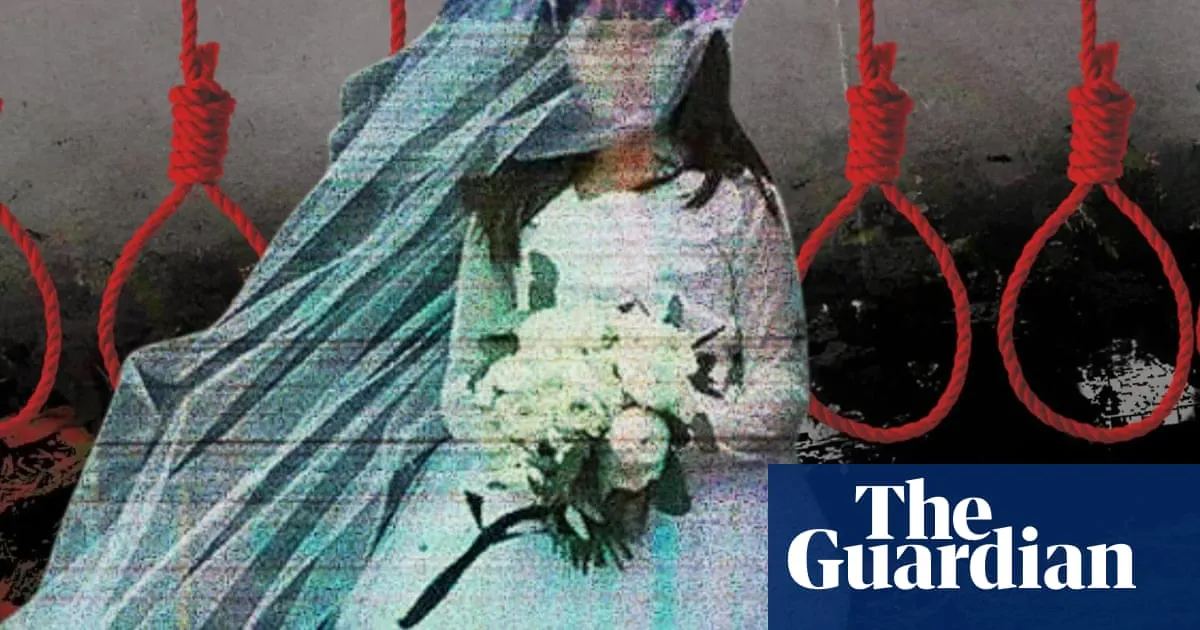
A child bride who was due to be executed this month in Iran over the death of her husband has had her life spared by his parents, who were paid the equivalent of £70,000 in exchange for their forgiveness.Goli Kouhkan, 25, has been on death row in Gorgan central prison in northern Iran for the past seven years. At the age of 18 she was arrested over allegedly participating in the killing of her abusive husband, Alireza Abil, in May 2018, and sentenced to qisas – retribution-in-kind.Mai Sato, UN special rapporteur on the situation for human rights in Iran, said: “It’s great that Kouhkan won’t be executed – one life has been saved … but it doesn’t really solve the issue of the qisas law, which is in violation of many international standards.” Sato, along with three other UN experts, said earlier this month that the case “exemplifies the systemic gender bias faced by women victims of child marriage and domestic violence within Iran’s criminal justice system”.In November, the Guardian was the first international publication to reveal that Kouhkan, an undocumented member of Iran’s Baluch minority, would face execution by hanging unless she could raise 10bn tomans (about £80,000) to pay off the victim’s family. Under Iranian law, a victim’s family can pardon someone in return for blood money – compensation payable in cases of murder or bodily harm.In a statement issued last month, Mahmood Amiry-Moghaddam, director of Iran Human Rights, said: “The blood-money amount set for her case is several times the official rate, an impossible sum for a young, undocumented Baluch woman from a deprived background who has also been rejected by her family.”Forced to marry her cousin at 12, Kouhkan became pregnant at 13 and gave birth to a son. She suffered physical and emotional abuse for years. On the day her husband was killed, Kouhkan found him beating their son, then aged five. She called her husband’s cousin, Mohammad Abil, for help. When he arrived a fight broke out which resulted in the death of her husband. According to Iran Human Rights, Abil remains on death row.Kouhkan’s lawyer confirmed in a post on Instagram on 9 December that the original sum of 10bn tomans had been reduced to 8bn tomans and that amount had been raised through donations. In a video published by Mizan News Agency, Kouhkan’s parents-in-law are seen signing documents.Kouhkan hopes to be reunited with her son when she is released, according to Mehdi Ghatei, founder of Qasim Child Foundation, a charity registered in Australia, who had started a fundraiser for Kouhkan. In accordance with Iranian law, Kouhkan’s son is entitled to 2bn tomans of the total blood money, which is “a good sum for establishing a new life”, he said.Ghatei said he had been contacted by organisations and individuals all over the world after the Guardian’s story about Kouhkan and that international pressure had played a part in saving her life. “The Iranian regime tries to keep people silent,” he said. “When people start raising awareness [of cases such as Kouhkan’s] there is sometimes huge pressure from international bodies, which increases the chances of halting executions. The role of the mainstream media is huge in this case, unbelievable.”At least 241 women were executed in Iran between 2010 and 2024, 114 of whom were sentenced to qisas for homicide. The majority of women executed for homicide in the documented cases had killed their husband or intimate partner. Many of these women were victims of domestic violence or child marriage, or acted in self-defence.Iran executes the highest number of women in the world, according to available data. Amnesty International said that at least 30 women were executed in the country last year. At least 42 women have been executed in 2025 so far – 18 for murdering their husbands, including two child brides, according to Iran Human Rights.
SRCThe Guardian - World News
LANGEN
LEANCenter-Left
WORDS643
ENT3
THU · 2025-12-11 · 12:48 GMTBRIEF NSR-2025-1211-2127
NSR-2025-1211-2127News Report·EN·Human Rights
Child bride spared execution in Iran after blood money is paid
Goli Kouhkan, a 25-year-old Iranian woman, has been spared execution after her husband's family accepted blood money in exchange for forgiveness. Kouhkan was sentenced to death for her alleged involvement in the 2018 death of her abusive husband, whom she was forced to marry at age 12.
Sarah JohnsonThe Guardian - World NewsFiled 2025-12-11 · 12:48 GMTLean · Center-LeftRead · 3 min
The Guardian - World NewsFIG 01
Reading time
3min
Word count
643words
Sources cited
6cited
Entities identified
3entities
Quality score
100%
§ 01
Briefing Summary
AI-generatedNEWSAR · AI
Goli Kouhkan, a 25-year-old Iranian woman, has been spared execution after her husband's family accepted blood money in exchange for forgiveness. Kouhkan was sentenced to death for her alleged involvement in the 2018 death of her abusive husband, whom she was forced to marry at age 12. The case garnered international attention, highlighting systemic gender bias in Iran's justice system regarding child marriage and domestic violence. After an initial sum of 10 billion tomans was deemed impossible, the amount was reduced to 8 billion tomans, which was raised through donations. Kouhkan's in-laws signed documents confirming the agreement, and she now hopes to be reunited with her son upon release.
Confidence 0.90Sources 6Claims 5Entities 3
§ 02
Article analysis
Model · rule-basedFraming
Human Rights
Legal & Judicial
Tone
Mixed Tone
AI-assessed
CalmNeutralAlarmist
Factuality
0.80 / 1.00
Factual
LowHigh
Sources cited
6
Well sourced
FewMany
§ 03
Key claims
5 extracted01
The original sum of 10bn tomans had been reduced to 8bn tomans and that amount had been raised through donations.
factual
Confidence
1.00
02
The blood-money amount set for her case is several times the official rate.
quoteMahmood Amiry-Moghaddam, director of Iran Human Rights
Confidence
1.00
03
Kouhkan won’t be executed – one life has been saved … but it doesn’t really solve the issue of the qisas law.
quoteMai Sato, UN special rapporteur
Confidence
1.00
04
At the age of 18 she was arrested over allegedly participating in the killing of her abusive husband, Alireza Abil, in May 2018.
factual
Confidence
1.00
05
Goli Kouhkan, 25, has been on death row in Gorgan central prison in northern Iran for the past seven years.
factual
Confidence
1.00
§ 04
Full report
3 min read · 643 words§ 05
Entities
3 identifiedKey playerOppositionContextPositiveNeutralNegative
Locations1
§ 06
Keywords & salience
10 termschild bride
1.00
execution
0.90
blood money
0.90
iran
0.80
domestic violence
0.70
qisas law
0.70
child marriage
0.60
human rights
0.60
death row
0.50
gender bias
0.50
§ 07
Topic connections
Interactive graph Network visualization showing 51 related topics
View Full Graph Person Organization Location Event|Click node to navigate|Edge numbers = shared articles