The latest exchange of air strikes and border clashes between Pakistan and Afghanistan has once again pushed the region to the brink, reviving a dread among those who have lived through this cycle before, the continuation of a war that never truly ended.The so-called war on terror has been waged for over two decades, with no end in sight. Since 2001, the war has claimed more than 33,000 civilian and security forces lives in Pakistan and displaced millions internally. Yet a fundamental question remains unanswered: who exactly is the enemy?In the 1990s, Pakistan’s deep state supported the rise of the Afghan Taliban and was among the few to formally recognise the regime. After September 11, Pakistan became a key non-NATO ally of the United States in the war on terror. During this period, the state operated on a dangerous and confusing binary of good Taliban and bad Taliban. Those fighting NATO forces across the border were often seen as strategic assets, while those turning inwards, particularly the Tehreek-e-Taliban Pakistan (TTP), were labelled as enemies.This ambiguity proved to be catastrophic. The TTP, formed in 2007 as an alliance of militant groups in the tribal areas, expanded amid this confusion, ushering in Pakistan’s deadliest phase of terrorism. Suicide bombings, assassinations and attacks on civilians became routine. Multiple militant outfits operated simultaneously. Military operations followed one after another. Millions were displaced internally. Thousands lost their lives, homes and livelihoods.The state was accused by its citizens of fighting a foreign power’s war on its own soil, turning its guns inward and fracturing its social fabric. The result was a generation raised on resentment, anger and deep mistrust of the state, particularly among Pashtuns in Khyber Pakhtunkhwa and the former Federally Administered Tribal Areas, which bore the brunt of the violence.When the US exited Afghanistan and the Afghan Taliban returned to power in 2021, Islamabad initially welcomed the development, believing a friendly regime had finally emerged next door. That optimism has since evaporated. Relations deteriorated sharply, with Pakistan accusing Kabul of sheltering and supporting the TTP, as evidenced by UN reports of safe havens and the release of scores of TTP prisoners by the Taliban post-takeover. Kabul denies this, blaming Pakistan’s internal failures and retaliating with border incursions.01:43Pakistan declares ‘open war’ with Afghanistan’s Taliban after striking Kabul and Kandahar
SRCSouth China Morning Post
LANGEN
LEANCenter-Right
WORDS384
ENT9
WED · 2026-03-04 · 14:30 GMTBRIEF NSR-2026-0304-21336
NSR-2026-0304-21336Analysis·EN·Conflict
Pakistan’s forever war and the politics of exhaustion
Recent clashes between Pakistan and Afghanistan highlight the ongoing instability in the region following decades of conflict. Since 2001, Pakistan has been embroiled in the "war on terror," resulting in significant casualties and displacement.
Jawad KhalidSouth China Morning PostFiled 2026-03-04 · 14:30 GMTLean · Center-RightRead · 2 min
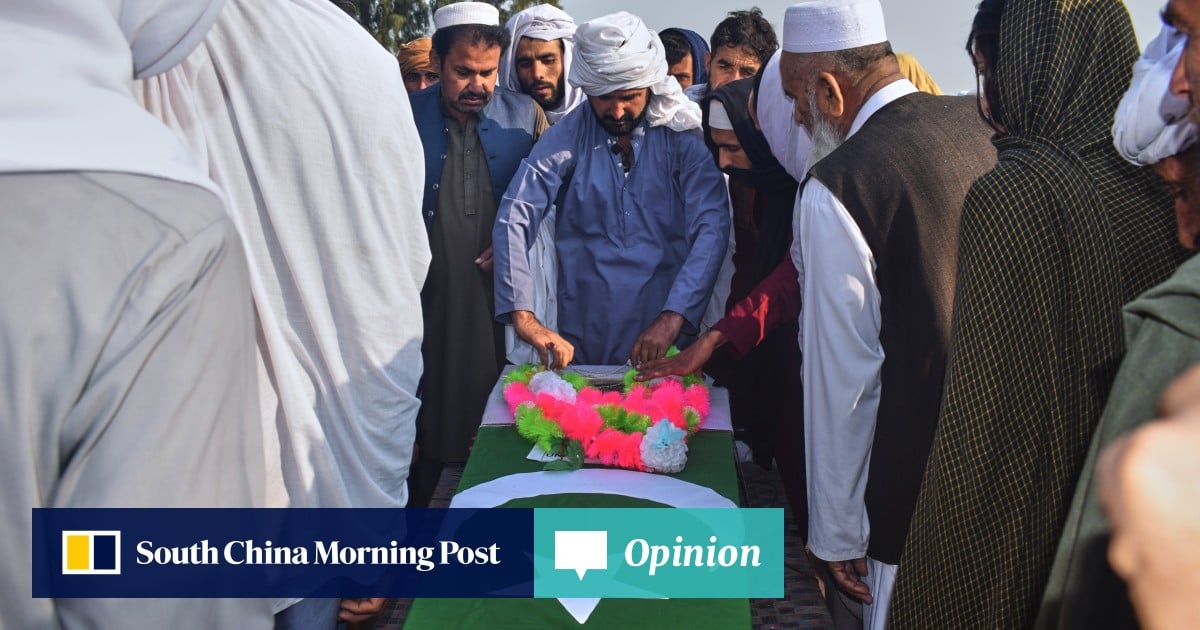
South China Morning PostFIG 01
Reading time
2min
Word count
384words
Sources cited
1cited
Entities identified
9entities
Quality score
100%
§ 01
Briefing Summary
AI-generatedNEWSAR · AI
Recent clashes between Pakistan and Afghanistan highlight the ongoing instability in the region following decades of conflict. Since 2001, Pakistan has been embroiled in the "war on terror," resulting in significant casualties and displacement. The article points to Pakistan's past support of the Afghan Taliban and its subsequent alliance with the US after 9/11, creating a distinction between "good" and "bad" Taliban factions. This ambiguity fostered the growth of the Tehrik-e-Taliban Pakistan (TTP), leading to widespread violence within Pakistan. Despite initially welcoming the Afghan Taliban's return to power in 2021, relations have soured, with Pakistan accusing Afghanistan of harboring the TTP, while Afghanistan denies the charges and accuses Pakistan of internal failures.
Confidence 0.90Sources 1Claims 5Entities 9
§ 02
Article analysis
Model · rule-basedFraming
Conflict
National Security
Tone
Mixed Tone
AI-assessed
CalmNeutralAlarmist
Factuality
0.60 / 1.00
Mixed
LowHigh
Sources cited
1
Limited
FewMany
§ 03
Key claims
5 extracted01
Pakistan accuses Kabul of sheltering and supporting the TTP.
factual
Confidence
0.90
02
The TTP was formed in 2007 as an alliance of militant groups.
factual
Confidence
0.90
03
Pakistan supported the rise of the Afghan Taliban in the 1990s.
factual
Confidence
0.90
04
More than 33,000 civilian and security forces lives in Pakistan have been claimed since 2001.
statistic
Confidence
0.90
05
Millions have been internally displaced in Pakistan since 2001 due to the war on terror.
statistic
Confidence
0.80
§ 04
Full report
2 min read · 384 words§ 05
Entities
9 identifiedKey playerOppositionContextPositiveNeutralNegative
Organizations3
§ 06
Keywords & salience
9 termspakistan
1.00
afghanistan
0.90
war on terror
0.80
border clashes
0.70
ttp
0.70
terrorism
0.60
militant groups
0.50
political instability
0.50
internal displacement
0.40
§ 07
Topic connections
Interactive graph Network visualization showing 51 related topics
View Full Graph Person Organization Location Event|Click node to navigate|Edge numbers = shared articles