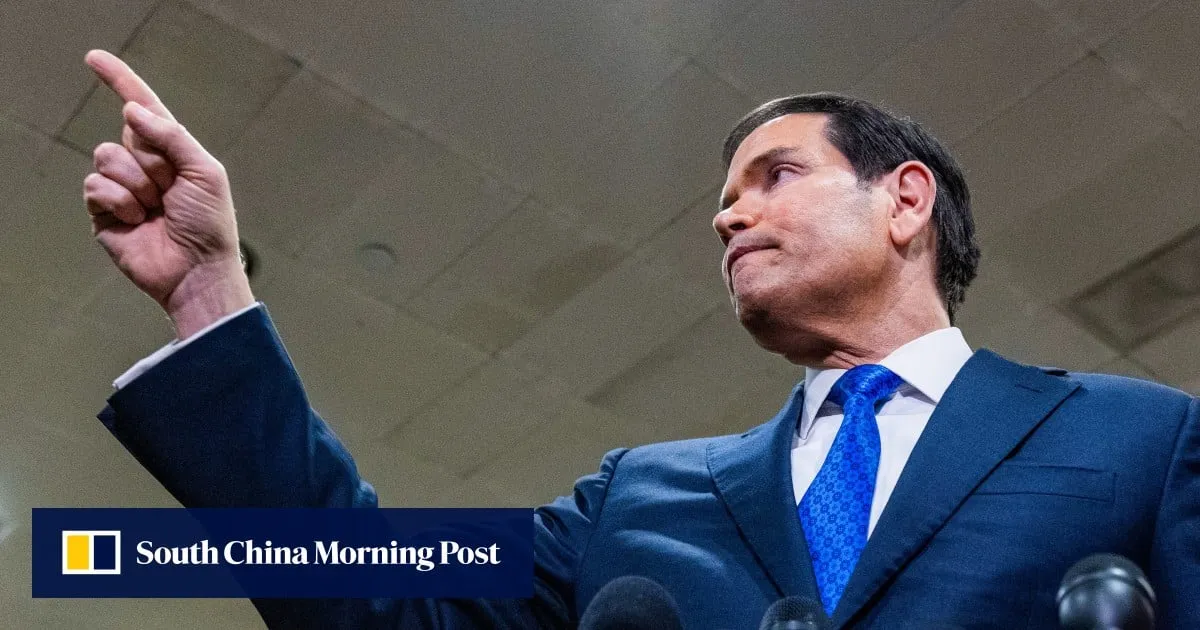
US Secretary of State Marco Rubio has stirred unexpected debate in Taiwan after invoking the phrase “unleash Chiang” while warning that Washington would intensify its strikes against Iran.Speaking to reporters on Tuesday about the escalating Middle East conflict, Rubio said the world would soon see a change in the scope and intensity of the attacks.“We’re going to unleash Chiang on these people in the next few hours and days,” he said.The remark, made in the context of US efforts to dismantle Iran’s missile systems and military capabilities, quickly drew attention in Taiwan because the phrase refers to the late Republic of China leader Chiang Kai-shek.The expression dates back to the early Cold War. After the Korean War broke out on June 25, 1950, then US president Harry Truman ordered the Seventh Fleet to protect Taiwan and prevent an attack by Chinese Communist forces.At the same time, Truman barred Chiang – who had retreated to Taiwan after losing the Chinese civil war in 1949 – from launching a counteroffensive to retake mainland China.
SRCSouth China Morning Post
LANGEN
LEANCenter-Right
WORDS172
ENT8
THU · 2026-03-05 · 11:00 GMTBRIEF NSR-2026-0305-21672
NSR-2026-0305-21672News Report·EN·Political Strategy
What does Marco Rubio’s ‘unleash Chiang’ threat against Iran actually mean?
US Secretary of State Marco Rubio recently made a statement warning that Washington would intensify its strikes against Iran, invoking the phrase "unleash Chiang" in the process. The remark drew attention in Taiwan due to its reference to late Republic of China leader Chiang Kai-shek.
Lawrence ChungSouth China Morning PostFiled 2026-03-05 · 11:00 GMTLean · Center-RightRead · 1 min
South China Morning PostFIG 01
Reading time
1min
Word count
172words
Sources cited
2cited
Entities identified
8entities
Quality score
100%
§ 01
Briefing Summary
AI-generatedNEWSAR · AI
US Secretary of State Marco Rubio recently made a statement warning that Washington would intensify its strikes against Iran, invoking the phrase "unleash Chiang" in the process. The remark drew attention in Taiwan due to its reference to late Republic of China leader Chiang Kai-shek. The phrase has historical roots, dating back to the early Cold War era when US President Harry Truman ordered the Seventh Fleet to protect Taiwan and prevent a Chinese Communist attack. In 1949, after losing the Chinese civil war, Chiang retreated to Taiwan and was barred from launching a counteroffensive to retake mainland China. Rubio's statement has sparked debate in Taiwan about the implications of his words. The context of US efforts to dismantle Iran's missile systems and military capabilities is unclear.
Confidence 0.90Sources 2Claims 4Entities 8
§ 02
Article analysis
Model · rule-basedFraming
Political Strategy
Diplomatic
Tone
Measured
AI-assessed
CalmNeutralAlarmist
Factuality
0.80 / 1.00
Factual
LowHigh
Sources cited
2
Limited
FewMany
§ 03
Key claims
4 extracted01
The expression dates back to the early Cold War.
factualArticle
Confidence
1.00
02
Truman barred Chiang from launching a counteroffensive to retake mainland China.
factualArticle
Confidence
1.00
03
Rubio said the world would soon see a change in the scope and intensity of the attacks.
quoteMarco Rubio
Confidence
1.00
04
Marco Rubio invoked the phrase “unleash Chiang” while warning that Washington would intensify its strikes against Iran.
factualArticle
Confidence
1.00
§ 04
Full report
1 min read · 172 words§ 05
Entities
8 identifiedKey playerOppositionContextPositiveNeutralNegative
People3
Organizations1
§ 06
Keywords & salience
8 termsiran
0.90
chiang kai-shek
0.80
us foreign policy
0.70
marco rubio
0.70
taiwan
0.60
middle east conflict
0.60
cold war
0.50
military capabilities
0.40
§ 07
Topic connections
Interactive graph Network visualization showing 51 related topics
View Full Graph Person Organization Location Event|Click node to navigate|Edge numbers = shared articles