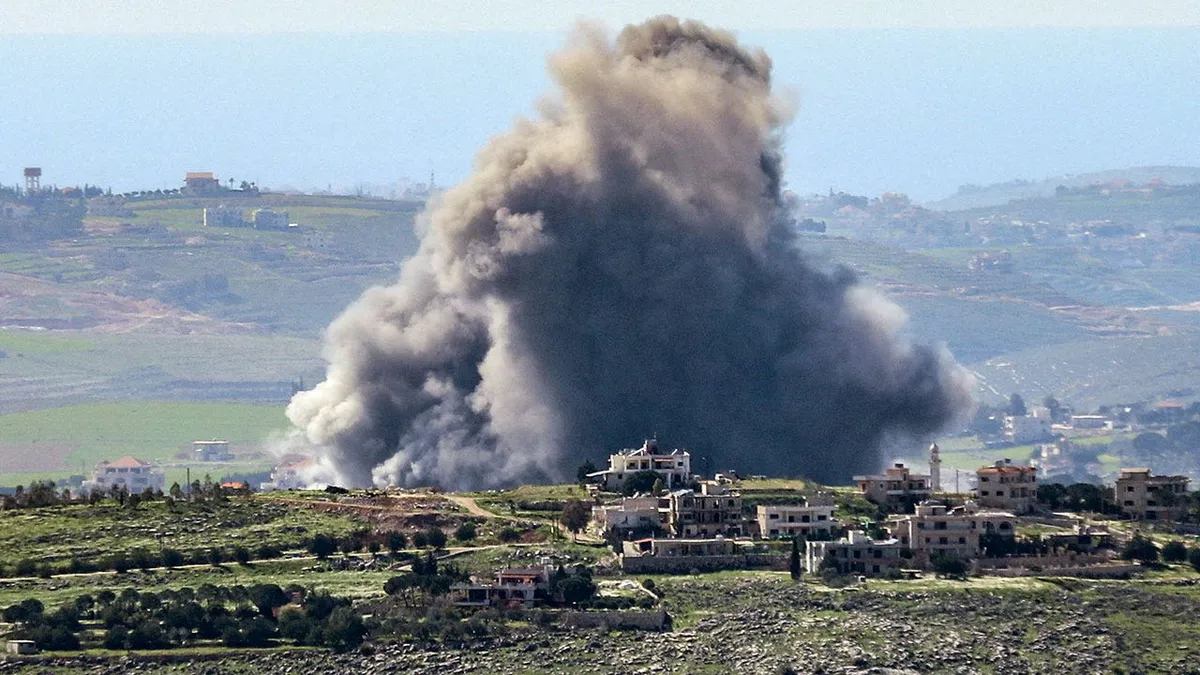
Amid the ongoing conflict with Iran, analysts say the Trump administration should pressure Lebanon to fulfill its commitments to disarm the Iran-backed terrorist group as it drags the country into another war with Israel. David Schenker, a former U.S. assistant secretary of state for Near Eastern Affairs who oversaw Lebanon's policy during the first Trump administration and now directs the Program on Arab Politics at the Washington Institute for Near East Policy, said: "The U.S. should make clear to Lebanon that it is time for the state to honor its ceasefire commitment to disarm Hezbollah," he told Fox News Digital. Schenker warned if Beirut "doesn’t pursue disarmament, it will remain a failed state." The warning comes as the IDF attacked multiple Hezbollah targets Friday in response to the terror group's launching of rockets and drones toward Israel on March 2, its first attack since a November 2024 ceasefire ended the previous round of fighting. Iran SMUGGLED $1B TO Hezbollah THIS YEAR DESPITE US SANCTIONS, TREASURY OFFICIAL SAYS Since the first day of the renewed fighting, the IDF has carried out over 200 strikes across Lebanon targeting Hezbollah’s military, media and financial infrastructure, as well as operatives from the group and affiliated networks, according to a March 5 analysis by the Foundation for Defense of Democracies’ Long War Journal. Israeli Defense Minister Israel-katz" class="entity-link entity-person" data-entity-id="4249" data-entity-type="person">Israel Katz also threatened Hezbollah Secretary-General Naim Qassem. The renewed fighting has exposed deep tensions inside Lebanon’s government, which in recent days called on Hezbollah to disarm and ordered security agencies to prevent attacks on Israel from Lebanese territory. Iran COULD ‘ACTIVATE’ Hezbollah IF US TARGETS REGIME, TRUMP’S INNER CIRCLE TO DECIDE: EXPERT Schenker says the move reflects frustration in Beirut rather than a fundamental policy shift. "The Government of Lebanon’s latest cabinet vote on Hezbollah disarmament is nothing new," Schenker said. "It is a reiteration of the cabinet decision last August mandating the disarmament of Hezbollah. The language is perhaps more strident, but the message is the same." "It is a reflection of the Government’s frustration and desperation over Hezbollah dragging Lebanon into yet another war with Israel ," he added. "It also reflects the Lebanese Armed Forces’ failure to date to take its mission of disarmament seriously." Hezbollah’s latest attacks appear to have caught Lebanese officials off guard. Reports suggest the group had previously assured officials it would not intervene in a broader regional conflict tied to Iran. Schenker said the episode underscores a longstanding reality in Lebanon’s political system. "The government of Lebanon has never tried to control Hezbollah," he said. "The few months that the LAF devoted to disarmament in south Lebanon was performed with Hezbollah’s consent and coordinated with the militia." Still, public frustration inside Lebanon may be shifting the political environment. "Given the population’s growing anger toward Hezbollah now, the political environment should be more conducive for the LAF to confront Hezbollah," Schenker said. ON MADURO’S ‘TERROR ISLAND,’ Hezbollah OPERATIVES MOVE IN AS TOURISTS DRIFT OUT "The fear of ‘civil war’—i.e., Hezbollah perpetrating violence against the Government—remains," he added. "But increasingly, Lebanese prefer taking that risk and possibly gaining sovereignty than being in a state of perpetual war with Israel." In a clip posted on X by the Center for Peace Communications, Lebanese people angrily responded to Hezbollah's actions with one man telling Jusoor News: "If Hezbollah leader Naim Qassem wants to commit suicide, let him go do it in Tehran, not Lebanon." According to David Daoud, senior fellow at the Foundation for Defense of Democracies, Hezbollah’s decision to attack Israel despite the ceasefire reflects the group’s willingness to escalate the conflict even as Lebanon’s government seeks to avoid another war. The crisis has also drawn international attention. French President Emmanuel Macron called for urgent steps to prevent Lebanon from sliding deeper into war. "Everything must be done to prevent this country, so close to France, from once again being drawn into war," Macron wrote in a statement posted on X on March 5 after speaking with Donald Trump , Benjamin Netanyahu and Lebanese leaders. Macron said Hezbollah "must immediately cease its fire toward Israel," while urging Israel to avoid expanding military operations inside Lebanon. For now, analysts say the outcome may depend on whether Lebanon’s government is willing to confront Hezbollah directly or continue to tolerate Iran's terror proxy that has long operated outside the control of the government's control.
SRCFox News - World
LANGEN
LEANCenter-Right
WORDS728
ENT11
FRI · 2026-03-06 · 11:30 GMTBRIEF NSR-2026-0306-22017
NSR-2026-0306-22017News Report·EN·National Security
Israel pounds Hezbollah targets, daring Lebanon to reclaim sovereignty from Iran-backed terror proxy
Amid renewed conflict between Israel and Hezbollah, Israel has been striking Hezbollah targets in Lebanon following rocket and drone attacks by the terror group in early March, the first since a November 2024 ceasefire. Analysts, including former U.S.
Efrat LachterFox News - WorldFiled 2026-03-06 · 11:30 GMTLean · Center-RightRead · 3 min
Fox News - WorldFIG 01
Reading time
3min
Word count
728words
Sources cited
2cited
Entities identified
11entities
Quality score
100%
§ 01
Briefing Summary
AI-generatedNEWSAR · AI
Amid renewed conflict between Israel and Hezbollah, Israel has been striking Hezbollah targets in Lebanon following rocket and drone attacks by the terror group in early March, the first since a November 2024 ceasefire. Analysts, including former U.S. official David Schenker, are urging the U.S. to pressure Lebanon to disarm Hezbollah, citing Lebanon's commitment to do so and warning of its potential failure as a state. The IDF has conducted over 200 strikes targeting Hezbollah's infrastructure and operatives. The Lebanese government has called on Hezbollah to disarm and ordered security agencies to prevent attacks, reflecting frustration over Hezbollah dragging Lebanon into conflict with Israel. However, analysts suggest this may be a reiteration of past mandates rather than a fundamental policy shift.
Confidence 0.90Sources 2Claims 5Entities 11
§ 02
Article analysis
Model · rule-basedFraming
National Security
Conflict
Tone
Mixed Tone
AI-assessed
CalmNeutralAlarmist
Factuality
0.60 / 1.00
Mixed
LowHigh
Sources cited
2
Limited
FewMany
§ 03
Key claims
5 extracted01
The U.S. should make clear to Lebanon that it is time for the state to honor its ceasefire commitment to disarm Hezbollah.
quoteDavid Schenker
Confidence
1.00
02
Since the first day of the renewed fighting, the IDF has carried out over 200 strikes across Lebanon targeting Hezbollah.
factualArticle
Confidence
1.00
03
IDF attacked multiple Hezbollah targets Friday in response to the terror group's launching of rockets and drones toward Israel on March 2.
factualArticle
Confidence
1.00
04
Iran smuggled $1B to Hezbollah this year despite US sanctions, Treasury official says
factualTreasury official
Confidence
0.90
05
If Beirut doesn’t pursue disarmament, it will remain a failed state.
predictionDavid Schenker
Confidence
0.70
§ 04
Full report
3 min read · 728 words§ 05
Entities
11 identifiedKey playerOppositionContextPositiveNeutralNegative
People4
Organizations3
§ 06
Keywords & salience
9 termshezbollah
1.00
israel
0.90
lebanon
0.80
disarmament
0.70
iran
0.60
terrorism
0.50
conflict
0.50
ceasefire
0.40
sovereignty
0.40
§ 07
Topic connections
Interactive graph Network visualization showing 51 related topics
View Full Graph Person Organization Location Event|Click node to navigate|Edge numbers = shared articles