1 hour agoLaura KuenssbergPresenter, Sunday with Laura KuenssbergIranian ambassador to UK: 'We will defend ourselves'Iran will continue to defend itself if the "aggression from the American and Israeli side continues", the Iranian ambassador to the UK has told the BBC.While Iran's president on Saturday apologised to its Gulf neighbours and promised to stop attacks, Seyed Ali Mousavi told Sunday with Laura Kuenssberg their policy remained to "defend themselves".After days of strikes across the Middle East caused enormous disruption and damage in many different countries, Mousavi said that "if facilities or properties or bases are used against the Iranian nation", they would be considered "legitimate targets".In the last few hours, Gulf countries including Qatar and the UAE have been hit by Iran, while the US and Israel have continued their attacks as the war enters a second week.In an exclusive interview with the BBC to be broadcast on Sunday, Mousavi was asked if Iran would stop its attacks on military bases outside Israel in other parts of the Middle East. He said there is "willingness from the Iranian side not to strike, not to attack our neighbours".But he maintained that Iran had the right to continue striking targets across the whole region where there were military bases. Mousavi said Iran's response "depends on the activities of the Americans and the Israeli regime"."If the aggression… continues there is no doubt we will defend ourselves," he said. "And if they want to use these military bases - although we don't want to do that - there is no doubt we will defend ourselves accordingly."It has been more than seven days since the US and Israel began strikes on Iran, which led Tehran to retaliate with its own attacks across the region.Kuwait, the United Arab Emirates, Saudi Arabia, Bahrain, Oman and Iraq have all been hit, as has an RAF base in Cyprus. Moment of drone strike close to Dubai airportIt is rare for the leadership of a country like Iran to apologise, let alone in public.And it is rare for a representative of Iran to agree to be interviewed. But in the wake of President Masoud Pezeshkian's apology, Iran's ambassador to the UK agreed to our request to speak to him, and even more unusually, invited us to speak to him in Iran's embassy in London, a building that tells the story of the fraught and troubled history between Iran and the West. The building, on the edge of London's Hyde Park, is where five Iranian gunmen were killed after a dramatic siege that was brought to an end by SAS commandos in 1980. Nineteen hostages were set free, but one died and two were injured in the crossfire. The gunmen belonged to a dissident Iranian group opposed to Ayatollah Khomeini, the religious leader.PA MediaArmed police on a balcony adjoining to the Iranian Embassy on the final day of the siegeLike his president in Tehran, the ambassador plainly wanted to make the case that Iran was only responding to aggression from Israel and the United States, and that it was not trying to put other citizens in the Middle East in danger, or to prolong the war unnecessarily. But the way in which Iran has responded by attacking so many different countries across the region, in a way that Western officials see as indiscriminate lashing out, tells a different story. And speaking to us next to a large banner of the supreme leader, who was killed last week, ambassador Mousavi made it obvious that Iran will not stop strikes on Israel or on American military bases in the Middle East, wherever they are located, for as long as Israel and America's attacks continue. The ambassador vehemently denies that Iran has been the source of the conflict, and dismissed outright US President Donald Trump's demand that his country surrender. Iran has said sorry for some of the disruption to its neighbour. But that apology plainly does not in any way mean an end to this war.
SRCBBC News - World
LANGEN
LEANCenter
WORDS662
ENT12
SAT · 2026-03-07 · 14:11 GMTBRIEF NSR-2026-0307-22363
NSR-2026-0307-22363News Report·EN·National Security
Iran will continue to defend itself against aggression, ambassador to UK says
Iran's ambassador to the UK, Seyed Ali Mousavi, stated that Iran will continue to defend itself against aggression from the US and Israel. Speaking to the BBC, Mousavi said that if facilities or bases are used against Iran, they would be considered legitimate targets.
BBC News - WorldFiled 2026-03-07 · 14:11 GMTLean · CenterRead · 3 min
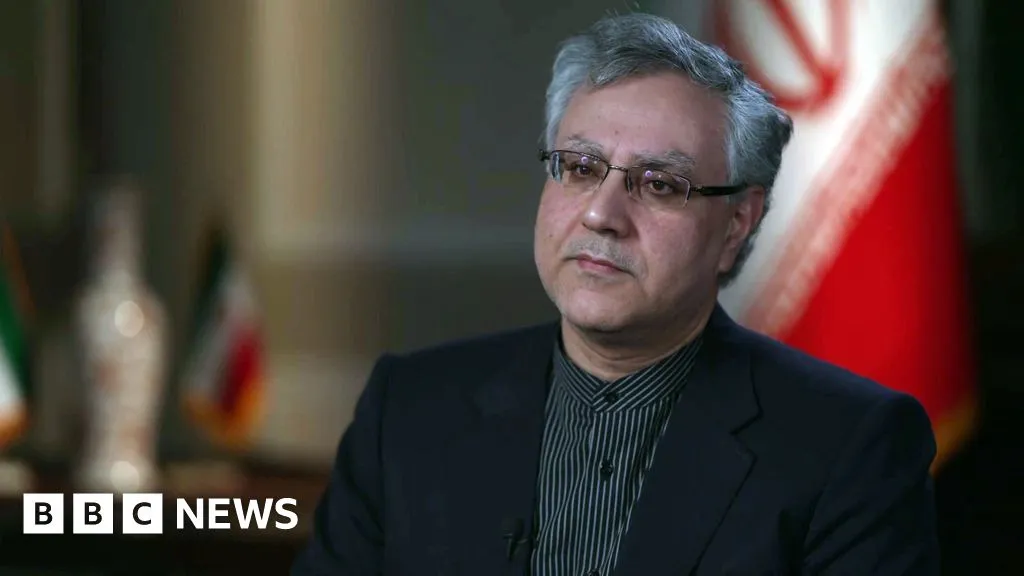
BBC News - WorldFIG 01
Reading time
3min
Word count
662words
Sources cited
2cited
Entities identified
12entities
Quality score
100%
§ 01
Briefing Summary
AI-generatedNEWSAR · AI
Iran's ambassador to the UK, Seyed Ali Mousavi, stated that Iran will continue to defend itself against aggression from the US and Israel. Speaking to the BBC, Mousavi said that if facilities or bases are used against Iran, they would be considered legitimate targets. While Iran's president apologized to Gulf neighbors and promised to stop attacks, Mousavi maintained Iran's right to strike targets across the region where military bases are located, depending on the activities of the US and Israel. This statement comes after days of strikes across the Middle East, including in Gulf countries like Qatar and the UAE, as well as retaliatory attacks by Iran following strikes by the US and Israel. The ambassador's comments suggest a willingness to de-escalate but affirm Iran's right to defend itself.
Confidence 0.90Sources 2Claims 5Entities 12
§ 02
Article analysis
Model · rule-basedFraming
National Security
Conflict
Tone
Measured
AI-assessed
CalmNeutralAlarmist
Factuality
0.70 / 1.00
Factual
LowHigh
Sources cited
2
Limited
FewMany
§ 03
Key claims
5 extracted01
If facilities or properties or bases are used against the Iranian nation, they would be considered legitimate targets.
quoteSeyed Ali Mousavi
Confidence
1.00
02
Iran will continue to defend itself if the aggression from the American and Israeli side continues.
quoteSeyed Ali Mousavi, Iranian ambassador to the UK
Confidence
1.00
03
Iran's president apologized to its Gulf neighbours and promised to stop attacks.
factualBBC (reporting on Iran's president)
Confidence
0.90
04
The US and Israel have continued their attacks as the war enters a second week.
factualBBC
Confidence
0.80
05
Gulf countries including Qatar and the UAE have been hit by Iran.
factualBBC
Confidence
0.80
§ 04
Full report
3 min read · 662 words§ 05
Entities
12 identifiedKey playerOppositionContextPositiveNeutralNegative
People3
Organizations1
§ 06
Keywords & salience
10 termsiran
1.00
defend itself
0.90
aggression
0.80
israel
0.70
attacks
0.70
us
0.70
iranian ambassador
0.60
military bases
0.60
middle east
0.50
retaliation
0.40
§ 07
Topic connections
Interactive graph Network visualization showing 51 related topics
View Full Graph Person Organization Location Event|Click node to navigate|Edge numbers = shared articles