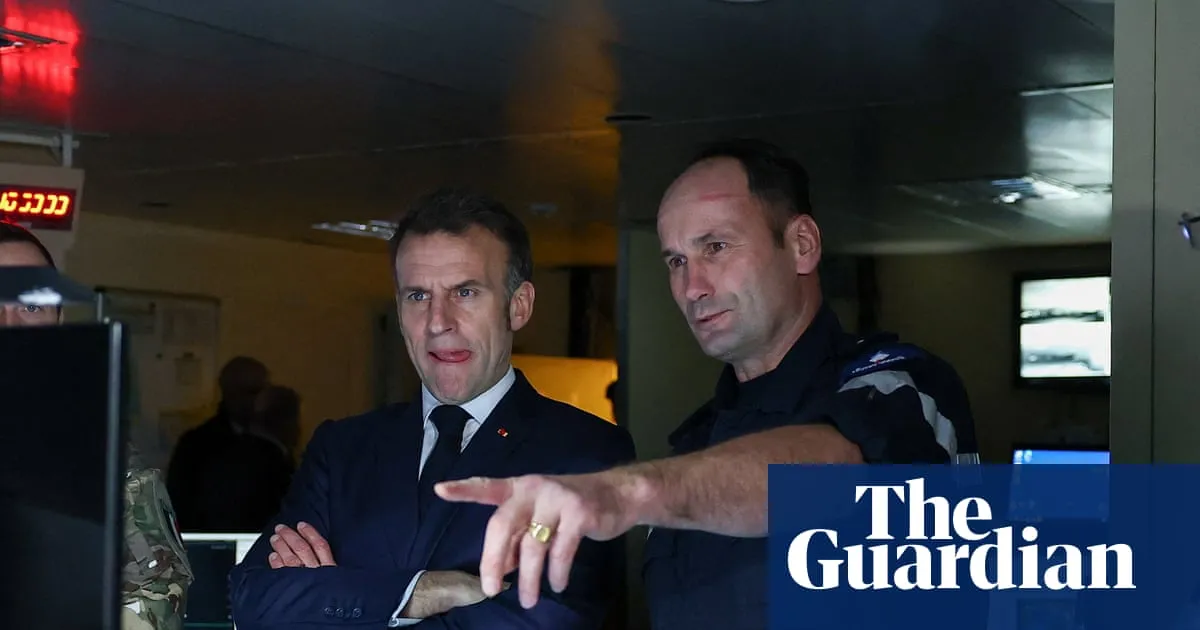
Emmanuel Macron has vowed that Europe will do whatever it takes to stand by Cyprus, the continent’s first state to be directly affected by the Iran war.In the strongest show yet of solidarity towards the EU member closest to the Middle East, Macron likened the attacks, which included a drone strike against a British base on the eastern Mediterranean island, to an attack on Europe.“When Cyprus is attacked, it is Europe that is attacked,” the French president said, standing alongside the leaders of Greece and Cyprus at an airbase in Paphos.He added: “The defence of Cyprus is obviously a key issue for your country, for your neighbour, partner and friend, Greece, but also for France and, with it, the European Union.”Kyriakos Mitsotakis, the Greek prime minister, echoed the sentiment, saying: “We will not accept that the slightest piece of European territory, like Cyprus, be exposed to danger.”The visit came a week after a Shahed drone crashed into a hangar at RAF Akrotiri, leaving a gaping hole in the building where US U-2 reconnaissance planes were reported to be stationed.Hours later, two other Iranian-made combat drones were intercepted off Cyprus by British fighter jets.All three attacks had been launched from Lebanon, 150 miles to the island’s east, the Cypriot foreign minister, Constantinos Kombos, told the Guardian.Macron used the visit to Cyprus to announce that France and its allies were also preparing “a purely defensive, purely support mission” to reopen the Strait of Hormuz, where dozens of ships have been stranded since the start of the conflict. He said the mission would start “as soon as possible after the most intense phase of the conflict is over”.Around 20m barrels of oil – the equivalent of a fifth of the world’s seaborne crude supply – pass through the strait every day, with Greek tankers carrying much of it because of the country’s dominant role in global shipping. Macron said reopening the artery was vital. “It is essential for international trade, but also for the flow of gas and oil, which must be able to leave this region once again,” he said.France was among Europe’s first nations to respond to a Cypriot request for military assistance, deploying air defence systems, a frigate and the nuclear-powered aircraft carrier Charles de Gaulle to the region.Mitsotakis had earlier ordered the dispatch of four F-16 fighter jets, now stationed in Paphos, and two frigates, including the Kimon, the “pride of the Greek fleet”.Italy, Spain, the Netherlands and Britain have also announced they will be sending warships and air assets as part of a coordinated effort to throw a protective cordon around Cyprus. The UK has flown in Royal Navy Wildcat helicopters capable of taking out aerial threats and F-35 fighter jets to bolster protection of military installations on the 99 sq mile area of territory it has retained since Cyprus gained independence in 1960.The deployments, at a time when Europe’s relations with the US have rarely been more strained, have underlined a resolve to defend its frontiers – albeit after Cyprus had been attacked.With the US-led offensive in its 10th day and Cypriot officials expressing little optimism that the war would end anytime soon, analysts said Macron’s visit amounted to much more than symbolic politics.“This is about Europe making her presence felt in the region when there are so many moving parts, so many unknowns,” said Cleopatra Kitti, a senior policy adviser at the Athens-based thinktank, Eliamep.Ahead of holding trilateral talks with his counterparts on Monday, the island’s president, Nikos Christodoulides, told reporters the presence of the two leaders in Paphos highlighted the extent to which the country’s security had become the collective responsibility of the European Union.He said: “It’s the first time we’ve seen such a response and I consider this to be of particular importance.”
SRCThe Guardian - World News
LANGEN
LEANCenter-Left
WORDS629
ENT12
MON · 2026-03-09 · 18:35 GMTBRIEF NSR-2026-0309-22900
NSR-2026-0309-22900News Report·EN·National Security
Emmanuel Macron vows Europe will stand by Cyprus after Iran drone strike
Following an Iranian drone strike on a British base in Cyprus, French President Emmanuel Macron pledged Europe's support for the island nation, stating an attack on Cyprus is an attack on Europe. The incident involved a Shahed drone crashing into a hangar at RAF Akrotiri, followed by the interception of two more Iranian-made drones launched from Lebanon.
Helena Smith in NicosiaThe Guardian - World NewsFiled 2026-03-09 · 18:35 GMTLean · Center-LeftRead · 3 min
The Guardian - World NewsFIG 01
Reading time
3min
Word count
629words
Sources cited
4cited
Entities identified
12entities
Quality score
100%
§ 01
Briefing Summary
AI-generatedNEWSAR · AI
Following an Iranian drone strike on a British base in Cyprus, French President Emmanuel Macron pledged Europe's support for the island nation, stating an attack on Cyprus is an attack on Europe. The incident involved a Shahed drone crashing into a hangar at RAF Akrotiri, followed by the interception of two more Iranian-made drones launched from Lebanon. Macron announced a defensive mission with allies to reopen the Strait of Hormuz, vital for international trade and energy flow, after the conflict's peak. Greece also pledged support, sending fighter jets and frigates to Cyprus. France has already deployed air defense systems, a frigate, and the Charles de Gaulle aircraft carrier to the region in response to Cyprus's request for military assistance.
Confidence 0.90Sources 4Claims 5Entities 12
§ 02
Article analysis
Model · rule-basedFraming
National Security
Diplomatic
Tone
Measured
AI-assessed
CalmNeutralAlarmist
Factuality
0.80 / 1.00
Factual
LowHigh
Sources cited
4
Well sourced
FewMany
§ 03
Key claims
5 extracted01
Around 20m barrels of oil pass through the strait of Hormuz every day.
statistic
Confidence
1.00
02
France and its allies were also preparing “a purely defensive, purely support mission” to reopen the strait of Hormuz.
quoteMacron
Confidence
1.00
03
All three attacks had been launched from Lebanon, 150 miles to the island’s east.
factualConstantinos Kombos
Confidence
1.00
04
A Shahed drone crashed into a hangar at RAF Akrotiri.
factual
Confidence
1.00
05
Europe will do whatever it takes to stand by Cyprus after Iran drone strike.
quoteEmmanuel Macron
Confidence
1.00
§ 04
Full report
3 min read · 629 words§ 05
Entities
12 identifiedKey playerOppositionContextPositiveNeutralNegative
People3
Organizations1
§ 06
Keywords & salience
9 termscyprus
1.00
iran
0.80
drone strike
0.70
european union
0.70
strait of hormuz
0.60
military assistance
0.60
british base
0.50
emmanuel macron
0.50
air defence systems
0.40
§ 07
Topic connections
Interactive graph Network visualization showing 32 related topics
View Full Graph Person Organization Location Event|Click node to navigate|Edge numbers = shared articles