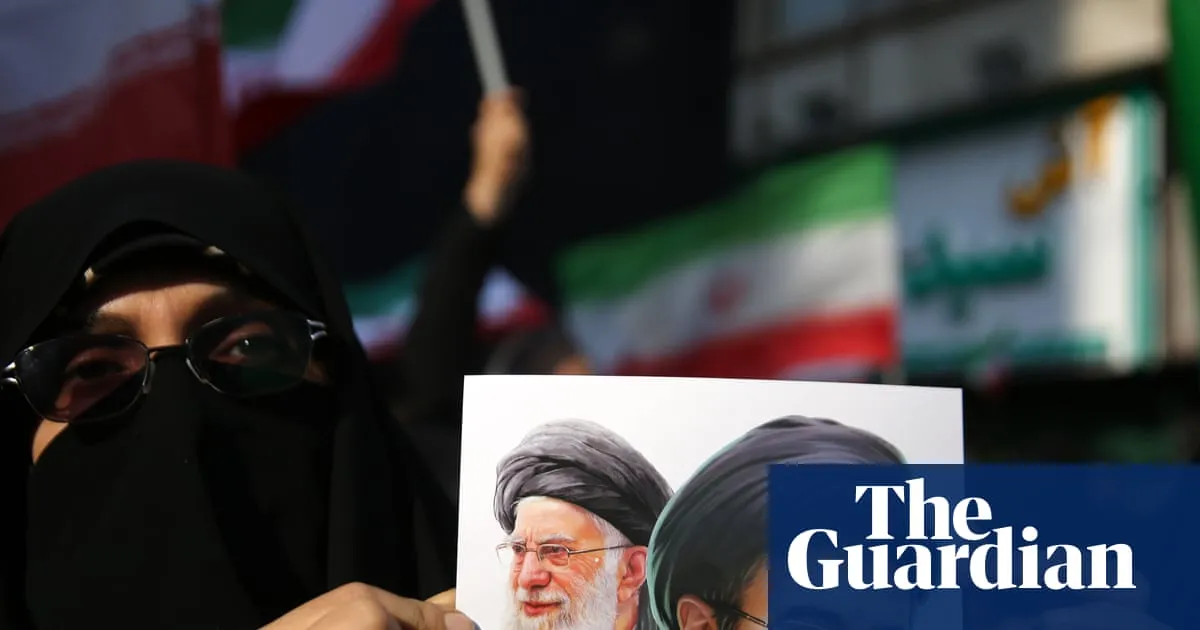
Crowds in Tehran greeted the announcement of the country’s new supreme leader by chanting: “God’s hand is still upon us, Khamenei is still our leader.” As the world economy grinds to a halt, Iran is selling the elevation of Mojtaba Khamenei as a sign of reassuring continuity for a country determined to show its defiance of the west.Yet in reality he injects a new unpredictable, even mysterious, element into the Middle East crisis, since just as he is unknown to Washington, so he is a figure of deep obscurity to ordinary Iranians. By contrast, the first supreme leader, Ruhollah Khomeini, led Iran to revolution in 1979 and the second, Mojtaba’s father, Ali Khamenei, had been president for eight years before he was chosen by the Assembly of Experts within a day of Khomenei’s death.Before he was catapulted to power following his father’s assassination, Mojtaba had lived the life of a backroom bureaucrat, acting as “the path to access to his father” as a 2007 US diplomatic cable explained.There is only one video of him speaking in public, to a jurisprudence class, and there has been no substantive interview marking out his views. Yet as the consummate insider, acting as deputy chief of staff in the supreme leader’s office for two decades, he has long been the candidate of the Revolutionary Guards (IRGC), the heart of Iran’s military industrial complex. One western diplomat said his selection “shows Iran is doubling down on the security state. The new leader will be even more beholden to the IRGC”.That is because the IRGC had to overcome many obstacles to ensure their candidate took the helm. It fended off a rearguard attempt to delay his appointment so that the choice might be better made in a different political atmosphere – probably at the end of the war.Will Trump make a deal with Iran's new supreme leader? - The LatestThe evidence of the power struggle is fragmentary, but appears to have involved advice from Ali Larijani, the secretary of the supreme national security council, that a new inexperienced leader in the middle of wartime was a risk. Others in the supreme leader’s office, such as Ali Asghar Hejazi, also opposed Mojtaba’s elevation but were killed in Israeli airstrikes.But the IRGC had to overcome other doubts over his health, the hereditary principle, his religious qualifications and the practicality of holding a meeting of the Assembly of Experts with predatory Israeli war planes circling overhead.The primary uncertainty concerned Mojtaba’s physical and emotional health. The bombing of the supreme leader’s compound on 28 February also killed his mother, his wife, and a son. One of his sisters was also killed along with her husband, as well as a niece and nephew. To take on high office in wartime after suffering such a personal loss cannot be easy, and it is said he professed a reluctance to do so, although that may have been performative.Clerics also had to swallow their doubts about his religious knowledge. Until 2022, Mojtaba held the lower rank of Hojjat al-Islam. To fix this “qualification gap”, the 88-strong Assembly of Experts – under intense pressure from the IRGC – fast-tracked his credentials so that some seminary media outlets used the title “Ayatollah”. Something similar happened in 1989 to enable his father to become supreme leader in 1989.The biggest obstacle was that he was the supreme leader’s son. The republic had come into being in contradistinction to the dynastic rule of the shah, and the rule of the Gulf families. Khomeini deemed the monarchy to be “abhorrent to Islam”, and Khamenei himself described the hereditary principle as un-Islamic.Iranians gather at Enghelab Square in Tehran to celebrate the newly appointed supreme leader on Monday. Photograph: Abedin Taherkenareh/EPASuch doubts were widely shared across Iranian society.Complex theological arguments were produced to overrule objections to inherited power.But what still lay in doubt was how the assembly could safely reach consensus. The risk was underlined by bombing of the secretariat offices of the Assembly of Experts in Qom last week, in which several staff members were killed.Debate ensued over whether the rules governing the assembly required the clerics to meet in person to establish a consensus. It was previously held that there had to be an absolute majority with a two-thirds quorum.The centrist former president Hassan Rouhani was one of the figures urging delay and calling for fundamental political overhaul at the war’s end.But the IRGC media, and hardline clerics, emphasised the need to fill the political vacuum, arguing the temporary leadership could not govern indefinitely. The insistence of the US president, Donald Trump, that he be personally involved in the process only increased Iran’s determination to be seen to be making sovereign decisions about its leadership.But what Khamenei will do with this leadership and how he will relate with other centres of power inside Iran is now the question. His father turned the supreme leader from a supervisory figure to the engine of government, even if he often tried to avoid taking sides in factional battles, and ensured blame landed elsewhere in the system when matters went wrong. He also gave the IRGC “near-monopoly control of the Iranian economy across all sectors”, allowing the Revolutionary Guards to fund their extraterritorial activities, said Maryam Alemzadeh, an associate professor in history and politics of Iran at St Antony’s College, Oxford.The older Khamenei’s consistent ideological thread was his belief that the US was untrustworthy, morally bankrupt and exploitative. So economic cooperation with the US, of the kind Trump is extracting from Venezuela, is not going to be on offer from his son’s regime. He will continue to look to China and Russia to prevent the regime’s collapse. Above all, he will do all he can to protect the IRGC’s business and political empire – one of his father’s greatest legacies. It is an empire from which he himself has personally financially benefited, and is now under systematic US attack.One of his first tests will be whether he renews his father’s fatwa against the possession of nuclear weapons. Another will be whether he sets realistic preconditions for holding talks either with the US or the Gulf neighbours.But conservatives are delighted. Ezzatollah Zarghami, a former culture minister, who is one of the few who claims to have had weekly one-on-one meetings with Mojtaba, said: “He is a proponent of dialogue and listening to others’ voices. In personal interactions, he is excessively humble. Our young leader without even arriving has rubbed Trump’s nose in the dirt,” he said.
SRCThe Guardian - World News
LANGEN
LEANCenter-Left
WORDS1 081
ENT11
MON · 2026-03-09 · 18:30 GMTBRIEF NSR-2026-0309-22905
NSR-2026-0309-22905Analysis·EN·Political Strategy
Iran’s new supreme leader brings mystery element to Middle East crisis
Following the death of Iran's Supreme Leader Ali Khamenei, his son Mojtaba Khamenei has been elevated to the position, a move presented by Iran as a sign of stability. However, Mojtaba's ascension introduces uncertainty due to his relative obscurity both domestically and internationally.
Patrick Wintour Diplomatic editorThe Guardian - World NewsFiled 2026-03-09 · 18:30 GMTLean · Center-LeftRead · 5 min
The Guardian - World NewsFIG 01
Reading time
5min
Word count
1 081words
Sources cited
1cited
Entities identified
11entities
Quality score
100%
§ 01
Briefing Summary
AI-generatedNEWSAR · AI
Following the death of Iran's Supreme Leader Ali Khamenei, his son Mojtaba Khamenei has been elevated to the position, a move presented by Iran as a sign of stability. However, Mojtaba's ascension introduces uncertainty due to his relative obscurity both domestically and internationally. Unlike his predecessors, he lacks significant public presence and experience, having primarily worked behind the scenes. His appointment was reportedly backed by the Islamic Revolutionary Guard Corps (IRGC), suggesting a potential strengthening of the security state. The IRGC reportedly overcame internal opposition and concerns regarding Mojtaba's qualifications and health to secure his leadership. This transition occurs during a period of heightened tensions in the Middle East.
Confidence 0.90Sources 1Claims 5Entities 11
§ 02
Article analysis
Model · rule-basedFraming
Political Strategy
National Security
Tone
Mixed Tone
AI-assessed
CalmNeutralAlarmist
Factuality
0.60 / 1.00
Mixed
LowHigh
Sources cited
1
Limited
FewMany
§ 03
Key claims
5 extracted01
Mojtaba Khamenei had lived the life of a backroom bureaucrat before his father's assassination.
factual
Confidence
0.90
02
Mojtaba Khamenei has been the candidate of the Revolutionary Guards (IRGC) for a long time.
factual
Confidence
0.80
03
The new leader will be even more beholden to the IRGC.
quoteOne western diplomat
Confidence
0.70
04
Mojtaba Khamenei's elevation injects a new unpredictable element into the Middle East crisis.
prediction
Confidence
0.70
05
Ali Asghar Hejazi opposed Mojtaba’s elevation but was killed in Israeli airstrikes.
factual
Confidence
0.60
§ 04
Full report
5 min read · 1 081 words§ 05
Entities
11 identifiedKey playerOppositionContextPositiveNeutralNegative
People5
Organizations2
§ 06
Keywords & salience
9 termsnew supreme leader
1.00
iran
0.90
mojtaba khamenei
0.80
middle east crisis
0.70
revolutionary guards (irgc)
0.70
political power struggle
0.60
ali khamenei
0.50
security state
0.50
succession
0.40
§ 07
Topic connections
Interactive graph Network visualization showing 21 related topics
View Full Graph Person Organization Location Event|Click node to navigate|Edge numbers = shared articles