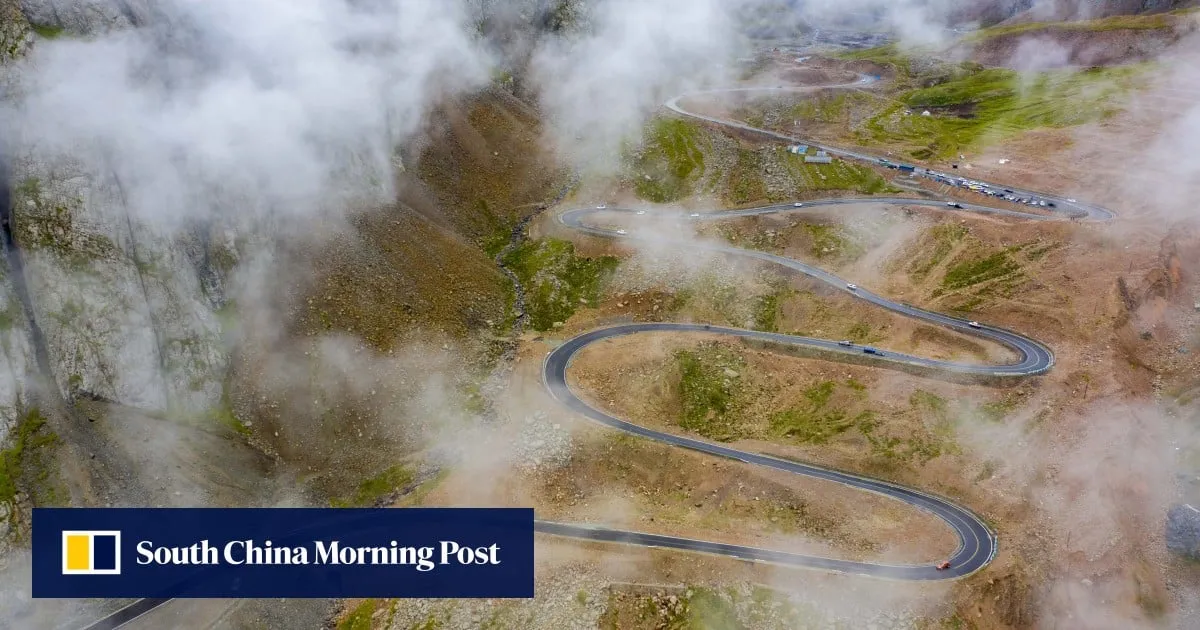
China plans to further strengthen its strategic transport network in sensitive border regions over the next five years to fortify and better project power along its remote frontiers amid rising geopolitical uncertainty.One project involves building a 394km (245-mile) highway linking the northern and southern sides of the rugged Tianshan Mountains in far-western Xinjiang Uygur Autonomous Region, according to the draft 15th five-year plan released last week.The route will run parallel to a strategic road built in the 1970s to improve military mobility following the 1962 India-border-war" class="entity-link entity-event" data-entity-id="42116" data-entity-type="event">Sino-India border war.Construction of the Dushanzi-Kuqa Highway in central Xinjiang began in September and is expected to finish in 2032. Once completed, it will allow year-round travel and cut journeys across the Tianshan Mountains to half or a third of the time.Under the plan, which outlines China’s policy priorities for the rest of the decade, China aims to complete two highways spanning all nine of its land-border provinces and “advance” construction of the National Coastal Highway along its east coast that links the port city of Dandong, near North Korea, with Dongxing on the border with Vietnam.
SRCSouth China Morning Post
LANGEN
LEANCenter-Right
WORDS182
ENT11
TUE · 2026-03-10 · 09:10 GMTBRIEF NSR-2026-0310-23101
NSR-2026-0310-23101News Report·EN·Political Strategy
How China plans for greater power projection in Xinjiang and Tibet over the next 5 years
China intends to bolster its power projection capabilities in Xinjiang and Tibet over the next five years by strengthening its strategic transport network in these sensitive border regions. A key project involves constructing a 394km highway in Xinjiang, the Dushanzi-Kuqa Highway, expected to be completed by 2032, which will significantly reduce travel time across the Tianshan Mountains.
Laura ZhouSouth China Morning PostFiled 2026-03-10 · 09:10 GMTLean · Center-RightRead · 1 min
South China Morning PostFIG 01
Reading time
1min
Word count
182words
Sources cited
0cited
Entities identified
11entities
Quality score
100%
§ 01
Briefing Summary
AI-generatedNEWSAR · AI
China intends to bolster its power projection capabilities in Xinjiang and Tibet over the next five years by strengthening its strategic transport network in these sensitive border regions. A key project involves constructing a 394km highway in Xinjiang, the Dushanzi-Kuqa Highway, expected to be completed by 2032, which will significantly reduce travel time across the Tianshan Mountains. This highway will run parallel to an older strategic road used to improve military mobility after the Sino-India war. The plan, outlining China's policy priorities, also includes completing two highways spanning all nine of its land-border provinces. Additionally, China aims to advance the construction of the National Coastal Highway along its east coast, connecting Dandong near North Korea with Dongxing on the border with Vietnam. These infrastructure developments are intended to fortify China's remote frontiers amid rising geopolitical uncertainty.
Confidence 0.90Claims 5Entities 11
§ 02
Article analysis
Model · rule-basedFraming
Political Strategy
National Security
Tone
Measured
AI-assessed
CalmNeutralAlarmist
Factuality
0.80 / 1.00
Factual
LowHigh
Sources cited
0
No named sources
FewMany
§ 03
Key claims
5 extracted01
The route will run parallel to a strategic road built in the 1970s to improve military mobility.
factual
Confidence
1.00
02
A 394km highway will link the northern and southern sides of the Tianshan Mountains in Xinjiang.
factual
Confidence
1.00
03
China aims to complete two highways spanning all nine of its land-border provinces.
factual
Confidence
0.90
04
Construction of the Dushanzi-Kuqa Highway began in September and is expected to finish in 2032.
factual
Confidence
0.90
05
China plans to strengthen its strategic transport network in border regions over the next five years.
factual
Confidence
0.90
§ 04
Full report
1 min read · 182 words§ 05
Entities
11 identifiedKey playerOppositionContextPositiveNeutralNegative
Locations10
§ 06
Keywords & salience
10 termschina
0.90
power projection
0.80
strategic transport network
0.80
tibet
0.70
xinjiang
0.70
highways
0.70
border regions
0.60
five-year plan
0.60
geopolitical uncertainty
0.50
military mobility
0.40
§ 07
Topic connections
Interactive graph Network visualization showing 51 related topics
View Full Graph Person Organization Location Event|Click node to navigate|Edge numbers = shared articles