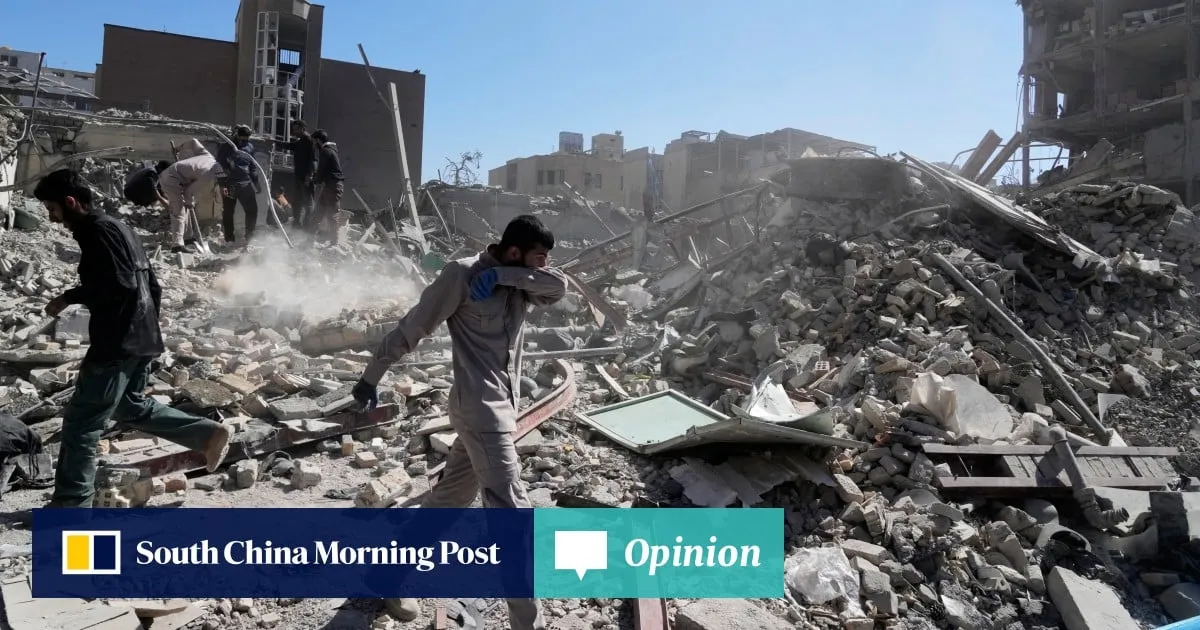
The United States and Israel are using artificial intelligence (AI) in their ongoing war on Iran. Even amid Anthropic’s blacklisting by the Pentagon amid a dispute over wartime applications, The Washington Post reported that the US military used the company’s AI tool Claude to strike around 1,000 targets in the first 24 hours of the invasion.Claude helped in war-planning by optimising target selection, analysing intelligence data and issuing precise location coordinates by assessing satellite images.The use of Claude is part of the Pentagon’s Maven Smart System. Built by Palantir, the system uses classified data from satellites, surveillance and other intelligence sources to provide real-time targeting options for the war against Iran.The increasing use of AI shortens the “kill chain”, reducing the time between identifying a target and neutralising it. This leads to decision compression in which human actors increasingly rely on algorithmic recommendations rather than independent judgment. With a lack of binding agreements on responsible military AI use, risks will only increase.AI’s increasing usage as a tool for improving precision and operational effectiveness raises serious concerns about accountability and the protection of civilians. Target-identification systems are only as reliable as the data they are trained on, and errors in classification can have catastrophic consequences. For example, there is a possibility that the mistaken bombing of an Iranian school on the first day of the attack, which killed at least 175 people, most of whom were children, could be due to AI.The Israeli military has also deployed the AI system Lavender in its attacks on Gaza. The AI-powered database was used to identify as many as 37,000 potential targets for attacks. Despite Lavender having an error rate of 10 per cent, it was utilised to fast track identification and targeting of low-level Hamas operatives, risking the lives of at least thousands of civilians.A Palestinian mother sits and looks out from a window of a tent set up inside her war-damaged home in the Gaza Strip on February 6. Photo: Reuters
SRCSouth China Morning Post
LANGEN
LEANCenter-Right
WORDS329
ENT11
TUE · 2026-03-10 · 12:30 GMTBRIEF NSR-2026-0310-23173
NSR-2026-0310-23173Analysis·EN·Technology
Iran strikes are a wake-up call to regulate military AI
The US and Israel are increasingly using AI in military operations, raising concerns about accountability and civilian protection. The US military utilized Anthropic's Claude AI tool, as part of the Pentagon's Maven Smart System, to optimize target selection and analyze intelligence in the war against Iran.
Abdul Moiz KhanSouth China Morning PostFiled 2026-03-10 · 12:30 GMTLean · Center-RightRead · 2 min
South China Morning PostFIG 01
Reading time
2min
Word count
329words
Sources cited
2cited
Entities identified
11entities
Quality score
100%
§ 01
Briefing Summary
AI-generatedNEWSAR · AI
The US and Israel are increasingly using AI in military operations, raising concerns about accountability and civilian protection. The US military utilized Anthropic's Claude AI tool, as part of the Pentagon's Maven Smart System, to optimize target selection and analyze intelligence in the war against Iran. Similarly, Israel deployed the Lavender AI system in Gaza to identify potential targets, despite a known error rate. These AI systems accelerate the targeting process, potentially leading to reduced human oversight and increased risk of errors with catastrophic consequences, such as the possible mistaken bombing of an Iranian school. The lack of binding agreements on responsible military AI use exacerbates these risks, highlighting the need for regulation.
Confidence 0.90Sources 2Claims 5Entities 11
§ 02
Article analysis
Model · rule-basedFraming
Technology
National Security
Tone
Mixed Tone
AI-assessed
CalmNeutralAlarmist
Factuality
0.70 / 1.00
Factual
LowHigh
Sources cited
2
Limited
FewMany
§ 03
Key claims
5 extracted01
The use of Claude is part of the Pentagon’s Maven Smart System, built by Palantir.
factualnull
Confidence
1.00
02
The Israeli military has also deployed the AI system Lavender in its attacks on Gaza.
factualnull
Confidence
0.90
03
The US military used Anthropic’s AI tool Claude to strike around 1,000 targets in the first 24 hours of the invasion.
factualThe Washington Post
Confidence
0.90
04
Lavender having an error rate of 10 per cent, it was utilised to fast track identification and targeting of low-level Hamas operatives.
factualnull
Confidence
0.80
05
The increasing use of AI shortens the “kill chain”, reducing the time between identifying a target and neutralising it.
factualnull
Confidence
0.80
§ 04
Full report
2 min read · 329 words§ 05
Entities
11 identifiedKey playerOppositionContextPositiveNeutralNegative
People1
Organizations6
§ 06
Keywords & salience
10 termsmilitary ai
1.00
artificial intelligence
0.90
target identification
0.70
civilian casualties
0.70
decision compression
0.60
algorithmic recommendations
0.60
ai error rate
0.60
kill chain
0.50
maven smart system
0.50
iran
0.40
§ 07
Topic connections
Interactive graph Network visualization showing 51 related topics
View Full Graph Person Organization Location Event|Click node to navigate|Edge numbers = shared articles