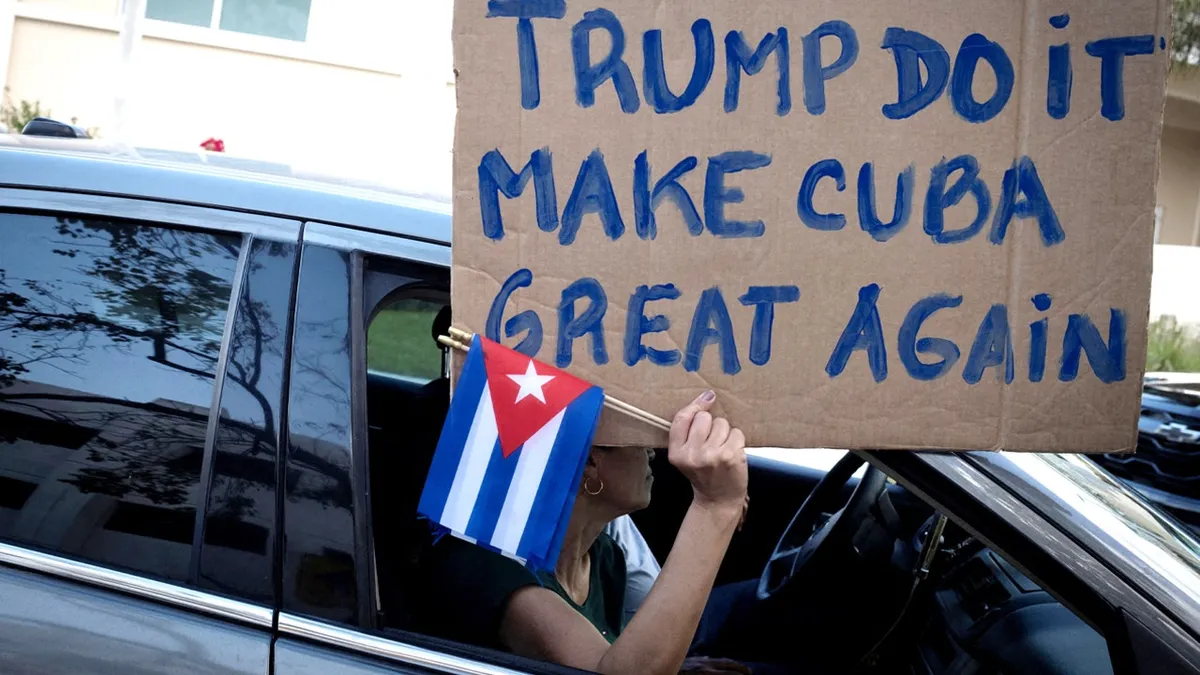
As Cuba faces rolling blackouts, food shortages and renewed protests, Cuban human rights activist Rosa María Payá is warning in an interview to Fox News Digital that the island’s deepening crisis cannot be solved with economic reforms alone and is urging the United States to maintain pressure on the communist government in Havana. The recent outages and shortages are tied to Cuba’s worsening energy and economic crisis. A recent nationwide blackout was triggered by a failure at the Antonio Guiteras thermoelectric plant, the island’s largest power station, cutting electricity across much of the country, according to Reuters. The crisis has been compounded by fuel shortages after the Trump administration moved to curtail oil shipments to the island, particularly from Venezuela — one of Cuba’s main suppliers. Cuban officials say U.S. sanctions have worsened the country’s economic difficulties, while repeated power plant failures and an aging electrical grid have left millions facing prolonged blackouts that have fueled growing public frustration and protests. Russia WARNS AGAINST 'PROVOCATIVE ACTIONS' AROUND Cuba AFTER 4 KILLED ONBOARD US-REGISTERED SPEEDBOAT The state-run company blamed U.S. sanctions in an official statement, saying, "Without ending the financial blockade, there can be no permanent energy stability," according to CubaHeadlines. The Trump administration has increased pressure on Cuba in recent months, tightening sanctions and targeting oil shipments that help power the island’s energy system. The measures are part of a broader effort to weaken the Cuban government and support democratic change on the island. "To President Trump, it's important for you to know that the Cuban people are grateful for what this administration is doing and that we are ready, and we want to make Cuba great again," Payá said, addressing him directly. "And that means an end to the communist dictatorship, not just a new economy, but a new republic." Her appeal comes as Cuba has re-emerged in Washington’s foreign policy discussions. Secretary of State Marco Rubio, the son of Cuban immigrants and one of the most prominent Cuban–American voices in U.S. politics, long has advocated a tougher stance toward Havana and stronger support for pro-democracy movements on the island. The Trump administration has recently increased pressure on the Cuban government, including measures targeting oil shipments that help sustain the island’s struggling energy sector. Trump praised Rubio during a press conference Tuesday and suggested he could play a central role in any potential negotiations with Havana. "Marco Rubio is doing a great job," Trump said. "I think he's going to go down as the greatest secretary of state in history. They trust Marco." A White House official told Fox News Digital Tuesday that, "The United States supports the Cuban people’s pursuit of democracy, prosperity, and fundamental freedoms. The United States calls on the Cuban regime to end its repression, release all unjustly detained political prisoners, and respect the rights and freedoms of all Cuban people." "We want to work with President Trump and with Secretary Rubio, the opposition is united," Payá said. "We have a plan. It's called the Freedom Accord," she added, referring to a democratic transition framework promoted by opposition groups in Cuba. "We are ready to lead this process. The moment is now, Mr. President." Opposition groups have developed the Freedom Accord, a political roadmap for democratic change, which she says would guide a transition away from the current system in Cuba. Payá, 37, who escaped the country 13 years ago, has spent the past decade advocating internationally for democratic change in Cuba. She is the daughter of prominent dissident Oswaldo Payá, founder of the Christian Liberation Movement and architect of the Varela Project, a petition campaign in the early 2000s that gathered more than 25,000 signatures demanding free elections and civil liberties in Cuba. Her father died in 2012 alongside fellow activist Harold Cepero in what Payá describes as an assassination by the Cuban regime. Cuban authorities said the men were killed in a car crash in eastern Cuba, but the Inter-American Commission on Human Rights later concluded there were "serious indications" that Cuban state agents were involved in the deaths. "After the Cuban regime assassinated my father … I have been trying to follow his legacy together with many, many other Cubans on the island and in exile that today believe that we have a real chance and freedom," she said, describing a movement that today includes activists both on the island and in exile. FLORIDA LAUNCHES PROBE AFTER Cuba KILLS 4 ABOARD US-FLAGGED SPEEDBOAT NEAR KEYS The crisis inside Cuba has reached a level where basic survival has become a daily struggle for many families, according to Payá. "The situation today is that mothers don't know if they are going to be able to feed their child tonight," she said. "Most of the island has been suffering blackouts that last for days on many occasions."The island has experienced waves of unrest in recent years driven by economic collapse and political repression. The largest demonstrations against the regime erupted on July 11, 2021, when thousands of Cubans took to the streets across the island chanting "freedom" in the biggest protests since the 1959 revolution. Authorities responded with mass arrests and prison sentences for many demonstrators. For Payá, those protests reflected something deeper than economic frustration. "The Cuban people have been fighting for freedom for the last 67 years," she said. "We are demanding political freedom, not just a new economy." Despite comparisons between Cuba’s crisis and the political turmoil in Venezuela, Payá argues the situation in Cuba is fundamentally different. "Cuba's situation is quite different," she said. "This is the longest running communist dictatorship in the Western hemisphere." Marco Rubio EMERGES AS KEY TRUMP POWER PLAYER AFTER Venezuela OPERATION While she emphasized that Cubans themselves must ultimately drive political change, Payá said international pressure remains essential because of the regime’s ability to repress dissent. Her appeal comes as Cuba has re-emerged in Washington’s foreign policy discussions. Payá said the Cuban opposition hopes the United States will continue supporting democratic change on the island. "I believe that President Trump knows very well, better than anyone, the difference between a real deal and a better one," she said. "He understands that this dictatorship must end." "To end the crisis," she added, "we need to end the regime." Fox News Digital reached out to the White House and Rubio for comment and has not yet received a reply.
SRCFox News - World
LANGEN
LEANCenter-Right
WORDS1 061
ENT11
TUE · 2026-03-10 · 18:16 GMTBRIEF NSR-2026-0310-23234
NSR-2026-0310-23234News Report·EN·Political Strategy
Cuban activist to Trump: ‘Make Cuba great again’ by ending communist rule
Cuban activist Rosa María Payá is urging the U.S. to maintain pressure on Cuba's communist government amidst worsening blackouts, food shortages, and protests.
Efrat LachterFox News - WorldFiled 2026-03-10 · 18:16 GMTLean · Center-RightRead · 5 min
Fox News - WorldFIG 01
Reading time
5min
Word count
1 061words
Sources cited
7cited
Entities identified
11entities
Quality score
100%
§ 01
Briefing Summary
AI-generatedNEWSAR · AI
Cuban activist Rosa María Payá is urging the U.S. to maintain pressure on Cuba's communist government amidst worsening blackouts, food shortages, and protests. Payá appealed to former President Trump, stating that Cuba needs an end to the communist dictatorship to become great again. Cuba is experiencing an energy and economic crisis, exacerbated by fuel shortages after the Trump administration curtailed oil shipments, particularly from Venezuela. Cuban officials blame U.S. sanctions for the country's economic difficulties and energy instability. The Trump administration has increased pressure on Cuba by tightening sanctions and targeting oil shipments to weaken the government and support democratic change.
Confidence 0.90Sources 7Claims 5Entities 11
§ 02
Article analysis
Model · rule-basedFraming
Political Strategy
Human Rights
Tone
Mixed Tone
AI-assessed
CalmNeutralAlarmist
Factuality
0.70 / 1.00
Factual
LowHigh
Sources cited
7
Well sourced
FewMany
§ 03
Key claims
5 extracted01
"To President Trump...we want to make Cuba great again...an end to the communist dictatorship"
quoteRosa María Payá
Confidence
1.00
02
A recent nationwide blackout was triggered by a failure at the Antonio Guiteras thermoelectric plant.
factualReuters
Confidence
1.00
03
The Trump administration has increased pressure on Cuba in recent months, tightening sanctions.
factualFox News Digital
Confidence
0.90
04
Cuba faces rolling blackouts, food shortages and renewed protests.
factualFox News Digital
Confidence
0.90
05
The recent outages and shortages are tied to Cuba’s worsening energy and economic crisis.
factualFox News Digital
Confidence
0.80
§ 04
Full report
5 min read · 1 061 words§ 05
Entities
11 identifiedKey playerOppositionContextPositiveNeutralNegative
People3
Organizations3
§ 06
Keywords & salience
9 termscuba
1.00
communist rule
0.90
economic crisis
0.80
u.s. sanctions
0.70
energy crisis
0.60
trump administration
0.60
protests
0.50
rosa maría payá
0.50
fuel shortages
0.40
§ 07
Topic connections
Interactive graph Network visualization showing 51 related topics
View Full Graph Person Organization Location Event|Click node to navigate|Edge numbers = shared articles