6 hours agoGhoncheh Habibiazad,BBC PersianandMallory MoenchAFP via Getty ImagesSmoke plumes billowed following strikes near Azadi Tower in western Tehran on Monday nightIranians have told BBC Persian that they are exhausted and struggling to sleep after 10 days of Israeli and US attacks, as explosions "every few hours" rocked Tehran and the nearby city of Karaj overnight and cut power. "I was in total darkness last night," one man in his 30s from Tehran said, while others reported temporary blackouts or power fluctuations."I'm feeling terrible. They hit a street near us today. I just want to be able to sleep tonight," a man in his 20s in the capital said.Another in his 20s in Tehran said "we're still alive," but added that "where missiles hit is getting closer and closer every day."On Monday evening, the Israeli military announced that it had begun a "broad wave of strikes against terror targets in Tehran".The military said on Tuesday morning that it had targeted an underground complex used by the Revolutionary Guards for weapons research, infrastructure within the main headquarters of the Quds Force, the Guards' overseas operations arm, and other weapons and defence production sites. Another "wave of strikes" was launched in Tehran on Tuesday afternoon, according to the military.Israel and the US launched a joint attack on Iran on 28 February, prompting retaliatory Iranian missile and drone strikes against Israel and targets in Middle Eastern countries hosting US military bases and embassies.On Monday, the US-based Human Rights Activists in Iran (HRANA) reported that 1,761 people had been killed in Iran - including at least 1,245 civilians, 194 of them children - since the war started.Access to Iran for journalists is restricted and the BBC has not been able to independently verify figures and events from inside the country.SuppliedThe Israeli military said it had struck "terror targets" in the Iranian capitalInternet connectivity in Iran has been almost entirely restricted, but BBC Persian has been hearing from residents, who we are not naming for their safety. The man in his 30s in Tehran who reported "total darkness" overnight said: "The electricity went out and I had no idea what was happening"."They hit hard last night. All you can see in our house are cracks in the walls. Sleeping has become the hardest thing for me."Two other Tehran residents said they had experienced electricity fluctuations, while another man in his 30s in the capital said the power went out for around 30 minutes."I just want this to end once and for all," he said.One Tehran resident in his 30s said strikes were happening for "20 minutes in a row" at one point over Monday night. "I am tired," he said. "Every bit of routine I had is now gone. I either can't do them or don't have the motivation to carry them out."A woman in her 20s in Tehran said there were explosions "every few hours" and a strange white light in the sky that seemed different than nights before.However, she said, "even if it takes a few weeks now, it's still better than spending a lifetime living with this system", reflecting the sentiment of those who want to see an end to the Islamic Republic.MamlekateThe impact of explosions on a block of flats in TehranSome in Karaj, which also experienced strikes and power cuts, felt similarly.A man in his 30s in the city, which is 30 km (20 miles) west of Tehran, said there were some fluctuations and a "blue light" in the sky on Monday night. A video published by BBC Persian from Karaj shows booms upon the horizon, as the night sky lights up with blue and red glows.The man said he would "tolerate this situation as long as the regime is gone".A mother and middle class restaurateur in her 50s, who lives in the Mehrshahr residential neighbourhood of Karaj, said there was a strike near her home overnight, "the closest place to us, and we truly felt the shadow of death over our heads"."But we are standing firm until the end to survive and to be free. Even if we are killed, it honestly does not matter compared to the lives that have already been lost in the hope of victory," she said.A woman in her 40s from Tehran also said: "I'm very sad about what has happened to the city, but I hope it ends well for the people of Iran. I hope to see them [officials] gone."Others who spoke to the BBC were not so defiant, or hopeful.A man in his 20s from Karaj said: "I'm getting tired of this situation. The whole war is overwhelming. Some scenarios for the future and for the people of Iran are truly frightening."The man in his 20s in Tehran who described how missiles were coming closer daily said he had been shot in the eye during the anti-government protests in December and January. HRANA has reported that at least 6,480 protesters were killed and 25,000 others injured in a brutal crackdown by security forces."We are the victims," he said. "I have been harmed by the Islamic Republic, and because of it a war is now happening that is harming us again."
SRCBBC News - World
LANGEN
LEANCenter
WORDS859
ENT9
TUE · 2026-03-10 · 13:26 GMTBRIEF NSR-2026-0310-23235
NSR-2026-0310-23235News Report·EN·Human Interest
'I just want to be able to sleep': Attacks in Iran rock cities and cut power
Recent Israeli and US attacks in Tehran and Karaj, Iran, have disrupted daily life, causing widespread fear and sleep deprivation among residents. Over the past 10 days, explosions and power outages have become frequent, with residents reporting feeling unsafe as strikes get closer.
BBC News - WorldFiled 2026-03-10 · 13:26 GMTLean · CenterRead · 4 min
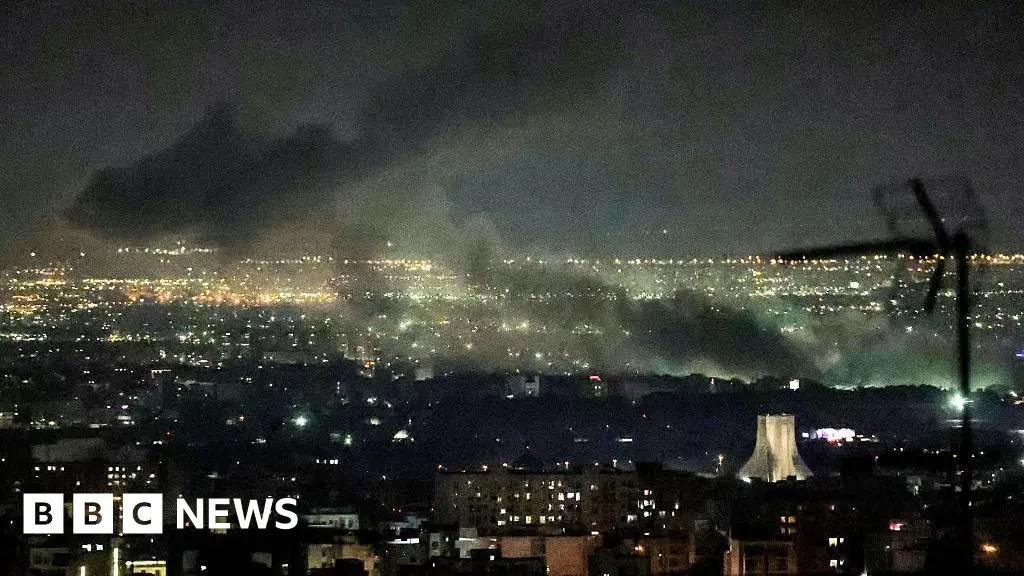
BBC News - WorldFIG 01
Reading time
4min
Word count
859words
Sources cited
5cited
Entities identified
9entities
Quality score
100%
§ 01
Briefing Summary
AI-generatedNEWSAR · AI
Recent Israeli and US attacks in Tehran and Karaj, Iran, have disrupted daily life, causing widespread fear and sleep deprivation among residents. Over the past 10 days, explosions and power outages have become frequent, with residents reporting feeling unsafe as strikes get closer. The Israeli military claims to be targeting terror-related sites, including weapons research facilities and Quds Force infrastructure. These attacks are part of a larger conflict that began on February 28th with a joint Israeli-US attack on Iran, followed by Iranian retaliatory strikes. While access to Iran is restricted, reports indicate a high number of casualties, including civilians and children, though these figures are unverified. Internet connectivity is also heavily restricted, making it difficult to obtain information.
Confidence 0.90Sources 5Claims 5Entities 9
§ 02
Article analysis
Model · rule-basedFraming
Human Interest
Conflict
Tone
Mixed Tone
AI-assessed
CalmNeutralAlarmist
Factuality
0.70 / 1.00
Factual
LowHigh
Sources cited
5
Well sourced
FewMany
§ 03
Key claims
5 extracted01
Israeli military announced it had begun a 'broad wave of strikes against terror targets in Tehran'.
factualIsraeli military
Confidence
1.00
02
Israel and the US launched a joint attack on Iran on 28 February.
factualnull
Confidence
0.90
03
Strikes were happening for '20 minutes in a row' at one point over Monday night.
quoteTehran resident
Confidence
0.80
04
Iranians are exhausted and struggling to sleep after 10 days of Israeli and US attacks.
quoteBBC Persian
Confidence
0.80
05
1,761 people had been killed in Iran since the war started.
statisticHuman Rights Activists in Iran (HRANA)
Confidence
0.70
§ 04
Full report
4 min read · 859 words§ 05
Entities
9 identifiedKey playerOppositionContextPositiveNeutralNegative
Organizations4
§ 06
Keywords & salience
9 termsattacks in iran
0.90
israeli strikes
0.80
power outages
0.70
tehran
0.70
missile strikes
0.60
revolutionary guards
0.50
civilian casualties
0.50
quds force
0.40
weapons research
0.40
§ 07
Topic connections
Interactive graph Network visualization showing 51 related topics
View Full Graph Person Organization Location Event|Click node to navigate|Edge numbers = shared articles