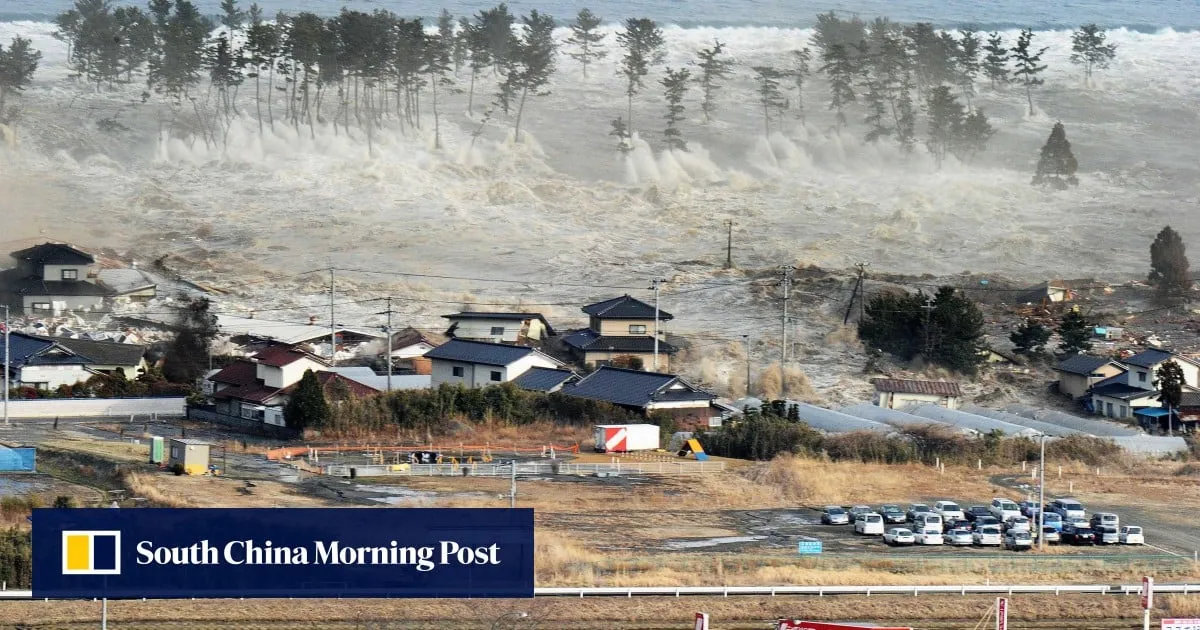
This article was first published on March 11, 2011.By Greg Torode, Martin Wong and AgenciesA farm building engulfed in flames as it disintegrated in giant waves; a minibus tumbling end over end, pushed ahead of a 10-metre wall of water - the tsunami triggered yesterday afternoon by the largest earthquake in Japanese history produced scenes of horror along the country’s northeast coast.At least 1,000 people were killed as the wall of water swept away everything in its path. The death toll is expected to soar today as rescuers reach the worst hit areas around Sendai, 300 kilometres north of Tokyo.The 8.9-magnitude quake struck at 1.46pm Hong Kong time; it was centred about 125 kilometres off the coast and occurred at a relatively shallow depth - 10 kilometres under the seabed.The tsunami crashed ashore soon afterwards, barrelling over houses, factories, farms, fishing boats and the local airport and triggering alerts across East Asia and the Pacific. People in low-lying parts of Taiwan, Indonesia, the Philippines and Hawaii were evacuated.
SRCSouth China Morning Post
LANGEN
LEANCenter-Right
WORDS168
ENT11
WED · 2026-03-11 · 02:30 GMTBRIEF NSR-2026-0311-23354
NSR-2026-0311-23354News Report·EN·Human Interest
Japan hit by worst earthquake and tsunami in its history in 2011 – from the SCMP archive
In March 2011, Japan experienced its largest earthquake in history, an 8.9-magnitude quake centered 125 kilometers off the northeast coast. The earthquake, occurring at a shallow depth of 10 kilometers, triggered a devastating tsunami that crashed ashore, sweeping away buildings, infrastructure, and vehicles.
SCMPSouth China Morning PostFiled 2026-03-11 · 02:30 GMTLean · Center-RightRead · 1 min
South China Morning PostFIG 01
Reading time
1min
Word count
168words
Sources cited
0cited
Entities identified
11entities
Quality score
100%
§ 01
Briefing Summary
AI-generatedNEWSAR · AI
In March 2011, Japan experienced its largest earthquake in history, an 8.9-magnitude quake centered 125 kilometers off the northeast coast. The earthquake, occurring at a shallow depth of 10 kilometers, triggered a devastating tsunami that crashed ashore, sweeping away buildings, infrastructure, and vehicles. The tsunami caused widespread destruction along the coast, particularly around Sendai, and prompted tsunami alerts and evacuations across East Asia and the Pacific, including Taiwan, Indonesia, the Philippines, and Hawaii. Initial reports indicated at least 1,000 fatalities, with expectations of a significantly higher death toll as rescue efforts reached the most affected areas. The event occurred at 1:46 pm Hong Kong time.
Confidence 0.90Claims 5Entities 11
§ 02
Article analysis
Model · rule-basedFraming
Human Interest
Environmental
Tone
Mixed Tone
AI-assessed
CalmNeutralAlarmist
Factuality
0.90 / 1.00
Factual
LowHigh
Sources cited
0
No named sources
FewMany
§ 03
Key claims
5 extracted01
The quake was centred about 125 kilometres off the coast and occurred at a depth of 10 kilometres.
factualAgencies
Confidence
1.00
02
The 8.9-magnitude quake struck at 1.46pm Hong Kong time.
factualAgencies
Confidence
1.00
03
The tsunami was triggered by the largest earthquake in Japanese history.
factualAgencies
Confidence
1.00
04
At least 1,000 people were killed as the wall of water swept away everything in its path.
statisticAgencies
Confidence
0.90
05
The death toll is expected to soar today as rescuers reach the worst hit areas around Sendai.
predictionAgencies
Confidence
0.70
§ 04
Full report
1 min read · 168 words§ 05
Entities
11 identifiedKey playerOppositionContextPositiveNeutralNegative
Locations8
§ 06
Keywords & salience
9 termstsunami
1.00
earthquake
1.00
japan
0.90
natural disaster
0.80
death toll
0.70
sendai
0.60
pacific
0.50
east asia
0.50
magnitude 8.9
0.40
§ 07
Topic connections
Interactive graph No topic relationship data available yet. This graph will appear once topic relationships have been computed.