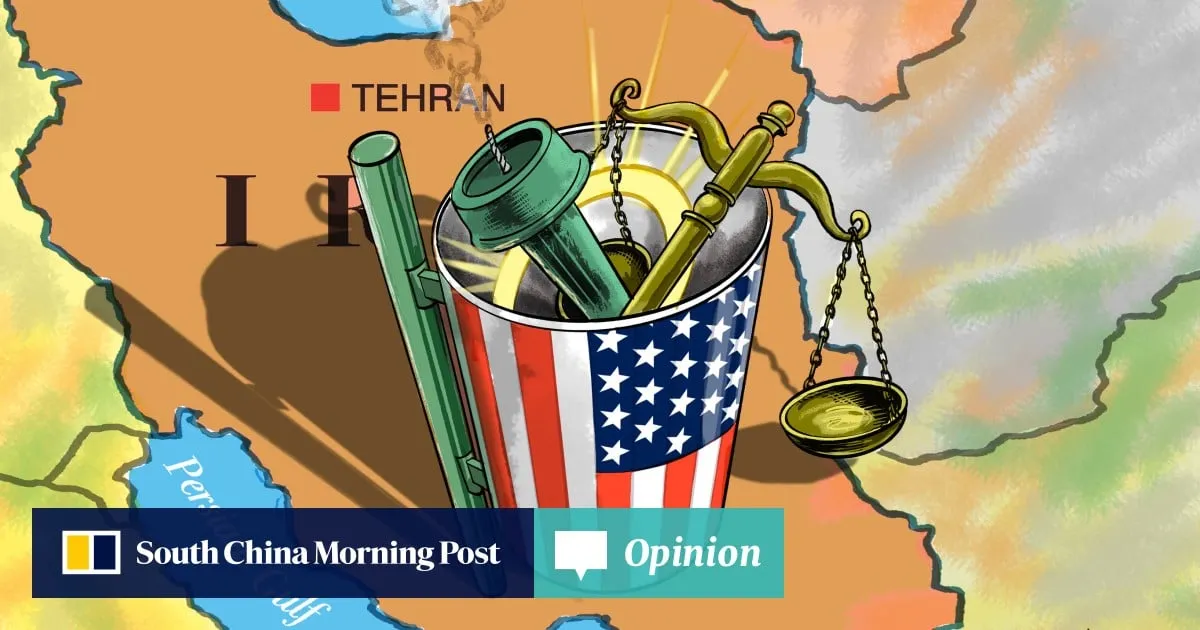
The US launched its war against Iran on February 28, convinced that decapitating Tehran’s leadership would produce swift political capitulation. A week later, Iran was still firing missiles across the Gulf, some 150 oil tankers were stalled at the Strait of Hormuz and an Iranian Revolutionary Guard commander has threatened to set ablaze any vessel attempting passage.A recent analysis in The Diplomat argues the strikes signal the end of China’s westward strategic march. The diagnosis captures real costs but mistakes a disruption for a defeat. For Beijing, the more consequential question is not whether Iran has fallen, but whether Washington has stepped into its deepest quagmire since Iraq.The case for a Chinese calamity rests on one assumption: that Iran collapses quickly, freeing US resources for an Indo-Pacific pivot. That assumption is already fraying. Air power can destroy facilities and eliminate commanders, but it cannot legislate political outcomes. For a case in point, consider Libya in 2011. NATO pressure succeeded only because there were organised rebel forces already on the ground, while no comparable force exists in Iran today.Iran’s response has also exposed a deeper shift in modern warfare: missile volume is no longer the decisive variable. Tehran’s Shahed drones – which cost an estimated US$20,000-US$50,000 apiece – have imposed disproportionate costs on US and allied air defences. A single interceptor runs 10 times that figure or more, and the Stimson Centre’s Kelly Grieco has calculated that for every dollar Iran spends manufacturing a Shahed, it costs adversaries US$20-US$28 to bring it down. Protracted, asymmetric attrition is increasingly the logic of contemporary conflict, a calculus that extends well beyond the Gulf.More damaging is the context in which the strikes were launched. On February 27, Oman’s Foreign Minister Badr Al-Busaidi announced a diplomatic breakthrough: Iran had agreed to zero uranium stockpiling and full verification. Peace was “within reach”. US President Donald Trump struck anyway. By choosing kinetic action during negotiations that were yielding results, the Trump administration handed Beijing and Moscow a legitimacy argument they could not have constructed themselves.02:22Trump says US objectives in Iran ‘way ahead of schedule’ and attacks may end ‘soon’
SRCSouth China Morning Post
LANGEN
LEANCenter-Right
WORDS352
ENT12
WED · 2026-03-11 · 01:30 GMTBRIEF NSR-2026-0311-23360
NSR-2026-0311-23360Analysis·EN·Political Strategy
How America’s Iran miscalculation hands China a strategic advantage
The US launched strikes against Iran in late February, believing it would lead to a swift capitulation. However, Iran responded with missile attacks and threats, disrupting oil tanker traffic in the Strait of Hormuz.
Sophie Wushuang YiSouth China Morning PostFiled 2026-03-11 · 01:30 GMTLean · Center-RightRead · 2 min
South China Morning PostFIG 01
Reading time
2min
Word count
352words
Sources cited
2cited
Entities identified
12entities
Quality score
100%
§ 01
Briefing Summary
AI-generatedNEWSAR · AI
The US launched strikes against Iran in late February, believing it would lead to a swift capitulation. However, Iran responded with missile attacks and threats, disrupting oil tanker traffic in the Strait of Hormuz. Despite some arguing this benefits the US by freeing resources for the Indo-Pacific, the article suggests the conflict could become a quagmire, benefiting China. Iran's use of inexpensive drones to strain US and allied air defenses highlights a shift towards asymmetric warfare. The strikes also undermined ongoing diplomatic progress, as Oman's Foreign Minister announced a breakthrough in negotiations just before the US action. This provides China and Russia with a legitimacy argument against the US.
Confidence 0.90Sources 2Claims 5Entities 12
§ 02
Article analysis
Model · rule-basedFraming
Political Strategy
National Security
Tone
Measured
AI-assessed
CalmNeutralAlarmist
Factuality
0.60 / 1.00
Mixed
LowHigh
Sources cited
2
Limited
FewMany
§ 03
Key claims
5 extracted01
Trump says US objectives in Iran ‘way ahead of schedule’ and attacks may end ‘soon’
quoteDonald Trump
Confidence
1.00
02
A recent analysis in The Diplomat argues the strikes signal the end of China’s westward strategic march.
factualThe Diplomat
Confidence
1.00
03
Oman’s Foreign Minister Badr Al-Busaidi announced a diplomatic breakthrough: Iran had agreed to zero uranium stockpiling and full verification.
factualBadr Al-Busaidi
Confidence
0.90
04
The US launched its war against Iran on February 28, convinced that decapitating Tehran’s leadership would produce swift political capitulation.
factualnull
Confidence
0.90
05
For every dollar Iran spends manufacturing a Shahed, it costs adversaries US$20-US$28 to bring it down.
statisticKelly Grieco, Stimson Centre
Confidence
0.80
§ 04
Full report
2 min read · 352 words§ 05
Entities
12 identifiedKey playerOppositionContextPositiveNeutralNegative
Organizations3
§ 06
Keywords & salience
9 termsiran
1.00
us
0.90
china
0.80
strategic advantage
0.70
military strikes
0.60
miscalculation
0.60
diplomatic breakthrough
0.50
asymmetric warfare
0.50
indo-pacific pivot
0.40
§ 07
Topic connections
Interactive graph Network visualization showing 51 related topics
View Full Graph Person Organization Location Event|Click node to navigate|Edge numbers = shared articles