Israeli attacks never stopped, and the mechanism meant to police violations had no power to enforce them.A photograph shows the aftermath of an Israeli airstrike that targeted the village of Temnin in Lebanon's Bekaa Valley on March 11, 2026 [AFP]Former UN Spokesperson and Chief of Strategic Communications, UNIFIL.Published On 11 Mar 2026The resumption of hostilities between Israel and Hezbollah has surprised few who have been watching closely. The question was never whether conflict would return, only when. The arrangements that followed the November 27, 2024 ceasefire between Lebanon and Israel were widely understood to be temporary and structurally weak, leaving the underlying dynamics of confrontation largely untouched.The ceasefire agreement, brokered by the United States and France, formally aimed to end active hostilities between Hezbollah and Israel. In practice, however, the agreement never truly halted the conflict. Israeli forces maintained a presence in Lebanese territory, and military strikes against Lebanon continued on an almost daily basis. The agreement itself contained a significant ambiguity: It granted the Israeli military the ability to conduct operations whenever it perceived a potential threat to its security.This clause introduced a fundamental imbalance. The monitoring mechanism, chaired by the US and including France, with the participation of the Lebanese Armed Forces (LAF), the Israeli military and the United Nations Interim Force in Lebanon (UNIFIL), was tasked with overseeing the agreement but lacked the authority to independently verify whether the threats cited by Israel were real or whether the locations targeted were indeed Hezbollah positions. Even more critically, the mechanism did not establish a clear process for verifying or adjudicating violations of the agreement. As a result, accountability remained elusive from the outset.The only international actor systematically documenting violations was UNIFIL, in line with UN Security Council Resolution 1701. According to UNIFIL records, between November 27, 2024 and the end of February 2026, more than 10,000 Israeli violations of Lebanese airspace and 1,400 military activities were recorded inside Lebanese territory. These incidents resulted in approximately 400 deaths and more than 1,100 injuries in Lebanon.The monitoring mechanism itself collapsed with the resumption of hostilities between Hezbollah and Israel after the start of the US-Israeli war on Iran. During its last, and probably final, meeting at the end of February, Israeli representatives did not attend, marking the end of the framework intended to supervise the ceasefire arrangements.Meanwhile, Israeli forces still maintain control of five positions inside Lebanese territory near the villages of Labbouneh, Marwahin, Aitaroun, Hula and Sarada, in addition to establishing two buffer zones. According to the terms of the November 2024 ceasefire agreement, Israeli forces were expected to withdraw from these locations to allow the deployment of the LAF, but this transition never materialised.During this period, UNIFIL worked with the LAF to facilitate the redeployment of the Lebanese army in southern Lebanon, with several positions transferred back under Lebanese state control. However, continued Israeli strikes and military presence prevented the LAF from fully re-establishing authority in the south and restoring legitimate government institutions across the area.The renewed conflict that erupted on March 2, 2026 appears even more asymmetric, unpredictable and violent than the previous confrontation. One major reason is the absence of any active diplomatic mediation capable of containing escalation. Unlike earlier phases of the conflict, when international diplomacy, however limited, attempted to prevent full-scale war, this new round has unfolded in a relative diplomatic vacuum.Since the beginning of the broader confrontation in 2023, Israeli political and military leaders have repeatedly stated their intention to create security buffer zones north of the Blue Line that would be largely free of civilian presence. The pattern of attacks observed since late 2024 suggests a sustained effort to produce precisely such a reality on the ground. The scale of destruction in southern Lebanon supports this interpretation, with many villages near the Blue Line suffering extensive damage and several communities almost destroyed. Notably, much of this destruction occurred after the November 27 ceasefire, at a time when much of the civilian population had already been evacuated and Hezbollah attacks towards Israel had ceased.Attempts to restore local governance and services in the affected villages have faced immediate setbacks. Whenever local authorities tried to re-establish an administrative presence using temporary facilities such as prefabricated buildings or containers, those structures were frequently attacked. These attacks have prevented the return of civilian life and the re-establishment of local institutions.Recent reports indicate the presence of Israeli forces in additional southern Lebanese villages, including Ramyah, Yaroun, Hula, Kafr Kela, Khiam, Kfar Shouba, Aitaroun and Markaba. If confirmed, this would represent a further extension of Israeli operational presence inside Lebanese territory, with no withdrawal timeline in sight.These developments place significant strain on international law, particularly the principles of sovereignty and civilian protection. Yet the response from the international community has been strikingly muted. Diplomatic initiatives capable of mediating the conflict have so far failed to materialise.The situation was further exacerbated by a controversial decision adopted by the UNSC on August 31, 2025, largely driven by the US administration during the annual debate on renewing the mission’s mandate.The new resolution granted the peacekeeping force its last renewal, requesting a cessation of operations by the end of 2026 and final closure by 2027. Should this decision remain in effect, southern Lebanon could soon find itself without any international presence capable of monitoring events, supporting civilians and assisting the LAF in their redeployment.The implications of such an absence are profound, and the risk of miscalculation and uncontrolled escalation would significantly increase.The alleged use of white phosphorus along the Blue Line, coupled with repeated spraying of chemical pesticides reportedly aimed at preventing farmers from replanting their crops, suggests a deliberate effort to keep the area devoid of population and civilian infrastructure. These practices reinforce the depopulation of the border zone while further undermining the already severely damaged agricultural economy of southern Lebanon, with potentially long-term socioeconomic consequences.Compared with the 2023–2024 conflict, the current hostilities have also expanded geographically. Air raids and attacks are now occurring across a broader range of locations in Lebanon, including areas previously considered relatively safe. This widening scope has heightened public anxiety and may destabilise Lebanon’s already fragile political balance.Lebanon’s domestic situation remains extremely delicate. Continued military pressure risks shifting political alliances, weakening state institutions and further undermining Lebanese security forces.For many Lebanese citizens, the expanding pattern of attacks is reviving memories of past periods of civil unrest and internal instability. Such dynamics may serve Israeli strategic interests by further weakening Lebanon internally.
SRCAl Jazeera
LANGEN
LEANCenter
WORDS1 074
ENT11
WED · 2026-03-11 · 14:38 GMTBRIEF NSR-2026-0311-23592
NSR-2026-0311-23592Analysis·EN·Conflict
The Israel-Hezbollah ceasefire was built to fail
The November 2024 ceasefire between Israel and Hezbollah, brokered by the US and France, failed to halt ongoing conflict. Despite the agreement, Israel continued military operations within Lebanese territory, citing security threats.
Andrea TenentiAl JazeeraFiled 2026-03-11 · 14:38 GMTLean · CenterRead · 5 min
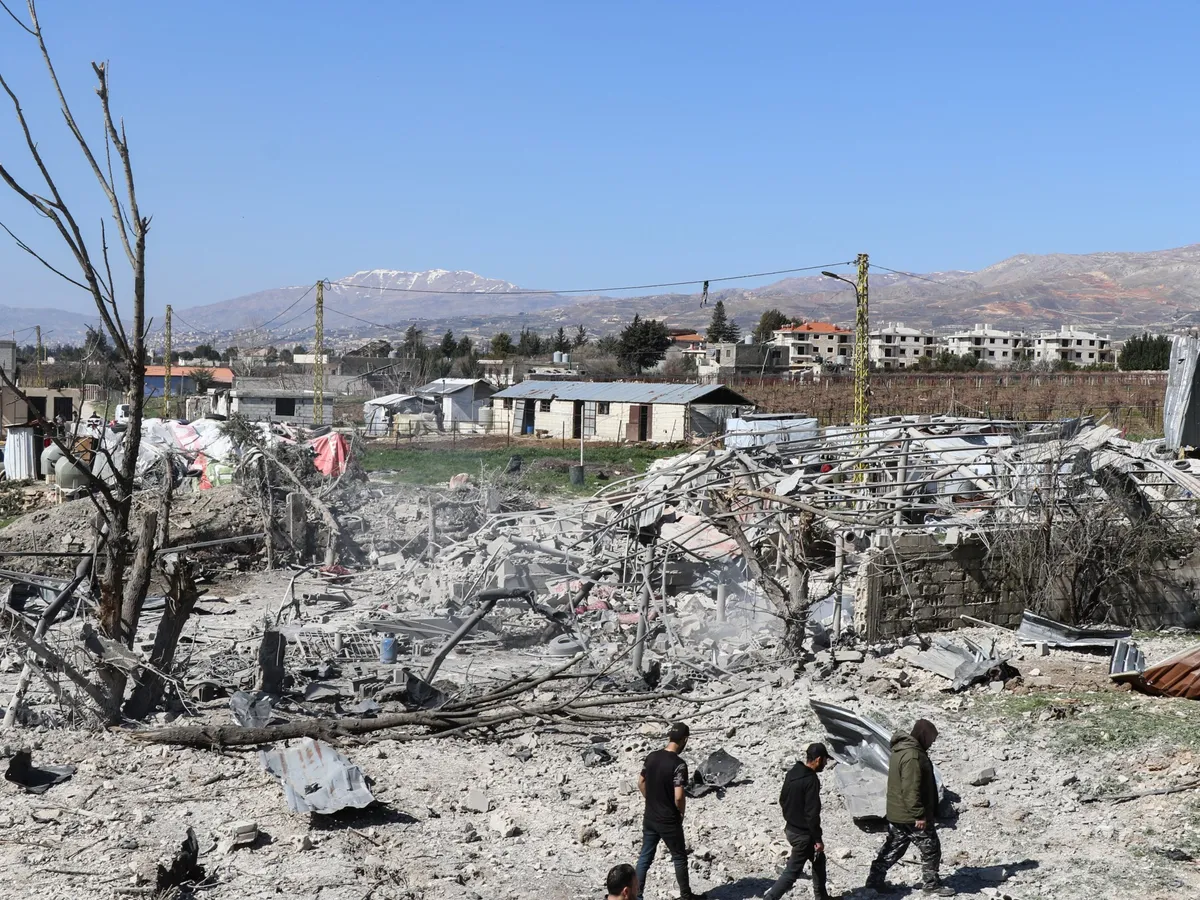
Al JazeeraFIG 01
Reading time
5min
Word count
1 074words
Sources cited
1cited
Entities identified
11entities
Quality score
100%
§ 01
Briefing Summary
AI-generatedNEWSAR · AI
The November 2024 ceasefire between Israel and Hezbollah, brokered by the US and France, failed to halt ongoing conflict. Despite the agreement, Israel continued military operations within Lebanese territory, citing security threats. A monitoring mechanism, including the US, France, Lebanon, Israel, and UNIFIL, lacked the authority to verify Israeli claims or enforce the ceasefire. UNIFIL documented over 10,000 Israeli airspace violations and 1,400 military activities in Lebanon between November 2024 and February 2026, resulting in hundreds of deaths and injuries. The monitoring mechanism ultimately collapsed following the resumption of hostilities between Hezbollah and Israel after the start of the US-Israeli war on Iran.
Confidence 0.90Sources 1Claims 5Entities 11
§ 02
Article analysis
Model · rule-basedFraming
Conflict
Political Strategy
Tone
Mixed Tone
AI-assessed
CalmNeutralAlarmist
Factuality
0.60 / 1.00
Mixed
LowHigh
Sources cited
1
Limited
FewMany
§ 03
Key claims
5 extracted01
Israeli forces still maintain control of five positions inside Lebanese territory.
factualnull
Confidence
0.90
02
Between November 27, 2024 and the end of February 2026, more than 10,000 Israeli violations of Lebanese airspace were recorded.
statisticUNIFIL
Confidence
0.90
03
Israeli forces maintained a presence in Lebanese territory, and military strikes against Lebanon continued on an almost daily basis.
factualnull
Confidence
0.90
04
The monitoring mechanism collapsed with the resumption of hostilities between Hezbollah and Israel after the start of the US-Israeli war on Iran.
factualnull
Confidence
0.80
05
The arrangements that followed the November 27, 2024 ceasefire between Lebanon and Israel were widely understood to be temporary and structurally weak.
factualnull
Confidence
0.80
§ 04
Full report
5 min read · 1 074 words§ 05
Entities
11 identifiedKey playerOppositionContextPositiveNeutralNegative
Organizations3
Locations7
§ 06
Keywords & salience
10 termsisrael-hezbollah conflict
1.00
ceasefire agreement
0.90
violations
0.80
monitoring mechanism
0.70
lebanese airspace
0.60
unifil
0.60
hostilities
0.50
israeli military
0.50
lebanon
0.40
accountability
0.40
§ 07
Topic connections
Interactive graph Network visualization showing 51 related topics
View Full Graph Person Organization Location Event|Click node to navigate|Edge numbers = shared articles