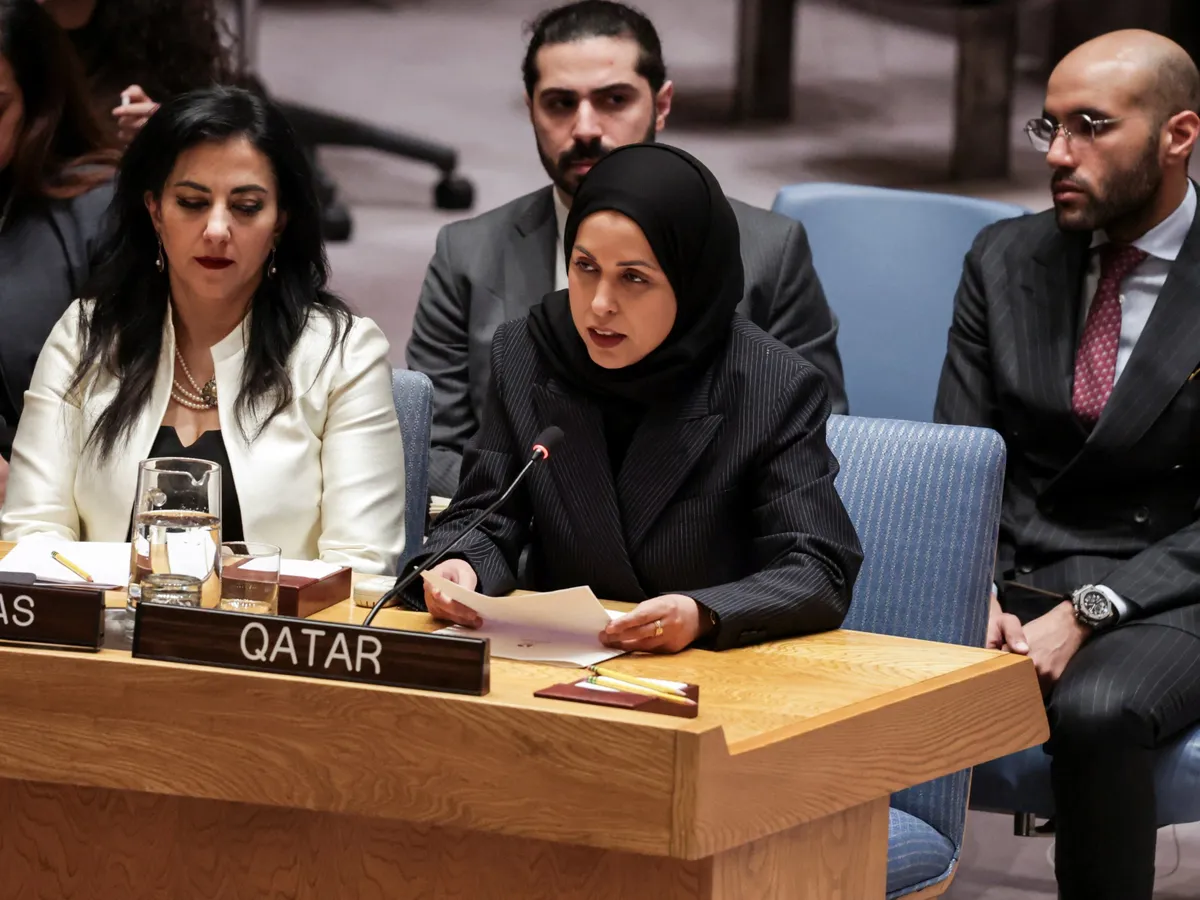
Qatar’s envoy to UN condemns Iranian drone, missile strikes across the Gulf as ‘clear violation of international law’.Published On 11 Mar 2026Qatar has called on the United Nations Security Council (UNSC) to take immediate steps to halt Iranian attacks on countries across the Middle East, warning that a failure to act sends a “dangerous signal”.Sheikha Alya Ahmed bin Saif Al Thani, Qatar’s ambassador to the UN, on Wednesday condemned Iran’s missile and drone strikes on targets across the region as “a clear violation of international law and the UN Charter”.Recommended Stories list of 3 itemslist 1 of 3Trump says Iran war to end ‘soon’ as Israel claims no time limitlist 2 of 3The hidden battlefield: Censorship in the Israel–Iran warlist 3 of 3UN warns of widening crisis as Israeli attacks displace 816,000 in Lebanonend of list“The continued targeting of our territory by the Iran" class="entity-link entity-organization" data-entity-id="8614" data-entity-type="organization">Islamic Republic of Iran does not reflect good faith, and impacts deeply the foundation of understanding upon which bilateral relations between our countries have been built,” she told reporters at the UN headquarters in New York.“The Security Council must act [and] fulfil its responsibility. Failure to respond would send a dangerous signal that attacks against uninvolved neighbours carry no consequences,” she said.Her comments came shortly before the Security Council voted in favour of a draft resolution denouncing the wave of Iranian attacks on Gulf Cooperation Council (GCC) countries.Iranian forces began firing ballistic missiles and drones at what it said were United States and Israeli targets across the Middle East after the two countries launched a war against Iran on February 28.But the Iranian strikes also have targeted civilian infrastructure, disrupting energy production and grounding flights for several days, particularly in hard-hit Gulf nations.The US has confirmed its loss of eight US service members in the Iranian attacks since the war began, while deaths have also been reported by several regional countries, including Israel, the United Arab Emirates, Kuwait, Bahrain and Saudi Arabia.
SRCAl Jazeera
LANGEN
LEANCenter
WORDS325
ENT12
WED · 2026-03-11 · 20:01 GMTBRIEF NSR-2026-0311-23670
NSR-2026-0311-23670News Report·EN·Diplomatic
UN’s failure to stop Iranian attacks sending ‘dangerous signal’: Qatar
In March 2026, Qatar's UN ambassador, Sheikha Alya Ahmed bin Saif Al Thani, condemned Iran's missile and drone attacks across the Middle East as violations of international law and the UN Charter. She urged the UN Security Council to take immediate action to halt these attacks, warning that inaction would signal that aggression against uninvolved nations has no consequences.
Al Jazeera StaffAl JazeeraFiled 2026-03-11 · 20:01 GMTLean · CenterRead · 2 min
Al JazeeraFIG 01
Reading time
2min
Word count
325words
Sources cited
1cited
Entities identified
12entities
Quality score
100%
§ 01
Briefing Summary
AI-generatedNEWSAR · AI
In March 2026, Qatar's UN ambassador, Sheikha Alya Ahmed bin Saif Al Thani, condemned Iran's missile and drone attacks across the Middle East as violations of international law and the UN Charter. She urged the UN Security Council to take immediate action to halt these attacks, warning that inaction would signal that aggression against uninvolved nations has no consequences. Her statement came before the Security Council voted on a resolution denouncing the attacks on Gulf Cooperation Council (GCC) countries. Iran initiated these strikes, targeting what it claimed were US and Israeli assets, after the two countries launched a war against Iran in late February. The attacks have disrupted civilian infrastructure, energy production, and flights, causing casualties in multiple countries, including US service members.
Confidence 0.90Sources 1Claims 5Entities 12
§ 02
Article analysis
Model · rule-basedFraming
Diplomatic
National Security
Tone
Mixed Tone
AI-assessed
CalmNeutralAlarmist
Factuality
0.70 / 1.00
Factual
LowHigh
Sources cited
1
Limited
FewMany
§ 03
Key claims
5 extracted01
Failure to respond would send a dangerous signal that attacks against uninvolved neighbours carry no consequences.
quoteSheikha Alya Ahmed bin Saif Al Thani
Confidence
1.00
02
The US has confirmed the loss of eight US service members in the Iranian attacks.
factual
Confidence
1.00
03
Iranian forces began firing missiles and drones at US and Israeli targets after a war began on Feb 28.
factual
Confidence
1.00
04
The UNSC voted in favor of a draft resolution denouncing Iranian attacks on GCC countries.
factual
Confidence
1.00
05
Qatar condemns Iranian drone and missile strikes as a clear violation of international law.
quoteSheikha Alya Ahmed bin Saif Al Thani, Qatar’s ambassador to the UN
Confidence
1.00
§ 04
Full report
2 min read · 325 words§ 05
Entities
12 identifiedKey playerOppositionContextPositiveNeutralNegative
Organizations4
§ 06
Keywords & salience
10 termsiranian attacks
1.00
united nations security council
0.90
international law
0.80
qatar
0.70
middle east
0.70
missile strikes
0.60
drone strikes
0.60
gulf cooperation council
0.50
us service members
0.40
un charter
0.40
§ 07
Topic connections
Interactive graph Network visualization showing 51 related topics
View Full Graph Person Organization Location Event|Click node to navigate|Edge numbers = shared articles