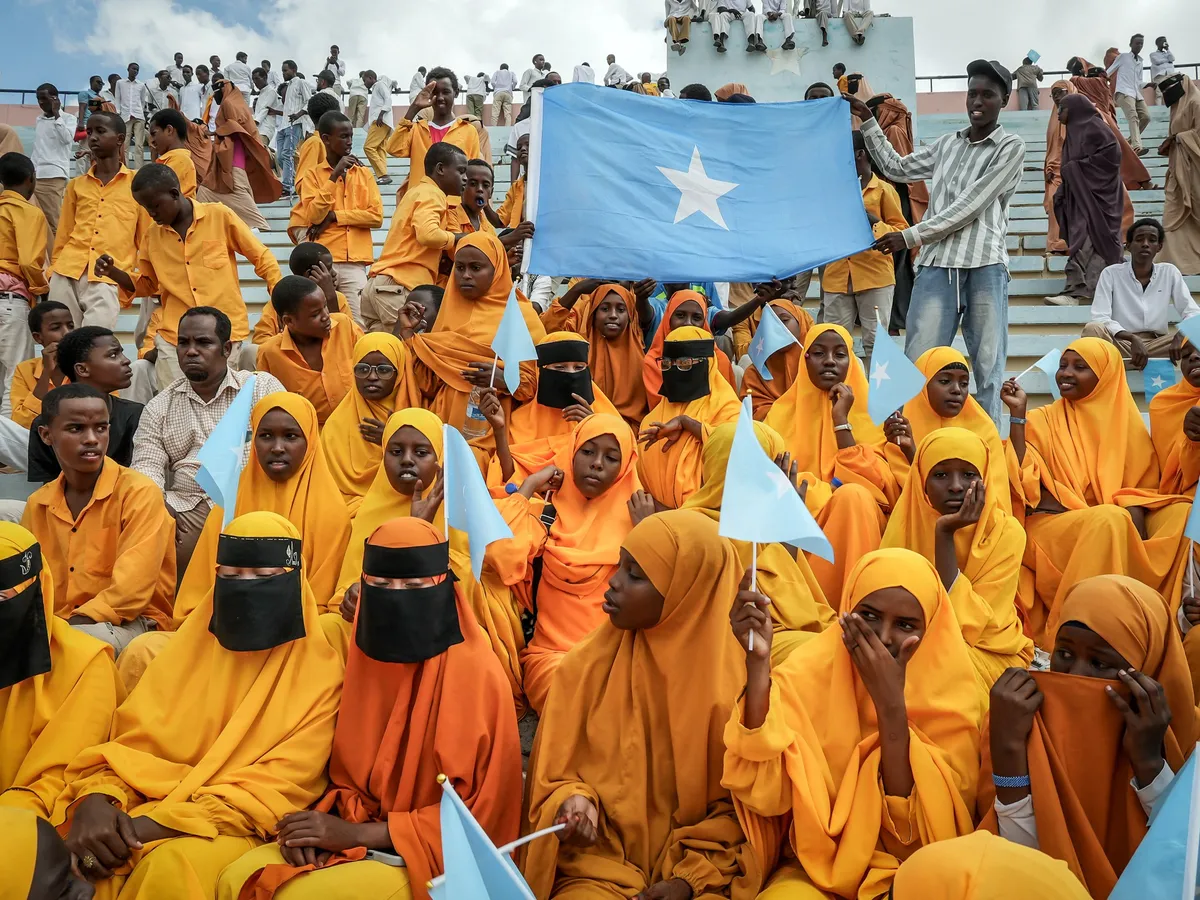
Somali minister tells Al Jazeera Israeli base plans in Somaliland risk dragging Somalia into ‘external confrontations’.Residents wave Somali flags at a Mogadishu rally on December 30, 2025, denouncing Israel’s recognition of Somaliland and calling for Somalia’s unity. [File: AFP]Published On 12 Mar 2026Somalia has warned that its territory cannot be used as a launching pad for military operations, after two media reports that said Israel is planning to establish a military base in the breakaway region of Somaliland, directly across the Gulf of Aden from Yemen.“Somalia does not want to see its territory pulled into external confrontations or used in ways that could further destabilise an already sensitive region,” Ali Omar, Somalia’s state minister for foreign affairs, told Al Jazeera on Thursday.Recommended Stories list of 3 itemslist 1 of 3UN: 6.5 million in Somalia facing hungerlist 2 of 3Will Ethiopia be part of Israel’s ‘hexagon’ alliance rivalling its enemies?list 3 of 3Why Yemen’s Houthis are staying out of Israel-US fight with Iran – for nowend of listThe warning from Mogadishu comes after US outlet Bloomberg and Sweden’s public radio Ekot reported this week about Israeli plans for a military installation near the strategic port city of Berbera on the Gulf of Aden.The reports come as the US‑Israeli war on Iran edges towards its second week, with the Strait of Hormuz effectively closed and the Houthis warning that they are prepared to enter the conflict.In comments to Bloomberg, Somaliland’s presidency minister, Khadar Abdi, said Somaliland would pursue a “strategic relationship” with Israel that “encompasses a lot of things.” He added that the possibility of an Israeli base had not yet been discussed yet, but that it “will be analysed at some point.”Omar said the “Federal Government is the only authority empowered to enter into international security or military arrangements on behalf of the country.”“Any discussions about foreign military facilities on Somali territory that take place outside that framework simply have no legal standing,” he said.Somaliland declared independence from Somalia in 1991, but had not secured recognition from any UN member state until Israel’s move to recognise the breakaway region in December. Somalia, however, continues to claim Somaliland, which has governed itself independently for more than three decades.Somaliland officials have not divulged what was agreed upon with Israel when they established full diplomatic ties in December.On January 1, its Ministry of Foreign Affairs flatly denied allegations from the Somali government that any military arrangements were under discussion with Israel, insisting its engagement with Israel was “purely diplomatic.” Shortly after, a ministry official told Israel’s Channel 12 that a base was “on the table and being discussed”.In February, Khadar Hussein Abdi, Somaliland’s minister of the presidency, told the news agency AFP he “could not rule out” allowing Israel to establish a military presence.Israel recognised Somaliland as an independent state on December 26th, becoming the first country to do so after more than three decades of failed bids by the breakaway region.The Somali minister’s remarks come as the US-Israeli war on Iran escalates. The Strait of Hormuz, through which about 20 percent of global oil and gas supplies transit, has effectively been closed amid Iranian threats of attacks on shipping.Elsewhere in the region, Israel has intensified attacks on Lebanon, killing at least 687 people and wounding more than 1,500, according to Lebanese authorities. It launched the attacks last Monday after the Lebanese armed group Hezbollah, a close Iranian ally, fired rockets in retaliation for the US-Israeli killing of former Iranian Supreme Leader Ali Khamenei.Yemen’s Houthis, another key ally of Tehran, have so far not been directly involved in the war, but they have said they are prepared to enter the conflict.The group, which controls northern, western and central Yemen, has previously warned against an Israeli presence in Somaliland, describing it as a “hostile stance” and “legitimate target”.Amid the growing focus on shipping lanes in the Middle East, attention has also turned to the Bab al-Mandeb Strait, a narrow waterway linking the Red Sea with the Gulf of Aden and the Indian Ocean, through which roughly 12 percent of global trade passes.Yemen’s Houthis have previously enforced a blockade on Israel-linked ships in the area in support of Palestinians in Gaza during Israel’s genocidal war.The US embassy in Djibouti this week repeated a warning to US citizens against being near Camp Lemmonier, the US’s largest base in Africa, a sign of concern that the conflict could spread.“The Red Sea and the Gulf of Aden are critical corridors for global trade and regional security, and instability there affects the entire Horn of Africa,” Omar told Al Jazeera.“When regional tensions rise, civilian populations are always the most vulnerable,” Omar told Al Jazeera, adding that, “steps that could expose Somali communities to unnecessary risks or draw them into wider geopolitical conflicts are not in the interest of our people”.
SRCAl Jazeera
LANGEN
LEANCenter
WORDS800
ENT12
THU · 2026-03-12 · 18:51 GMTBRIEF NSR-2026-0312-23993
NSR-2026-0312-23993News Report·EN·National Security
Somalia warns against any Israeli base plans on Somaliland
Somalia has cautioned against potential Israeli plans to establish a military base in Somaliland, a breakaway region bordering the Gulf of Aden. The warning, issued by Somalia's state minister for foreign affairs, follows reports from Bloomberg and Swedish public radio about Israel's potential military installation near Berbera.
Faisal AliAl JazeeraFiled 2026-03-12 · 18:51 GMTLean · CenterRead · 4 min
Al JazeeraFIG 01
Reading time
4min
Word count
800words
Sources cited
5cited
Entities identified
12entities
Quality score
100%
§ 01
Briefing Summary
AI-generatedNEWSAR · AI
Somalia has cautioned against potential Israeli plans to establish a military base in Somaliland, a breakaway region bordering the Gulf of Aden. The warning, issued by Somalia's state minister for foreign affairs, follows reports from Bloomberg and Swedish public radio about Israel's potential military installation near Berbera. Somalia fears such a base could destabilize the region and involve it in external conflicts. While a Somaliland minister acknowledged a strategic relationship with Israel, he stated that a base had not yet been discussed. Somalia maintains that only the Federal Government can authorize international security agreements, as it still claims Somaliland despite its declaration of independence in 1991 and recent recognition by Israel.
Confidence 0.90Sources 5Claims 5Entities 12
§ 02
Article analysis
Model · rule-basedFraming
National Security
Diplomatic
Tone
Mixed Tone
AI-assessed
CalmNeutralAlarmist
Factuality
0.70 / 1.00
Factual
LowHigh
Sources cited
5
Well sourced
FewMany
§ 03
Key claims
5 extracted01
Somaliland declared independence from Somalia in 1991.
factualnull
Confidence
1.00
02
Somaliland would pursue a “strategic relationship” with Israel.
quoteKhadar Abdi, Somaliland’s presidency minister
Confidence
1.00
03
Somalia warns against any Israeli base plans on Somaliland territory.
quoteSomali minister
Confidence
1.00
04
Somaliland's engagement with Israel was “purely diplomatic.”
quoteSomaliland Ministry of Foreign Affairs
Confidence
0.90
05
Israel is planning to establish a military base in Somaliland.
factualBloomberg and Ekot
Confidence
0.80
§ 04
Full report
4 min read · 800 words§ 05
Entities
12 identifiedKey playerOppositionContextPositiveNeutralNegative
§ 06
Keywords & salience
8 termssomalia
0.90
israeli base
0.90
somaliland
0.80
military operations
0.70
external confrontations
0.70
gulf of aden
0.60
international security
0.50
breakaway region
0.50
§ 07
Topic connections
Interactive graph Network visualization showing 51 related topics
View Full Graph Person Organization Location Event|Click node to navigate|Edge numbers = shared articles