EXPLAINERIsrael has closed the Rafah border crossing, and Israeli settler attacks in the occupied West Bank have continued.Published On 13 Mar 2026With the eyes of the world on the United States and Israel’s war in Iran, Israeli strikes and raids in Gaza and settler attacks and military operations in the occupied West Bank have continued unabated.Since October 7, 2023, Israel has killed more than 72,000 people in its genocidal war on Gaza, the majority of them women and children, and reduced almost the entire enclave to rubble. About 1,200 people were killed in Israel and more than 250 taken captive in the October 7, 2023, attacks on Israel led by Hamas.Recommended Stories list of 3 itemslist 1 of 3‘We’re going to make a tonne of money’: US Senator Graham on US war on Iranlist 2 of 3Which US and Israeli military companies are profiting from the Iran war?list 3 of 3Iran says 1,255 people killed in US-Israeli attacks, mostly civiliansend of listIn the West Bank, Israeli soldiers or settlers have killed more than 1,000 Palestinians, many of them civilians, since the start of the Gaza war, according to Palestinian Ministry of Health figures. At least 45 Israelis, including both soldiers and civilians, have been killed in Palestinian attacks or during Israeli military operations in the region in the same period, according to official Israeli figures.Here’s what we know of the situation in Gaza and the West Bank since the war in Iran began on February 28:Gaza Border closed: On March 1, Israel closed Gaza’s Rafah border crossing with Egypt. The Israeli military’s Coordinator of Government Activities in the Territories (COGAT) said the move was a part of “several necessary security adjustments” that have been implemented in the region due to the war with Iran. The Rafah crossing is considered vital for the delivery of humanitarian aid and the evacuation of critically ill patients from Gaza. Panic buying: The war and the closure of the Rafah crossing have caused panic buying in Gaza, where residents who have already endured nearly two and a half years of war fear food shortages. Ali al-Hayek, a member of the Palestinian Businessmen Association in Gaza, told Al Jazeera that closing the crossings could halt aid distribution to struggling families and operations at charity kitchens. Call to reopen crossing: On Tuesday, United Nations Secretary-General Antonio Guterres called for Israel to reopen Gaza’s border crossings. On March 2, Israeli authorities said they would reopen the Karem Abu Salem crossing, known as Kerem Shalom to Israelis, to allow for the “gradual entry of humanitarian aid” into the territory. Father and daughter killed: On Saturday, an Israeli drone attack killed a father and his daughter in Khan Younis in southern Gaza. In a separate attack later that day in Khan Younis, another person was killed and a girl wounded, according to Al Jazeera correspondents on the ground. Gas shortage: A prolonged shortage in cooking gas and fuel since the beginning of the war has affected many in Gaza. Supplies of gas coming in, even since a ceasefire was declared, are well below the population’s actual needs, according to official sources in Gaza and United Nations agencies. Amnesty report about women: Global rights group Amnesty International released a report saying Palestinian women in Gaza have been “denied the conditions needed to live and to give life safely” by Israel. The report says pregnant women, as well as those suffering from terminal illness, lack adequate health services in the territory. West Bank
SRCAl Jazeera
LANGEN
LEANCenter
WORDS581
ENT11
FRI · 2026-03-13 · 12:50 GMTBRIEF NSR-2026-0313-24206
NSR-2026-0313-24206News Report·EN·Conflict
What’s happened in Gaza and the West Bank since the start of the Iran war?
Since the start of the Iran war on February 28, 2026, Israel has continued military operations in Gaza and the West Bank. In Gaza, the Rafah border crossing with Egypt was closed by Israel on March 1, citing security adjustments, leading to panic buying due to fears of food shortages.
Priyanka Shankar,Sarah ShamimAl JazeeraFiled 2026-03-13 · 12:50 GMTLean · CenterRead · 3 min
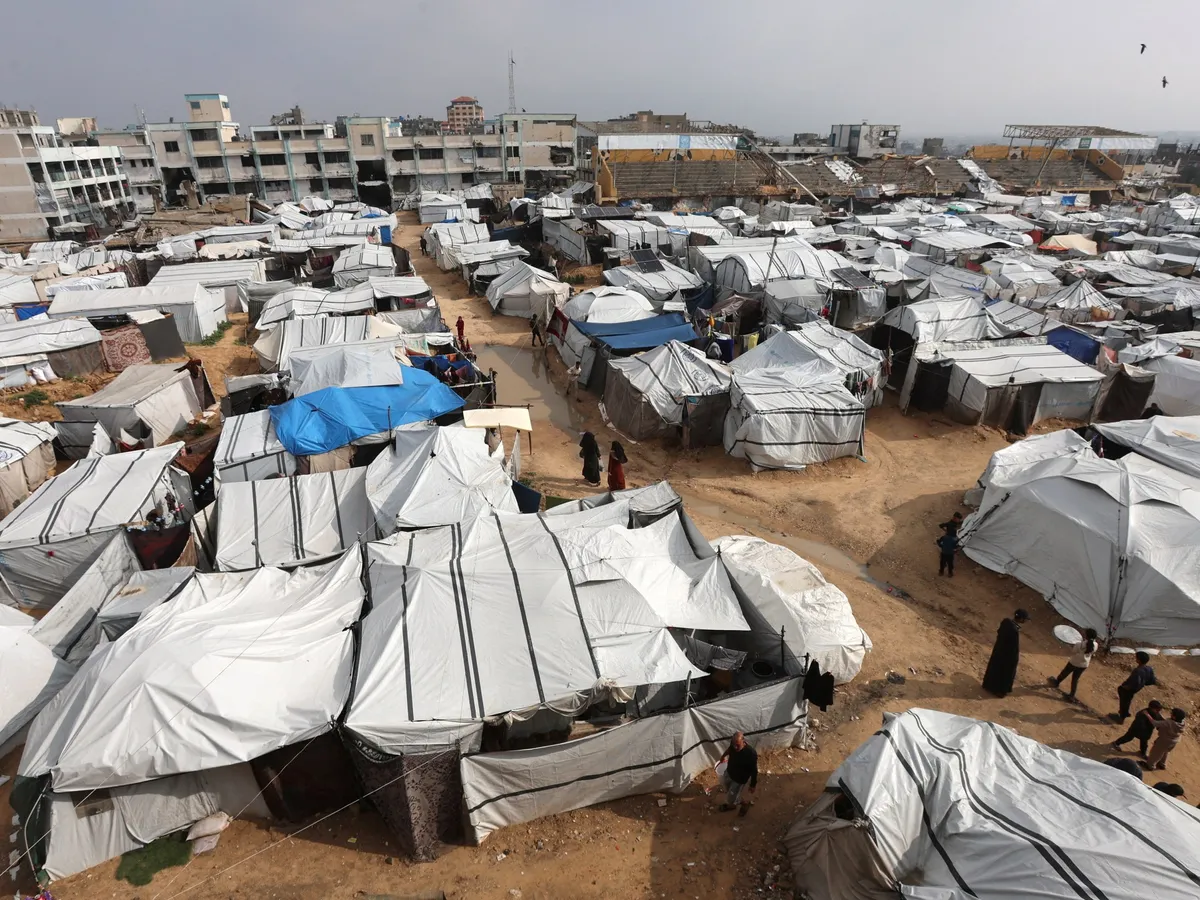
Al JazeeraFIG 01
Reading time
3min
Word count
581words
Sources cited
6cited
Entities identified
11entities
Quality score
100%
§ 01
Briefing Summary
AI-generatedNEWSAR · AI
Since the start of the Iran war on February 28, 2026, Israel has continued military operations in Gaza and the West Bank. In Gaza, the Rafah border crossing with Egypt was closed by Israel on March 1, citing security adjustments, leading to panic buying due to fears of food shortages. The UN Secretary-General has called for the reopening of Gaza's border crossings. In the West Bank, violence has continued, with over 1,000 Palestinians killed by Israeli soldiers or settlers since the start of the Gaza war in October 2023, while at least 45 Israelis have been killed in Palestinian attacks or military operations. These events are occurring against the backdrop of the ongoing conflict that began in October 2023, which has resulted in significant casualties in both Gaza and Israel.
Confidence 0.90Sources 6Claims 5Entities 11
§ 02
Article analysis
Model · rule-basedFraming
Conflict
Human Rights
Tone
Mixed Tone
AI-assessed
CalmNeutralAlarmist
Factuality
0.70 / 1.00
Factual
LowHigh
Sources cited
6
Well sourced
FewMany
§ 03
Key claims
5 extracted01
UN Secretary-General Antonio Guterres called for Israel to reopen Gaza’s border crossings.
factualnull
Confidence
1.00
02
About 1,200 people were killed in Israel in the October 7, 2023, attacks.
statisticnull
Confidence
1.00
03
Israel has closed the Rafah border crossing with Egypt.
factualnull
Confidence
1.00
04
More than 1,000 Palestinians have been killed in the West Bank since the start of the Gaza war.
statisticPalestinian Ministry of Health
Confidence
0.90
05
Since October 7, 2023, Israel has killed more than 72,000 people in Gaza.
statisticnull
Confidence
0.90
§ 04
Full report
3 min read · 581 words§ 05
Entities
11 identifiedKey playerOppositionContextPositiveNeutralNegative
Organizations2
§ 06
Keywords & salience
10 termsgaza
0.90
west bank
0.80
iran war
0.80
settler attacks
0.70
israeli strikes
0.70
rafah border crossing
0.70
humanitarian aid
0.60
food shortages
0.50
palestinians
0.50
military operations
0.40
§ 07
Topic connections
Interactive graph Network visualization showing 51 related topics
View Full Graph Person Organization Location Event|Click node to navigate|Edge numbers = shared articles