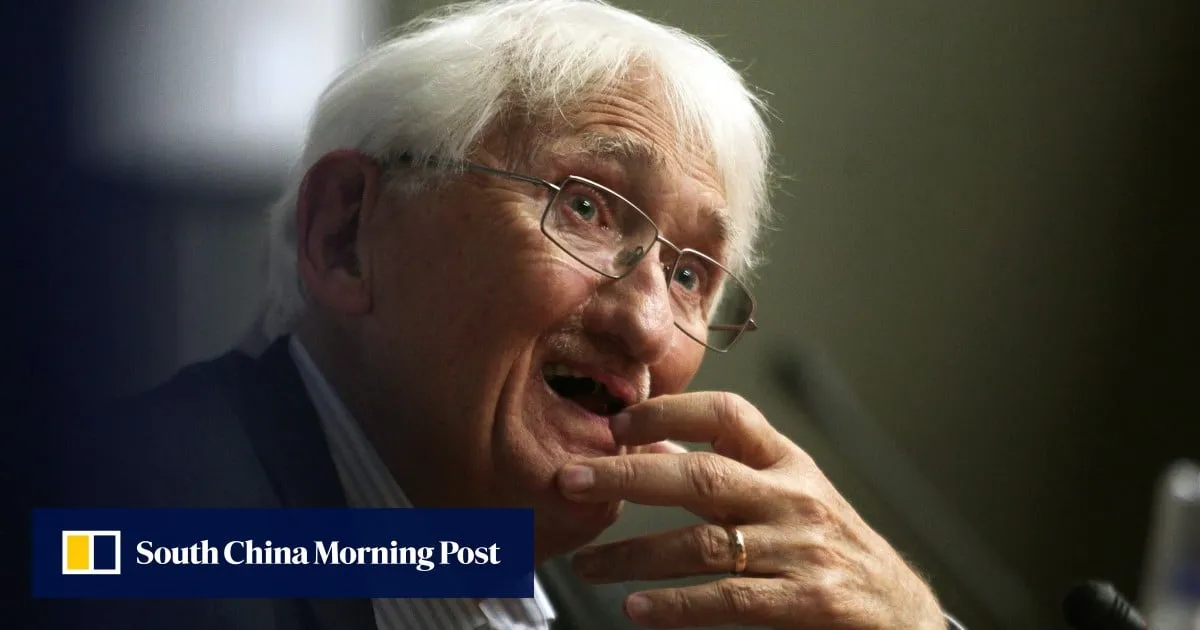
Jurgen Habermas, best known for his theory of political consensus-building, shaped the discourse of post-war Germany more than any other popular intellectual.He died on Saturday, aged 96, in Starnberg, Germany, the publisher Suhrkamp said.Over the course of seven decades, his public interventions – from searing critiques of fascist thought in the 1950s to more recent warnings against resurgent militarism and nationalism in Germany – steered the country at critical junctions.Not only his longevity, but also the renewed relevance of his ideas are remarkable in a country where post-war pacifism is waning and the far-right Alternative for Germany (AfD) has become the second-strongest party in parliament.Born on June 18, 1929 to a bourgeois family in Dusseldorf, Jurgen Habermas underwent two surgeries after birth and in early childhood for a cleft palate.A resulting speech impediment is often cited as having influenced his work on communication.
SRCSouth China Morning Post
LANGEN
LEANCenter-Right
WORDS143
ENT6
SAT · 2026-03-14 · 18:30 GMTBRIEF NSR-2026-0314-24538
NSR-2026-0314-24538News Report·EN·Human Interest
Jurgen Habermas, the philosopher who shaped Germany’s post-war conscience, dies at 96
Jurgen Habermas, the influential German philosopher known for his theory of political consensus-building, died on Saturday in Starnberg, Germany, at the age of 96. Over seven decades, Habermas shaped post-war Germany's intellectual discourse with his critiques of fascism and warnings against nationalism.
ReutersSouth China Morning PostFiled 2026-03-14 · 18:30 GMTLean · Center-RightRead · 1 min
South China Morning PostFIG 01
Reading time
1min
Word count
143words
Sources cited
1cited
Entities identified
6entities
Quality score
100%
§ 01
Briefing Summary
AI-generatedNEWSAR · AI
Jurgen Habermas, the influential German philosopher known for his theory of political consensus-building, died on Saturday in Starnberg, Germany, at the age of 96. Over seven decades, Habermas shaped post-war Germany's intellectual discourse with his critiques of fascism and warnings against nationalism. Born in Dusseldorf in 1929, Habermas's early childhood surgeries for a cleft palate and subsequent speech impediment influenced his work on communication. His ideas remain relevant in Germany amidst waning pacifism and the rise of the far-right AfD party. Habermas's interventions steered Germany at critical junctures, making him a significant figure in the country's post-war conscience.
Confidence 0.85Sources 1Claims 5Entities 6
§ 02
Article analysis
Model · rule-basedFraming
Human Interest
Political Strategy
Tone
Measured
AI-assessed
CalmNeutralAlarmist
Factuality
0.80 / 1.00
Factual
LowHigh
Sources cited
1
Limited
FewMany
§ 03
Key claims
5 extracted01
The far-right Alternative for Germany (AfD) has become the second-strongest party in parliament.
factual
Confidence
1.00
02
Habermas underwent surgeries for a cleft palate in early childhood.
factual
Confidence
1.00
03
Habermas was born on June 18, 1929 in Dusseldorf.
factual
Confidence
1.00
04
Jurgen Habermas died on Saturday, aged 96, in Starnberg, Germany.
factualSuhrkamp (publisher)
Confidence
1.00
05
Habermas shaped the discourse of post-war Germany more than any other popular intellectual.
factual
Confidence
0.90
§ 04
Full report
1 min read · 143 words§ 05
Entities
6 identifiedKey playerOppositionContextPositiveNeutralNegative
§ 06
Keywords & salience
10 termsjurgen habermas
1.00
post-war germany
0.90
political consensus-building
0.70
philosopher
0.70
intellectual
0.60
pacifism
0.50
nationalism
0.50
militarism
0.50
fascist thought
0.50
communication
0.40
§ 07
Topic connections
Interactive graph No topic relationship data available yet. This graph will appear once topic relationships have been computed.