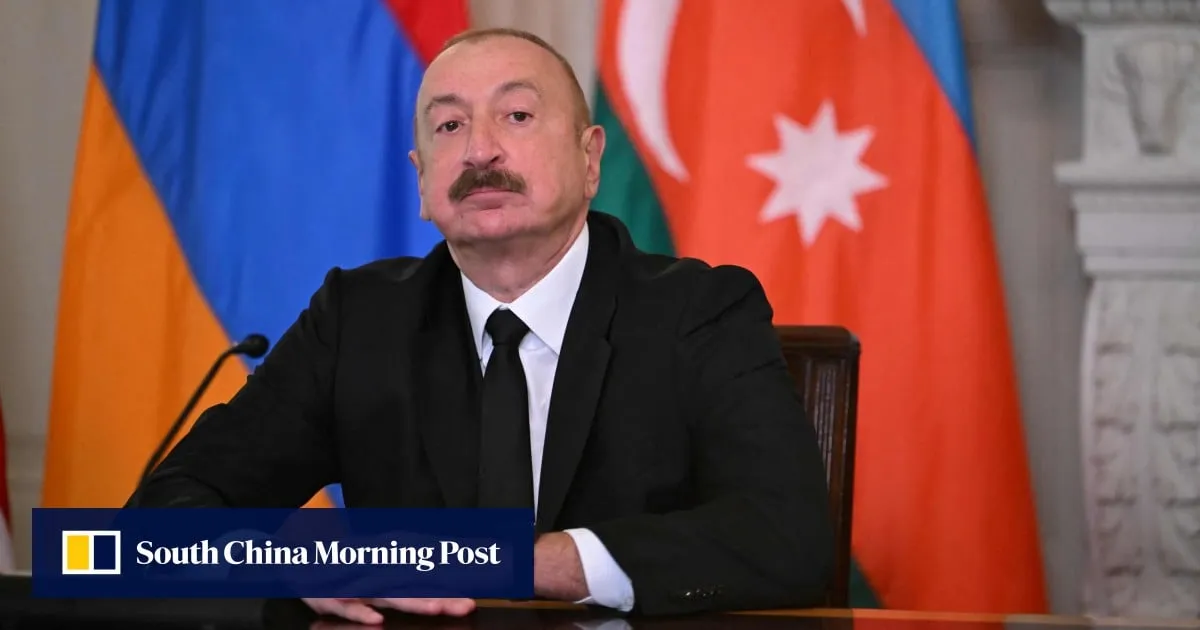
Central Asian governments are leveraging the diplomatic fallout from the US-Israel war on Iran to assert their autonomy and reinforce their long-standing strategy of balancing major powers, according to analysts.For decades, the five former Soviet republics have been seen as Russia’s “backyard”. However, as the conflict in Iran deepens, these nations are moving to recalibrate their geopolitical ties, signalling a shift away from their role as a passive buffer zone for great powers.The shift became apparent after Iranian drones struck Nakhchivan International Airport in Azerbaijan on March 5.This prompted Azerbaijani President Ilham Aliyev to mobilise the army, recall diplomats from Tehran and suspend cross-border truck traffic. The Nakhchivan Autonomous Republic is an Azerbaijani exclave bordered by Armenia, Turkey and Iran.Kazakhstan’s President Kassym-Jomart Tokayev issued an unusually sharp condemnation, signalling that attacks on neighbouring states had crossed a political threshold for governments across the wider region.While the response suggested unease with Tehran, the episode is unlikely to trigger a strategic rupture, according to observers. Instead, the crisis is accelerating the region’s efforts to strengthen its bargaining position.
SRCSouth China Morning Post
LANGEN
LEANCenter-Right
WORDS176
ENT6
SUN · 2026-03-15 · 06:00 GMTBRIEF NSR-2026-0315-24614
NSR-2026-0315-24614Analysis·EN·Political Strategy
Beyond a ‘buffer zone’: how the Iran war is recalibrating Central Asian ties
Central Asian countries are leveraging the diplomatic fallout from the US-Israel war on Iran to assert greater autonomy. The shift is driven by a desire to move beyond being a passive buffer zone for major powers like Russia.
Cao JiaxuanSouth China Morning PostFiled 2026-03-15 · 06:00 GMTLean · Center-RightRead · 1 min
South China Morning PostFIG 01
Reading time
1min
Word count
176words
Sources cited
1cited
Entities identified
6entities
Quality score
100%
§ 01
Briefing Summary
AI-generatedNEWSAR · AI
Central Asian countries are leveraging the diplomatic fallout from the US-Israel war on Iran to assert greater autonomy. The shift is driven by a desire to move beyond being a passive buffer zone for major powers like Russia. A key event highlighting this recalibration was the Iranian drone strike on Nakhchivan International Airport in Azerbaijan in March. This prompted a strong response from Azerbaijan and condemnation from Kazakhstan, signaling regional unease. While not expected to cause a strategic rupture with Iran, the incident is accelerating Central Asia's efforts to strengthen its geopolitical bargaining position and balance relationships with various global actors.
Confidence 0.90Sources 1Claims 5Entities 6
§ 02
Article analysis
Model · rule-basedFraming
Political Strategy
Diplomatic
Tone
Measured
AI-assessed
CalmNeutralAlarmist
Factuality
0.60 / 1.00
Mixed
LowHigh
Sources cited
1
Limited
FewMany
§ 03
Key claims
5 extracted01
Iranian drones struck Nakhchivan International Airport in Azerbaijan on March 5.
factualnull
Confidence
1.00
02
Kazakhstan’s President Kassym-Jomart Tokayev issued an unusually sharp condemnation.
factualnull
Confidence
0.90
03
For decades, the five former Soviet republics have been seen as Russia’s “backyard”.
factualnull
Confidence
0.90
04
Central Asian governments are leveraging the diplomatic fallout from the US-Israel war on Iran to assert their autonomy.
quoteanalysts
Confidence
0.80
05
The crisis is accelerating the region’s efforts to strengthen its bargaining position.
quoteobservers
Confidence
0.70
§ 04
Full report
1 min read · 176 words§ 05
Entities
6 identifiedKey playerOppositionContextPositiveNeutralNegative
§ 06
Keywords & salience
10 termscentral asia
1.00
geopolitical ties
0.80
iran
0.70
balancing powers
0.70
autonomy
0.60
buffer zone
0.60
nakhchivan
0.50
azerbaijan
0.50
diplomatic fallout
0.40
russia
0.40
§ 07
Topic connections
Interactive graph Network visualization showing 51 related topics
View Full Graph Person Organization Location Event|Click node to navigate|Edge numbers = shared articles