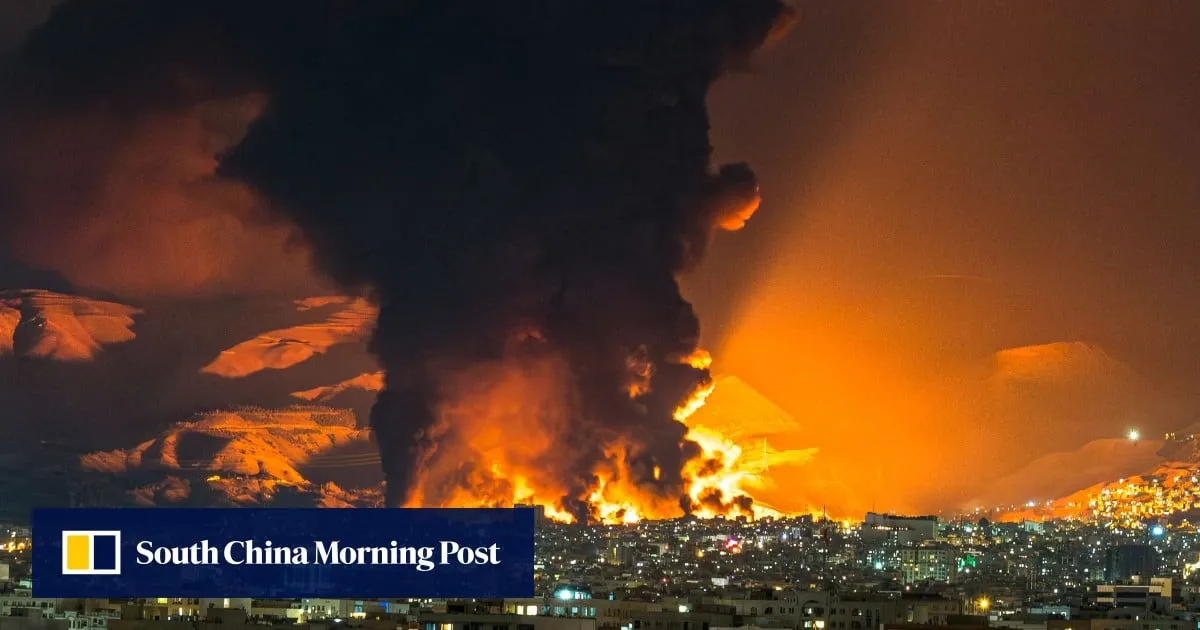
News of black rain falling on Tehran felt all too familiar to Nejat Rahmanian as he scrolled through alerts on social media feeds and tried to contact relatives on March 8.Israeli drone strikes hit giant oil depots and refineries on the outskirts of the Iranian capital a few hours earlier, setting fuel on fire and releasing columns of black smoke, which mixed with rain clouds that poured toxic chemicals onto the city later in the day.The descriptions reminded the Iranian researcher of a similar event he experienced in the city 35 years ago.It was surreal, recalled Rahmanian, a professor of chemical and petroleum engineering at the UK’s University of Bradford. Clothes hanging out to dry got stained and the air felt heavy. No one knew why.Later, they learned that around 1,290km (801 miles) away in Kuwait, Iraqi forces battling US and allied forces in the Gulf War had set hundreds of oilfields ablaze.00:47US-Israeli strikes hit oil storage facility in Tehran
SRCSouth China Morning Post
LANGEN
LEANCenter-Right
WORDS160
ENT9
SUN · 2026-03-15 · 10:25 GMTBRIEF NSR-2026-0315-24650
NSR-2026-0315-24650News Report·EN·Environmental
‘Black rain’: Iran war’s toxic pollution will spread and last for decades
On March 8th, Israeli drone strikes hit oil depots and refineries near Tehran, Iran, resulting in fires and the release of black smoke. This smoke mixed with rain clouds, causing "black rain" to fall on the city, depositing toxic chemicals.
BloombergSouth China Morning PostFiled 2026-03-15 · 10:25 GMTLean · Center-RightRead · 1 min
South China Morning PostFIG 01
Reading time
1min
Word count
160words
Sources cited
1cited
Entities identified
9entities
Quality score
100%
§ 01
Briefing Summary
AI-generatedNEWSAR · AI
On March 8th, Israeli drone strikes hit oil depots and refineries near Tehran, Iran, resulting in fires and the release of black smoke. This smoke mixed with rain clouds, causing "black rain" to fall on the city, depositing toxic chemicals. An Iranian researcher, Nejat Rahmanian, recalled a similar event 35 years prior, when Iraqi forces set Kuwaiti oilfields ablaze during the Gulf War, causing similar pollution in Tehran. The recent strikes and resulting pollution raise concerns about long-term environmental and health consequences for the city and its residents, echoing the lasting impact of the earlier incident. The event highlights the potential for conflict to cause widespread and enduring environmental damage.
Confidence 0.85Sources 1Claims 5Entities 9
§ 02
Article analysis
Model · rule-basedFraming
Environmental
Conflict
Tone
Mixed Tone
AI-assessed
CalmNeutralAlarmist
Factuality
0.70 / 1.00
Factual
LowHigh
Sources cited
1
Limited
FewMany
§ 03
Key claims
5 extracted01
News of black rain falling on Tehran felt all too familiar to Nejat Rahmanian.
factualnull
Confidence
1.00
02
Around 1,290km (801 miles) away in Kuwait, Iraqi forces set hundreds of oilfields ablaze.
factualnull
Confidence
1.00
03
Fuel was set on fire and released columns of black smoke, which mixed with rain clouds.
factualnull
Confidence
0.90
04
Israeli drone strikes hit giant oil depots and refineries on the outskirts of the Iranian capital.
factualnull
Confidence
0.90
05
The black rain poured toxic chemicals onto the city.
factualnull
Confidence
0.80
§ 04
Full report
1 min read · 160 words§ 05
Entities
9 identifiedKey playerOppositionContextPositiveNeutralNegative
Organizations1
Locations6
Events1
§ 06
Keywords & salience
9 termsblack rain
1.00
toxic pollution
0.90
oil depots
0.80
refineries
0.70
drone strikes
0.70
iran war
0.60
chemical pollution
0.60
oilfields ablaze
0.50
gulf war
0.40
§ 07
Topic connections
Interactive graph Network visualization showing 51 related topics
View Full Graph Person Organization Location Event|Click node to navigate|Edge numbers = shared articles