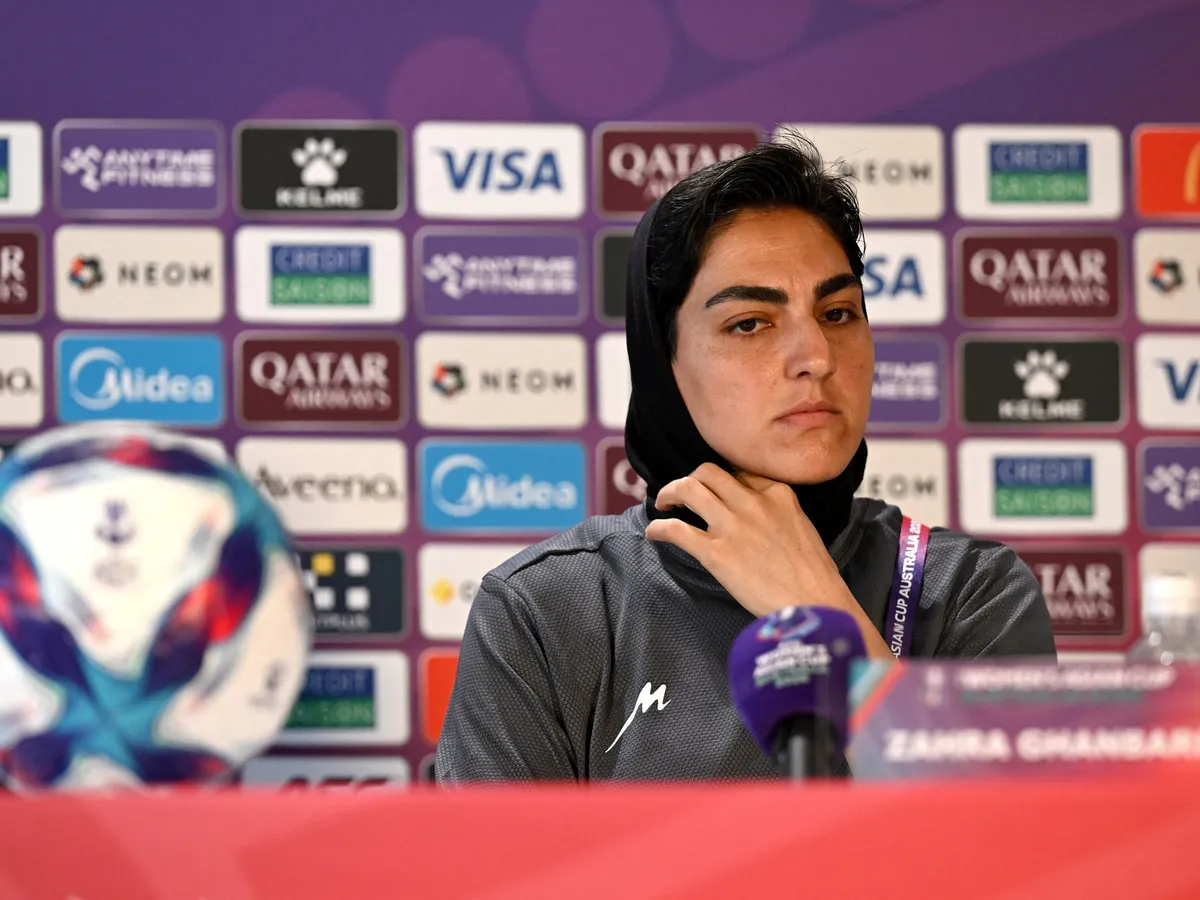
Zahra Ghanbari becomes the fifth player to withdraw request after seven members of her football squad sought asylum in Australia.Iranian women’s national team captain Zahra Ghanbari has become the latest player to withdraw her asylum request in Australia [File: Dave Hunt/AAPvia Reuters]Published On 15 Mar 2026The captain of the Iranian women’s football team has withdrawn her bid for asylum in Australia, Iran’s state media says, making her the fifth member of the delegation to change her mind after her team’s participation in the Asian Cup.Zahra Ghanbari will fly from Malaysia and travel to Iran within the next few hours, the IRNA News Agency said on Sunday.Three players and one backroom staff member had already withdrawn their bids for asylum and travelled to Malaysia from Australia, where the team participated in the AFC Women’s Asian Cup.Australia’s Home Affairs Minister Tony Burke said his country had offered asylum to all players and support staff members prior to their departure over fears they might be punished upon their return home after the team refused to sing Iran’s national anthem at the tournament.Iranian state broadcaster IRIB reported on Saturday that the three had “given up on their asylum application in Australia and are currently heading to Malaysia”, posting a picture of the women allegedly boarding a plane.The news was confirmed by Burke a few hours later.“Overnight, three members of the Iranian women’s football team made the decision to join the rest of the team on their journey back to Iran,” Burke said.“After telling Australian officials they had made this decision, the players were given repeated chances to talk about their options.”Five players took up the offer and signed immigration papers last week, with one more player and a member of staff joining them a day later. It leaves two Iranian players in Australia, where they have been promised asylum and an opportunity to settle.Iran played their three group games of the Asian Cup at the Gold Coast Stadium in Queensland on March 2, 5 and 8, after the United States and Israel launched their war on Iran on February 28.The initial attacks killed Iran’s Supreme Leader Ayatollah Ali Khamenei and other leaders.Overall, an estimated 1,444 Iranians have been killed since the war began, including more than 170 people, mostly schoolgirls, who were inside a primary school in the city of Minab.After refusing to sing the Iranian national anthem at their first match, players on the Iranian women’s football team were branded “traitors” by an IRIB presenter.When Iran played their second game of the tournament against Australia three days later, not only did the players sing the national anthem, but they also saluted it, prompting fears that they may have been forced to change their stance after receiving backlash in Iranian media.While neither the players nor the team management explained why they refrained from singing before the first match, fans and rights activists speculated that it may have been an act of defiance against the Iranian government.On the day of the team’s departure from Australia, Burke announced his government had offered all players and staff members the chance to stay back in the country.On Tuesday, Burke told reporters that five Iranian players had decided to seek asylum in Australia and would be assisted by the government.“They are welcome to stay in Australia, they are safe here, and they should feel at home here,” he said.A day later, Burke confirmed that an additional player and a member of the team’s support staff had received humanitarian visas in the hours before their departure.However, one player, who previously chose to stay behind, changed her mind and decided to return to Iran.The player, who was later identified as Mohadese Zolfigol, changed her decision on the advice of her teammates, Burke told the Parliament of Australia.“She had been advised by her teammates and encouraged to contact the Iranian embassy,” he said.The players who managed to escape with the help of Iranian rights activists were taken away by Australian police officials to a safe house, where they met immigration officials and signed the paperwork.“Our understanding is that every single member of the squad was interviewed independently by the Australian Federal Police,” Beau Busch, the Asia/Oceania president of players’ welfare body FIFPRO told Al Jazeera last week.“[The players] were made aware of their rights and the support available to them. They certainly weren’t rushed through that process.”
SRCAl Jazeera
LANGEN
LEANCenter
WORDS725
ENT12
SUN · 2026-03-15 · 14:00 GMTBRIEF NSR-2026-0315-24734
NSR-2026-0315-24734News Report·EN·Political Strategy
Captain of Iran’s women’s team withdraws Australia asylum bid: State media
Zahra Ghanbari, captain of Iran's women's football team, withdrew her asylum request in Australia, becoming the fifth member of the delegation to do so after seven sought asylum following the AFC Women's Asian Cup. Ghanbari will return to Iran from Malaysia.
Hafsa AdilAl JazeeraFiled 2026-03-15 · 14:00 GMTLean · CenterRead · 3 min
Al JazeeraFIG 01
Reading time
3min
Word count
725words
Sources cited
3cited
Entities identified
12entities
Quality score
100%
§ 01
Briefing Summary
AI-generatedNEWSAR · AI
Zahra Ghanbari, captain of Iran's women's football team, withdrew her asylum request in Australia, becoming the fifth member of the delegation to do so after seven sought asylum following the AFC Women's Asian Cup. Ghanbari will return to Iran from Malaysia. Previously, three players and one staff member also withdrew their asylum bids and traveled to Malaysia. Australia offered asylum to the team due to fears of punishment for refusing to sing the Iranian national anthem at the tournament, which took place in Australia in early March 2026. As of mid-March 2026, two Iranian players remain in Australia and have been promised asylum. The team's actions occurred amidst a war between the United States, Israel, and Iran that began in late February 2026.
Confidence 0.90Sources 3Claims 5Entities 12
§ 02
Article analysis
Model · rule-basedFraming
Political Strategy
Human Rights
Tone
Mixed Tone
AI-assessed
CalmNeutralAlarmist
Factuality
0.80 / 1.00
Factual
LowHigh
Sources cited
3
Well sourced
FewMany
§ 03
Key claims
5 extracted01
After refusing to sing the Iranian national anthem, players were branded “traitors” by an IRIB presenter.
quoteIRIB presenter
Confidence
1.00
02
Australia offered asylum to all players and support staff members.
factualTony Burke, Australia’s Home Affairs Minister
Confidence
1.00
03
Five players took up the offer and signed immigration papers last week.
factualnull
Confidence
0.90
04
Three players and one backroom staff member had already withdrawn their bids for asylum.
factualIRNA news agency
Confidence
0.90
05
Zahra Ghanbari has become the latest player to withdraw her asylum request in Australia.
factualIran’s state media
Confidence
0.90
§ 04
Full report
3 min read · 725 words§ 05
Entities
12 identifiedKey playerOppositionContextPositiveNeutralNegative
People3
Organizations2
Locations6
§ 06
Keywords & salience
8 termsasylum
1.00
iranian women's football team
0.90
withdraw asylum request
0.80
australia
0.70
asian cup
0.60
political asylum
0.50
national anthem
0.50
iran
0.40
§ 07
Topic connections
Interactive graph Network visualization showing 51 related topics
View Full Graph Person Organization Location Event|Click node to navigate|Edge numbers = shared articles