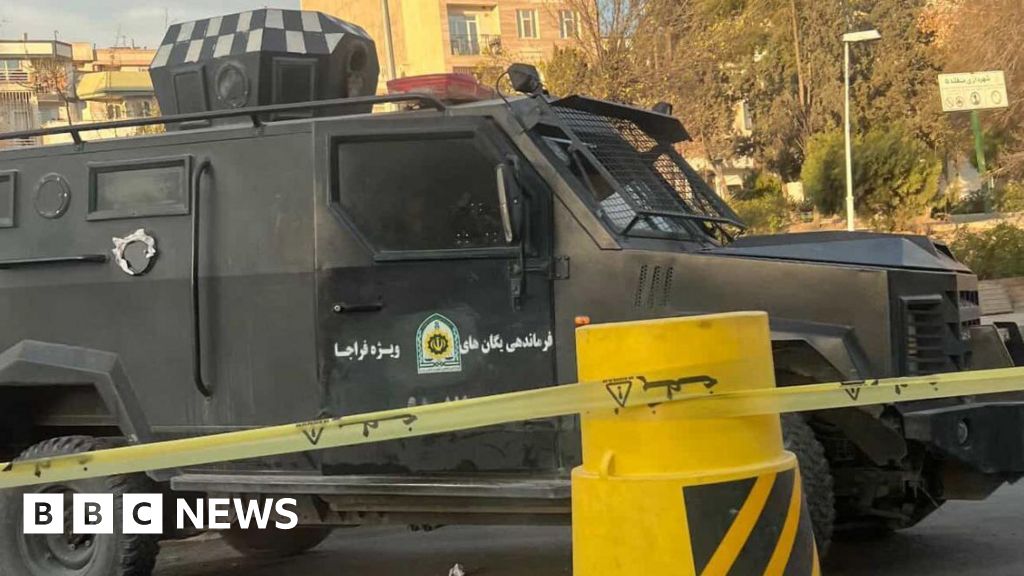
2 hours agoGhoncheh HabibiazadSenior reporter, BBC PersianSuppliedIran is taking steps to prevent anti-establishment protests, with checkpoints appearing across the streets of the capital, internet access restricted, and mass text warnings sent to residents.In Tehran, people have been telling the BBC about new security checkpoints around the city, where they say residents are stopped and searched.They have told BBC Persian that some checkpoints are positioned under footbridges and inside road tunnels, after reports that several checkpoints in the middle of roads had been targeted by drone strikes.A number of Iranian security personnel were killed in Israeli strikes on four checkpoints across Tehran, the hardline Fars News Agency reported on 11 March.Fars said unofficial counts indicated that around 10 members of the security forces were killed in strikes in four districts of the capital.Speaking to the BBC, a man in his twenties explained his strategy for getting through a checkpoint, where he said he was once stopped and his car was searched."I started saying things like, 'Thanks for your hard work,' as if they were genuinely putting in a lot of effort and I appreciated it," he said.US-Israel war with Iran: Follow live updatesSecurity forces let him go after the search."I always wear colourful clothes. But now I don't," said a woman, also in her twenties. "I'm scared of their patrols, worried that if I wear something too bright it might annoy them."Restricted internet hinders co-ordinationAnother man, also in his twenties, sells secure internet connections to some people, allowing them to bypass the government-imposed nationwide blackout.It is still very difficult to contact those inside Iran during the internet outage that has been in place since the start of the war, but tech-savvy residents have been using SpaceX's Starlink devices and sharing their connection with others.Restricting internet access not only restricts communication with the outside world, but also limits protesters' ability to mobilise, plan and communicate among each other. Encrypted messaging apps and platforms often function as tools for organising rallies, sharing protest locations, and circulating calls to action.When these platforms are unavailable, coordination becomes far more difficult.The man selling internet connections tells the BBC of his fear when a taxi he was travelling in passed through a checkpoint in a tunnel in Tehran."What I do as a job is considered a crime in the Islamic Republic," he explains. "I was really worried, because I had my laptop and phone with me.""Luckily, they didn't search the taxi," he says.Iranian police have arrested a person in southern Fars Province over allegedly setting up a network to sell "unfiltered" internet via Starlink, according to a report by semi-official Mehr News Agency on 12 March.Deputy Commander of the Fars Province Police has said that a 37-year-old man who had "set up a network across several provinces of the country to sell unfiltered internet via Starlink has been arrested" and added that a "Starlink device and related equipment were discovered at the suspect's hideout".Using Starlink in Iran carries a punishment of up to two years in prison and authorities have reportedly been searching for Starlink dishes to stop people from connecting to the internet.Government spokesperson Fatemeh Mohajerani said on 10 March that the authorities were working to restore internet access "for those who can broadcast the country's voice to the world".For now, rates for internet access being sold on the Telegram messaging app seen by the BBC are around $6 (£4.50) for 1 gigabytes of data - a high price in a country where the average monthly salary is estimated to be between $200 to $300 (£151-226).Although Iranian domestic apps remain available, some of those the BBC spoke to fear that they may not be as secure as encrypted platforms for organising protests.During an interview with the BBC's US partner CBS on 15 March, Foreign Minister Abbas Araghchi was asked why he able to speak via Zoom while his fellow countrymen are not allowed to access the internet."That's because I am the voice of all Iranians. I defend their rights," he replied.In addition to officials, a number of journalists inside the country have access to so-called "white SIM cards", which provide them with unrestricted internet supplied by the authorities.Some residents of the capital told BBC Persian that since the beginning of the war, at night they hear chants and songs supporting the establishment on loudspeakers, while supporters carrying the Islamic Republic's flag move through the streets.BBC Persian is the Persian language service of BBC News, used by 24 million people around the world - the majority in Iran - despite being blocked and routinely jammed by Iranian authorities.Text messages warn against protestsSo far, there have been no signs of the mass anti-establishment protests similar to those seen in January. The US-based Human Rights Activists News Agency (Hrana) said it had confirmed the killing of at least 7,000 civilians during January's protests.Since the conflict began on 28 February, the authorities have organised pro‑establishment rallies and urged supporters to take to the streets to prevent what they describe as attempts to destabilise the country from within.BBC Persian has seen a text message sent by the Intelligence Unit of the Islamic Revolutionary Guard Corps (IRGC) on 13 March warning against any upcoming protests."The evil enemy… is once again seeking to create fear and chaos in the streets. A blow harder than January 8 is awaiting the neo-ISIS [Islamic State]."The most deadly nights of the huge anti-establishment protests in Iran saw two deadly nights on 8 and 9 January.Police Chief Brig Gen Ahmad Reza Radan said on 10 March that anyone attempting to "take action in the cities at the behest of the enemy" would no longer be treated as a protester but as an "enemy".On 8 March, Israeli Prime Minister Benjamin Netanyahu issued a direct message to the Iranian people urging them to stand up against the establishment. But on 12 March during his first press conference since the war, he said that he could not "say with certainty that the Iranian people will bring down the regime".
SRCBBC News - World
LANGEN
LEANCenter
WORDS998
ENT8
MON · 2026-03-16 · 04:43 GMTBRIEF NSR-2026-0316-24884
NSR-2026-0316-24884News Report·EN·Human Rights
Iran taking steps to prevent anti-establishment protests, Tehran residents tell BBC
In Tehran, Iran, the government is reportedly implementing measures to prevent anti-establishment protests. Residents report increased security checkpoints throughout the city, including locations under footbridges and in tunnels, following alleged Israeli strikes on checkpoints earlier in March that resulted in the deaths of security personnel.
BBC News - WorldFiled 2026-03-16 · 04:43 GMTLean · CenterRead · 4 min
BBC News - WorldFIG 01
Reading time
4min
Word count
998words
Sources cited
5cited
Entities identified
8entities
Quality score
100%
§ 01
Briefing Summary
AI-generatedNEWSAR · AI
In Tehran, Iran, the government is reportedly implementing measures to prevent anti-establishment protests. Residents report increased security checkpoints throughout the city, including locations under footbridges and in tunnels, following alleged Israeli strikes on checkpoints earlier in March that resulted in the deaths of security personnel. These checkpoints involve searches of residents and their vehicles. Internet access is also restricted, hindering communication and coordination among potential protesters. Some residents are finding ways to bypass these restrictions using services like Starlink. The measures are reportedly causing fear and altering residents' behavior, such as changing their clothing choices to avoid attracting attention from security forces.
Confidence 0.90Sources 5Claims 5Entities 8
§ 02
Article analysis
Model · rule-basedFraming
Human Rights
National Security
Tone
Mixed Tone
AI-assessed
CalmNeutralAlarmist
Factuality
0.70 / 1.00
Factual
LowHigh
Sources cited
5
Well sourced
FewMany
§ 03
Key claims
5 extracted01
Iranian police have arrested a person for selling 'unfiltered' internet via Starlink.
factualMehr News Agency
Confidence
0.90
02
Restricted internet hinders co-ordination among protesters.
factualBBC Persian
Confidence
0.90
03
A number of Iranian security personnel were killed in Israeli strikes on four checkpoints across Tehran.
factualFars News Agency
Confidence
0.90
04
Iran is taking steps to prevent anti-establishment protests.
factualBBC Persian
Confidence
0.90
05
New security checkpoints are appearing across Tehran.
factualTehran residents
Confidence
0.80
§ 04
Full report
4 min read · 998 words§ 05
Entities
8 identifiedKey playerOppositionContextPositiveNeutralNegative
Organizations4
§ 06
Keywords & salience
10 termsanti-establishment protests
0.90
security checkpoints
0.80
internet restriction
0.80
tehran
0.70
iran
0.70
security forces
0.60
starlink
0.50
internet outage
0.50
drone strikes
0.50
fars news agency
0.40
§ 07
Topic connections
Interactive graph Network visualization showing 51 related topics
View Full Graph Person Organization Location Event|Click node to navigate|Edge numbers = shared articles