Donald Trump has ratcheted up the pressure on European allies to help protect the Strait of Hormuz, warning that NATO faces a “very bad” future if its members fail to come to Washington’s aid.The de facto closure of the vital waterway by Tehran in retaliation for airstrikes by the US and Israel has proved catastrophic for global energy and trade flows, causing the largest oil supply disruption in history and soaring global oil prices.The US president’s call for allies to enter the war by sending ships to the strait to protect commercial shipping vessels and unblock global oil supplies has met a muted response. Australia, France, Japan and the UK are among the countries to have said they have no plans to send ships.Trump told the Financial Times in an interview: “It’s only appropriate that people who are the beneficiaries of the strait will help to make sure that nothing bad happens there. If there’s no response or if it’s a negative response, I think it will be very bad for the future of NATO.”European Union foreign ministers will discuss on Monday bolstering a small naval mission in the Middle East but are not expected to decide on extending its role to the strait.Trump also told the FT he “may delay” a summit with China’s Xi Jinping as he ramped up the pressure on Beijing, an Iran ally, to help secure the strait. It was reported last week that China was in talks with Tehran to allow safe oil and gas passage.Trump said he expected China to help unblock the strait before he flies to Beijing. “I think China should help, too, because China gets 90% of its oil from the straits,” he said, suggesting that waiting until the summit would be too late. “We’d like to know before that.”Hormuz mapOn Sunday Trump said his administration had already contacted seven countries for support, but he declined to identify them. In an earlier social media post, he said he hoped China, France, Japan, South Korea, Britain and others would participate.“I’m demanding that these countries come in and protect their own territory because it is their territory,” Trump told reporters onboard Air Force One on the way from Florida to Washington on Sunday. “It’s the place from which they get their energy.”The president’s appeals have so far failed to produce any commitments. Japan’s prime minister, Sanae Takaichi, speaking in parliament, said Japan did not currently plan to dispatch naval vessels to escort ships in the Middle East and confirmed the US had yet to make a formal request for assistance.Prolonged restrictions on tanker traffic in the Strait of Hormuz could threaten Japan’s energy security. The world’s fifth biggest economy imports 90% of its oil from the Middle East, 70% of which is shipped via the waterway. Takaichi is expected to discuss the war when she meets Trump in Washington later this weekOn Monday, Japan began dipping into its oil reserves to alleviate supply concerns – the first time it has taken that step since Russia’s full-scale invasion of Ukraine in 2022. Japan is initially releasing 15 days’ worth of reserves held by the private sector, followed by a month’s supply of state-owned oil, according to the Kyodo news agency.Sending its self-defence forces abroad is politically sensitive in officially pacifist Japan. The defence minister, Shinjiro Koizumi, also pushed back on the pressures for Tokyo to dispatch ships. “What we can technically do and whether we should do it under the current circumstances is a different story,” he said.Australia has also pushed back on the request for naval assistance. “We won’t be sending a ship to the Strait of Hormuz,” the transport minister, Catherine King, told the national broadcaster. “We know how incredibly important that is but that’s not something we’ve been asked or we’re contributing to.”The UK said it was considering dispatching aerial minesweepers to help clear the waterway of mines in an attempt to allow the flow of oil exports to resume. However, officials said sending ships could worsen the situation given the volatile nature of the war.French foreign ministry officials emphasised that their current military posture was aimed at ensuring regional stability rather than escalating the conflict.South Korea’s presidential office said it would “continue to communicate closely with the US regarding this matter and make a decision after careful review”.The blockade on the strait has sent the price of energy soaring globally. Oil prices continued to rise on Monday, hitting more than $104 a barrel in early trading.Iran strikes mapWith the conflict now in its third week, Trump on Sunday did not put a timeframe on concluding the war but said oil prices “are going to come tumbling down as soon as it’s over, and it’s going to be over pretty quick”.The US energy secretary, Chris Wright, told ABC that it would “certainly come to the end in the next few weeks – could be sooner than that”.Trump has said Washington is in contact with Iran but expressed doubt that Tehran was prepared for serious negotiations to end the conflict. The US president previously that claimed Iran wanted to negotiate but this was disputed by the Iranian foreign minister, Abbas Araghchi. “We have never asked for a ceasefire, and we have never asked even for negotiations,” Araqchi told CBS. “We are ready to defend ourselves for as long as it takes.”Araghchi sought to project an image of strength and resilience despite waves of US and Israeli airstrikes that have killed a number of Iranian leaders, sunk much of the Islamic Republic’s navy and devastated its missile arsenal.“It’s not a war of survival. We are stable and strong enough,” he said. “We don’t see any reason why we should talk with Americans, because we were talking with them when they decided to attack us, and that was for the second time.”The impacts of the war continued to be felt in the Gulf, as Iran maintained its bombardment of the region.Missiles and drone attacks hit the United Arab Emirates. A drone-related incident sparked a fuel tank fire near Dubai airport that disrupted travel, while a missile killed a civilian in Abu Dhabi.'Drone-related incident' sparks fire in Dubai – video loopIn the eastern emirate of Fujairah, a drone attack on oil infrastructure sparked a large fire, authorities said, reporting no injuries.Agencies contributed to this report
SRCThe Guardian - World News
LANGEN
LEANCenter-Left
WORDS1 051
ENT12
MON · 2026-03-16 · 10:07 GMTBRIEF NSR-2026-0316-24951
NSR-2026-0316-24951News Report·EN·Diplomatic
Trump steps up pressure on European allies to help protect strait of Hormuz
President Trump is pressuring European allies and China to contribute to securing the Strait of Hormuz after its de facto closure by Iran disrupted global oil supplies. He warned that a lack of support from NATO members would be "very bad" for the alliance's future.
Hannah Ellis-Petersen in Dubai, Virginia Harrison and Sarah Basford Canales in Canberra and Justin McCurry in TokyoThe Guardian - World NewsFiled 2026-03-16 · 10:07 GMTLean · Center-LeftRead · 5 min
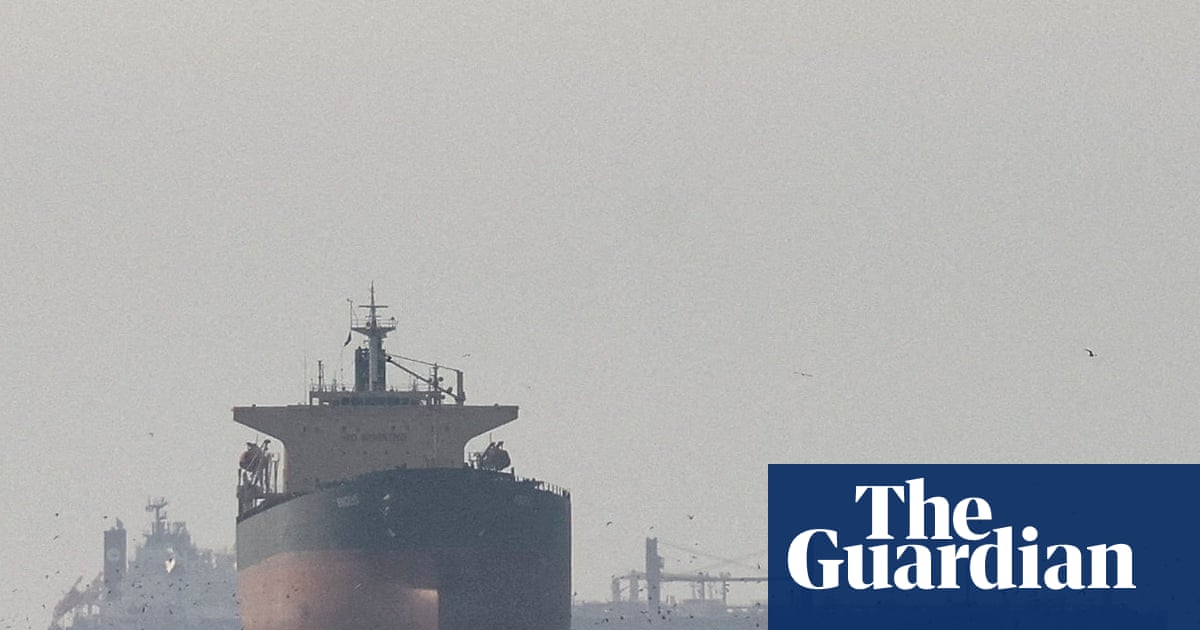
The Guardian - World NewsFIG 01
Reading time
5min
Word count
1 051words
Sources cited
5cited
Entities identified
12entities
Quality score
100%
§ 01
Briefing Summary
AI-generatedNEWSAR · AI
President Trump is pressuring European allies and China to contribute to securing the Strait of Hormuz after its de facto closure by Iran disrupted global oil supplies. He warned that a lack of support from NATO members would be "very bad" for the alliance's future. While EU foreign ministers are considering bolstering a naval mission in the Middle East, several countries, including Australia, France, Japan, and the UK, have declined to send ships to the strait. Trump suggested he might delay a summit with China's Xi Jinping unless Beijing helps secure the waterway, as China relies heavily on it for oil imports. The US has reportedly contacted seven countries for support, but no commitments have been made.
Confidence 0.90Sources 5Claims 5Entities 12
§ 02
Article analysis
Model · rule-basedFraming
Diplomatic
National Security
Tone
Mixed Tone
AI-assessed
CalmNeutralAlarmist
Factuality
0.70 / 1.00
Factual
LowHigh
Sources cited
5
Well sourced
FewMany
§ 03
Key claims
5 extracted01
Japan imports 90% of its oil from the Middle East, 70% of which is shipped via the waterway.
statistic
Confidence
1.00
02
If there’s no response or if it’s a negative response, I think it will be very bad for the future of Nato.
quoteTrump
Confidence
1.00
03
Australia, France, Japan and the UK are among the countries to have said they have no plans to send ships.
factual
Confidence
1.00
04
Trump has ratcheted up the pressure on European allies to help protect the strait of Hormuz.
factual
Confidence
0.90
05
The de facto closure of the vital waterway by Tehran has caused the largest oil supply disruption in history.
factual
Confidence
0.80
§ 04
Full report
5 min read · 1 051 words§ 05
Entities
12 identifiedKey playerOppositionContext
SO
Strait of Hormuz location · Context
95
DT
Donald Trump person · Key Player
90
US
United States location · Key Player
80
C
China location
70
N
NATO organization
70
T
Tehran location · Opposition
60
EU
European Union organization
60
J
Japan location
60
I
Israel location · Key Player
50
UK
United Kingdom location
50
F
France location
50
A
Australia location
40
§ 06
Keywords & salience
9 termsstrait of hormuz
1.00
donald trump
0.90
european allies
0.80
oil supply disruption
0.70
global energy
0.60
nato
0.60
china
0.50
commercial shipping
0.50
naval mission
0.40
§ 07
Topic connections
Interactive graph Network visualization showing 51 related topics
View Full Graph Person Organization Location Event|Click node to navigate|Edge numbers = shared articles